
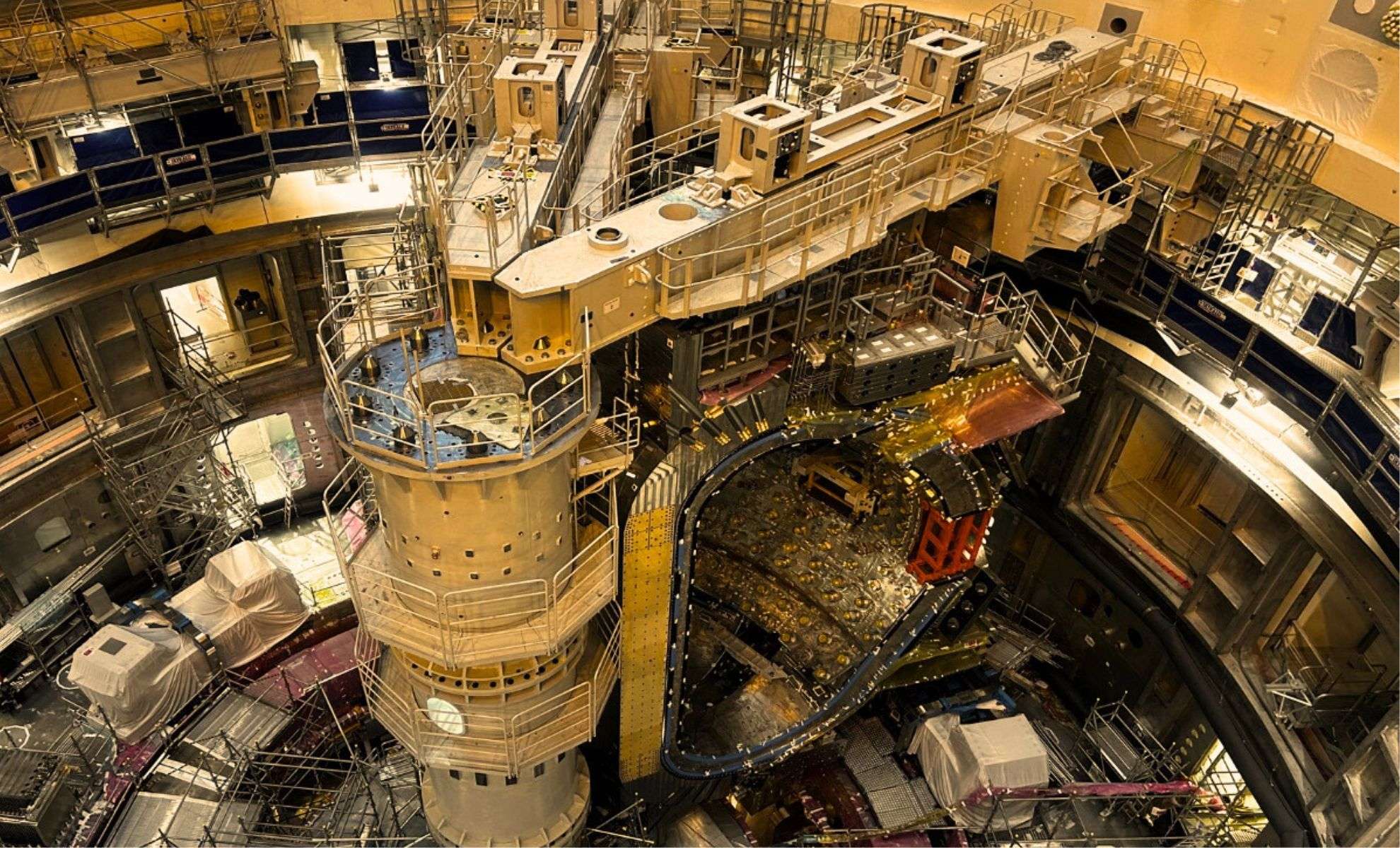
In the scenic southern French countryside, engineers have embarked on a groundbreaking mission that could redefine the future of energy: constructing the core of ITER, the globe’s largest nuclear fusion experiment. According to the project’s latest baseline update from July 2024, this stage represents the most sensitive and pivotal part of decades-long efforts to replicate the sun’s energy-producing process.
Constructing the Tokamak Core
Central to this endeavor is the vacuum vessel, an immense 19-meter-diameter double-walled chamber destined to contain plasma exceeding 150 million degrees Celsius. The vessel is being assembled from nine massive steel sections, each weighing around 440 tonnes, sourced from Europe and South Korea. Once fully joined and sealed, this colossal structure will weigh upwards of 5,200 tonnes—surpassing many naval vessels and unlike anything else produced in industrial manufacturing.
This summer, American nuclear firm Westinghouse secured a $180 million contract for the demanding assembly process. The task requires precision welding to form a flawlessly aligned ring, with engineers carefully managing thermal expansion and metal deformation.

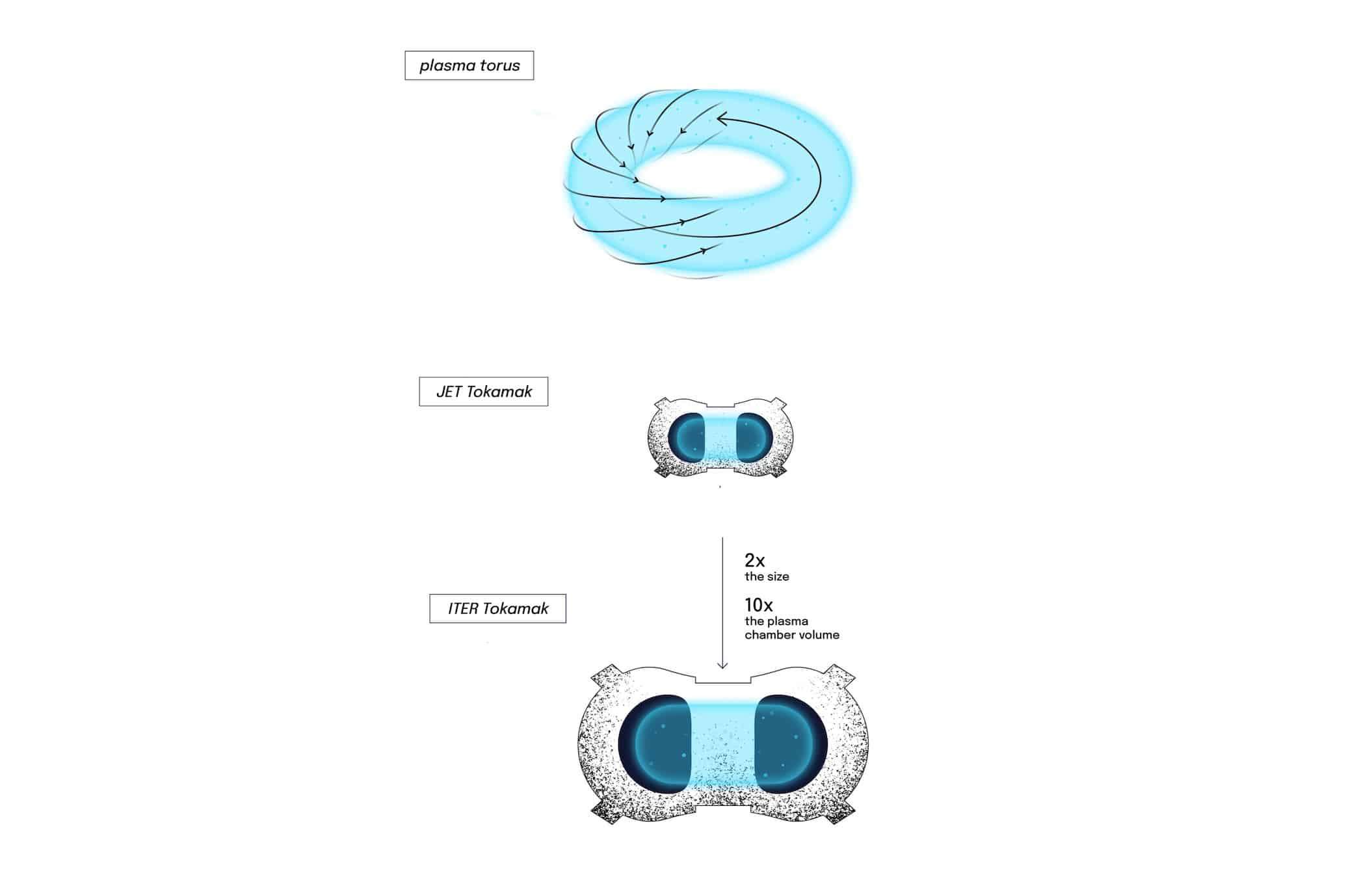
Precision is paramount: any contact between the plasma and the chamber walls would cause failure. Westinghouse is collaborating closely with experienced European partners, Ansaldo Nucleare and Walter Tosto, who have previously played key roles in fabricating parts of the vessel.
Global Scientific Partnership
While headquartered in France, ITER stands as a truly international initiative. It showcases one of the largest scientific collaborations in history, involving 35 countries including the United States, China, Russia, Japan, South Korea, and all member states of the European Union.
Contributing components, technology, and expertise, each nation sends their parts to the Cadarache facility, where specialists assemble this mega-project with millimeter accuracy, transforming the site into a giant, globe-spanning puzzle.
The allocation of tasks reflects this multinational cooperation. Europe is providing five vacuum vessel sectors, and South Korea four. The United States has delivered superconducting magnets exceeding 18 meters in length, and Japan supplies essential segments of the central solenoid. Some have dubbed ITER the "nuclear United Nations," where cooperation transcends politics through the universal language of science.
Project Milestones and Challenges
Initial timelines envisioned first plasma by 2018, but technical hurdles, design changes, and financial issues have deferred deadlines. As per the most recent schedule, ITER will begin operations with deuterium-deuterium fusion in 2035, advance to magnetic field and plasma current experiments in 2036, and initiate deuterium-tritium fusion runs in 2039.
The objective is to reach a fusion gain factor (Q) of 10, meaning producing 500 megawatts of fusion energy from just 50 megawatts of input power. ITER itself won’t feed electricity to the grid; that responsibility lies with its planned successor, DEMO, currently under design across Europe and Asia. Nevertheless, ITER represents a vital demonstration of fusion’s viability on a commercial scale.
Capturing the Sun’s Energy on Earth
Regarded as the "holy grail" of clean energy, fusion offers nearly limitless, carbon-neutral power while avoiding the long-lived radioactive waste typical of fission reactors. Yet, harnessing fusion’s enormous potential remains a scientific milestone not yet achieved. As Winston Churchill once observed in another context, "This is not the end. It is not even the beginning of the end. But it is, perhaps, the end of the beginning." This sentiment fits ITER’s current stage well.
Though many years remain before ignition, assembling the vacuum vessel signifies a transition from design phases to active assembly and operation. For scientists and leaders worldwide, the dream of channeling stellar energy is rapidly becoming a tangible reality, built piece by massive piece in this serene region of Provence.






0 comments
Sign in to Comment