
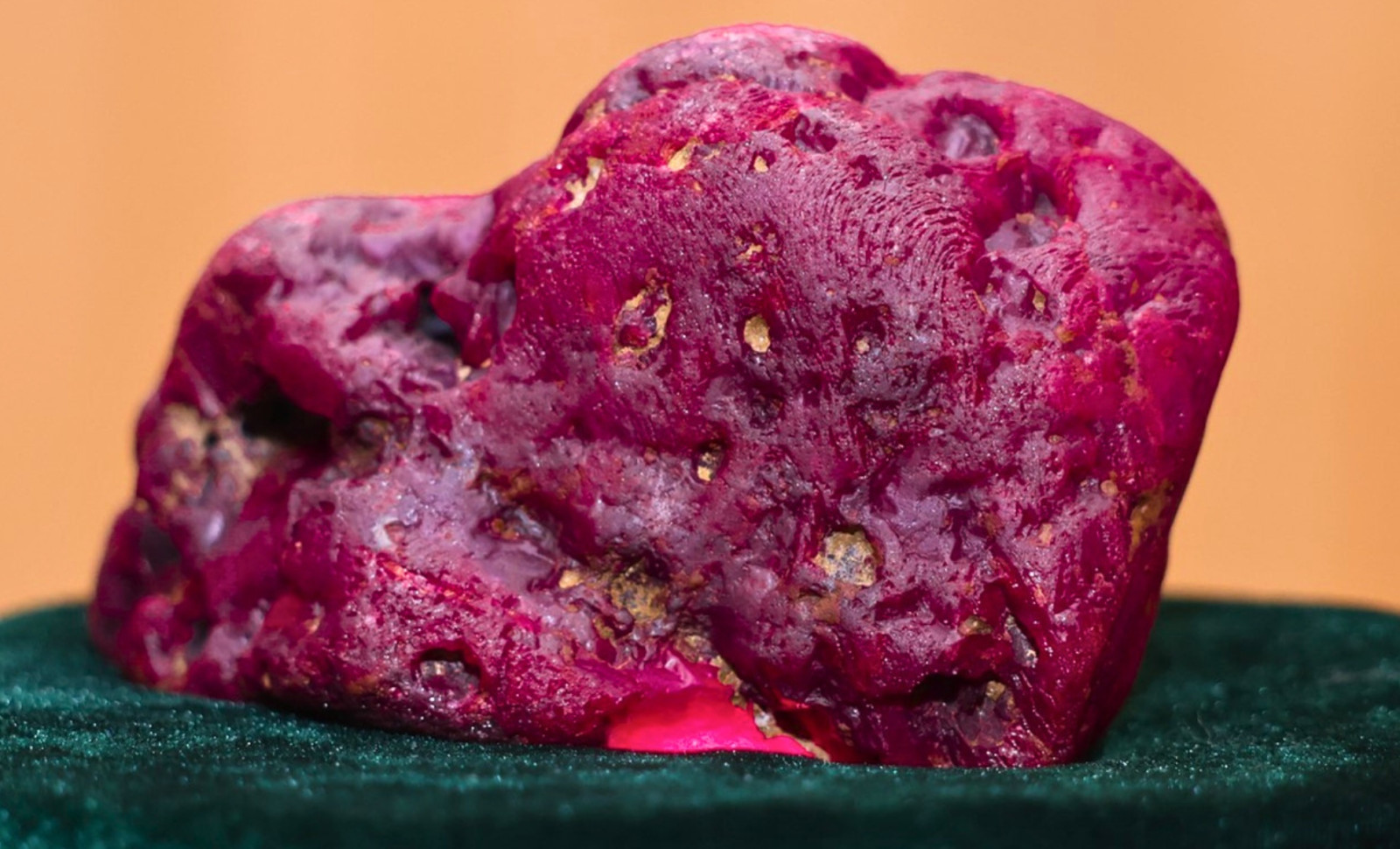
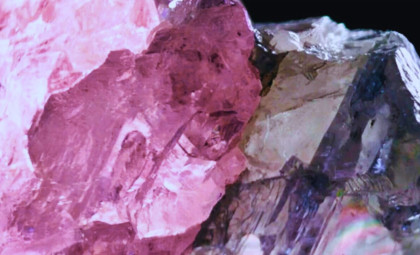
In mid-April, a colossal ruby tipping the scales at over four pounds was excavated from Myanmar's famed Mogok region. Government officials have hailed it as the most precious large gemstone ever uncovered in the country. Weighing an impressive 11,000 carats (2,200 grams), the discovery was officially announced on May 8 by the state-operated Global New Light of Myanmar, with CBS News confirming the find as Myanmar’s second largest ruby by size the same day.
The gem’s significance extends beyond its impressive size. It features a purplish-red shade accented by yellow undertones, moderate transparency, and a glassy surface known among gem experts as vitreous luster. Experts believe these qualities elevate its value above that of a 21,450-carat ruby discovered in 1996, despite that stone nearly doubling this one's weight. Additionally, the new ruby remains completely untreated, having undergone no heat or chemical alterations, a rare aspect that commands a premium price from collectors.
Myanmar is responsible for approximately 90% of the global ruby supply. The Mogok region, located in the northern Mandalay area, has produced every colossal ruby ever recorded by the country—including a 99.25-gram find in 1990, the 4,290-gram record-breaking gem in 1996, and a 557.85-gram discovery in 2022. Local gemologists now consider the newly found ruby to surpass all earlier giants.

An Object of Attention Amid Political Turmoil
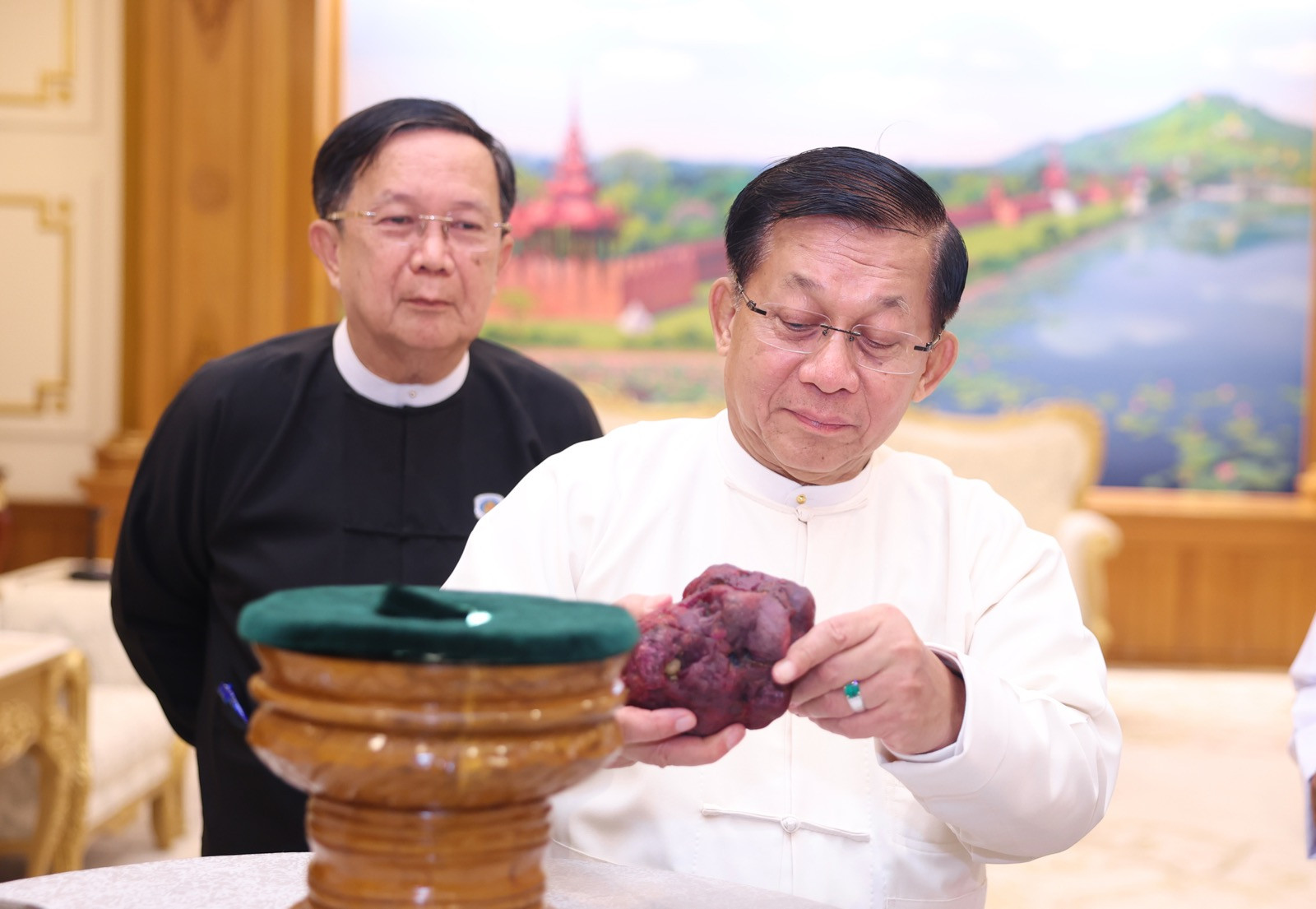
Soon after unearthing, the ruby was transported to Naypyitaw, where President Min Aung Hlaing personally examined the stone alongside both vice presidents, parliamentary speakers, and the defense services commander-in-chief. Union Minister U Hsan Oo, responsible for natural resources, detailed the gem’s properties and origin to the president.
This public display carries notable political undertones, as Myanmar’s current government assumed control following elections widely condemned by human rights organizations and opposition factions as fraudulent. Min Aung Hlaing, formerly head of the military, led the 2021 coup and now presides over a civilian-style government unrecognized by much of the global community.
At the time of the ruby’s discovery, Mogok was outside government control. The Ta’ang National Liberation Army, an ethnic insurgent group, had taken control of the town in July 2024 and operated its gem mines for over a year. A China-mediated ceasefire in late 2025 returned authority to Myanmar’s military, allowing miners to resume work, leading to the ruby’s emergence. This timeline highlights how closely gemstone mining is entwined with Myanmar’s ongoing civil conflict.
Revenue from rubies and jade bolsters both the military government and ethnic armed factions battling over control of the resource-rich region. The UK-based watchdog Global Witness has meticulously documented this cycle for years, urging global jewelers to halt purchases of Myanmar gemstones to avoid fueling the conflict further.
Why Gem Quality Matters More Than Size
While weight draws headlines, a ruby’s true worth depends on its color, clarity, and whether it has been treated. The most coveted rubies exhibit the famed pigeon’s blood red hue—a deep crimson tinged with a subtle blue undertone. Though this new ruby displays a purplish-red shade instead, its exceptional clarity and natural condition have led experts to appraise it above the heavier 1996 specimen. The unique geology of Mogok contributes to the distinctiveness of Burmese rubies.
The region’s deposits formed within marble subjected to intense heat and pressure during metamorphosis. Chromium traces imbue the stones with their characteristic red fluorescence. When exposed to ultraviolet light, a quality Mogok ruby radiates from within—a feature visible without instruments that distinguishes these gems in both auctions and lab analyses.
The fate of the 11,000-carat rough gemstone remains uncertain. Official reports have not disclosed whether it will be faceted, preserved intact as a specimen, or exhibited for sale. Myanmar’s Gem Emporium in Naypyitaw has traditionally been the government’s primary sales platform for major discoveries, but sanctions following the 2021 coup have severely restricted these transactions, with many Western luxury brands now steering clear of Burmese gems altogether.
Smuggling further clouds the picture. High-value rubies frequently cross into Thailand and China through unofficial channels before reentering legitimate markets with origins disguised. The journey of the 2022 NaSaKa ruby, which was documented, displayed, and eventually absorbed into state holdings, offers a recent precedent that this new ruby likely follows.
Whether this colossal gem ever reaches international buyers will reveal the extent to which increased scrutiny of Myanmar’s gem sector has transformed the industry—or whether a remarkable stone can still find collectors willing to overlook the political complexities behind its discovery.
- Categories:
- News


0 comments
Sign in to Comment