
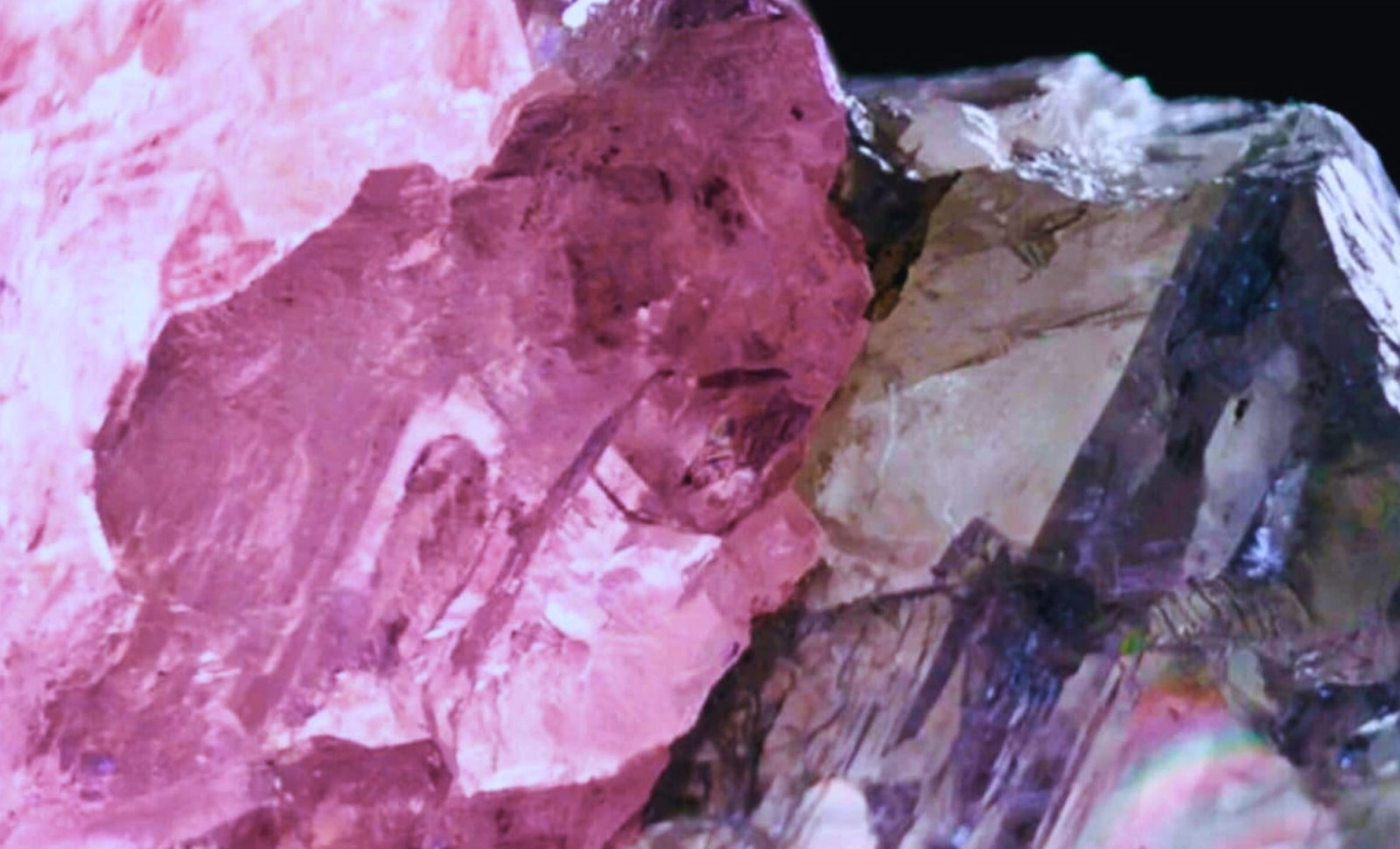
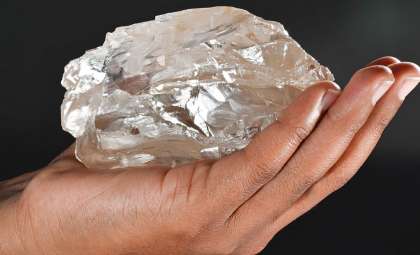
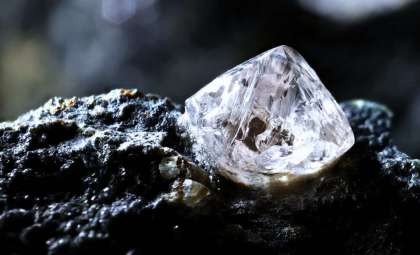
In late 2025, a remarkable diamond was discovered in Botswana, captivating the attention of geoscientists and gemologists globally. This 37.41-carat rough crystal exhibits an extraordinarily rare internal division: one side shines with a rich pink coloration while the other remains completely colorless, separated by a flawlessly clear boundary without any blending.
This striking contrast preserved within a single uncut stone offers a tangible glimpse into varying conditions deep within Earth’s mantle. Preliminary imaging has identified lattice formations indicative of two separate growth periods. Researchers at a laboratory in Gaborone are currently conducting detailed non-invasive examinations focused on defect localization and internal stress mapping.
The gem was extracted from the Karowe mine located in northern Botswana, renowned for producing exceptionally large, pure diamonds — including the famous 2,488-carat Motswedi diamond found in 2024. The site’s geological environment, characterized by ancient cratonic crust and deep kimberlite intrusions, is well-known for sourcing Type IIa diamonds which have minimal nitrogen and impurities.

Two-Phase Growth Validated by Laboratory Analysis
Experts at the Gemological Institute of America (GIA) confirmed the stone is a Type IIa diamond. This purity level, marked by near-absent chemical impurities, enables in-depth studies of structural and deformational features. According to Earth.com, the pink segment likely experienced plastic deformation, where the diamond’s atomic lattice was permanently distorted due to intense geological forces.
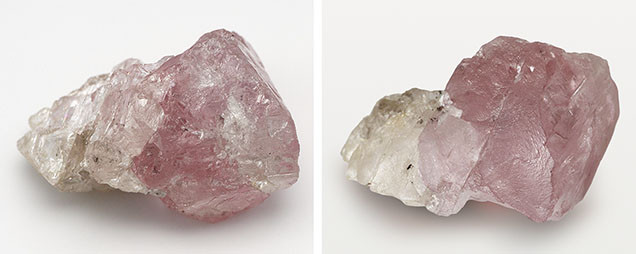
This plastic deformation modifies how light passes through the diamond, creating pink coloring without adding foreign elements. In this case, deformation was enough to produce vivid pink but did not push the hue towards brown. Conversely, the colorless half appears to have formed under less stress, preserving an undisturbed lattice structure.
Although other dual-toned diamonds exist, they are generally smaller than two carats and show gradual color changes or irregular patterns. The Botswana diamond stands out due to its distinct internal boundary, large size, and flawless condition, offering a valuable reference for comparing naturally stressed and unstressed growth within one crystal.
The Influence of Kimberlite in Safeguarding Deep Earth Minerals
This diamond’s journey to the Earth’s surface occurred via a kimberlite pipe, a volcanic conduit essential for transporting mantle minerals intact. Formed over 150 kilometers underground during explosive eruptions rich in volatiles, kimberlite pipes quickly propel deep-seated material upwards, reducing the chances of graphite conversion or thermal damage to diamonds.
Kimberlite’s composition and pipe-shaped structure are key factors in hosting and preserving diamond deposits. As detailed by Encyclopedia Britannica, kimberlite is a dense, often fragmental igneous rock composed of minerals such as olivine, pyrope garnet, and phlogopite mica. Its intrusive pathways through ancient continental crusts provide direct access routes for mining deep mantle specimens.
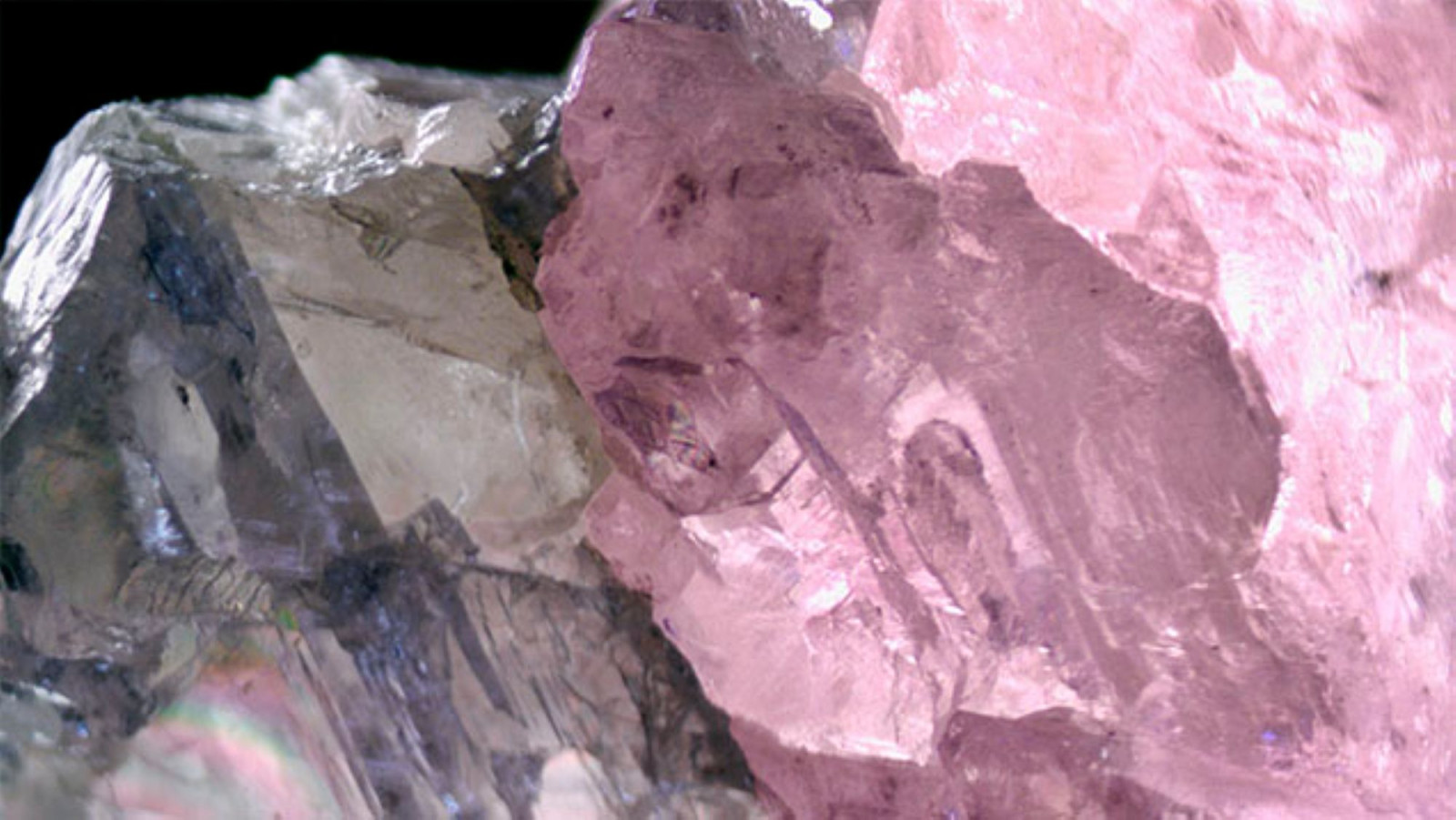
The distinct, "sharp" divide between the diamond’s pink and clear portions. Credit: Wanling Tan/GIA
At the Karowe mine, special processes minimize fragmentation of large crystals. This, combined with the mine’s unique geology, preserved the diamond in pristine condition, enabling comprehensive laboratory evaluation before any commercial cutting.
Currently, specialists employ advanced spectroscopic imaging and photoluminescence mapping techniques to analyze the distribution of imperfections within the stone. These non-destructive approaches ensure the crystal’s integrity remains intact for further scientific study.
Similarities to Argyle Diamonds Linked to Ancient Tectonic Events
The Botswana diamond’s dual growth pattern resembles that of pink diamonds from the Argyle mine in Western Australia. A recent 2023 publication in Nature Communications suggested tectonic deformation as a primary factor in the pink hues found in Argyle diamonds.
Research dated Argyle’s lamproite volcanic host rocks between 1.3 and 1.26 billion years ago, correlating with the breakup of the ancient supercontinent Nuna. Uranium-lead isotopic dating on minerals like zircon and titanite established this timeline. Structural analyses of Argyle diamonds revealed thin deformation bands consistent with tectonic stresses from that era.
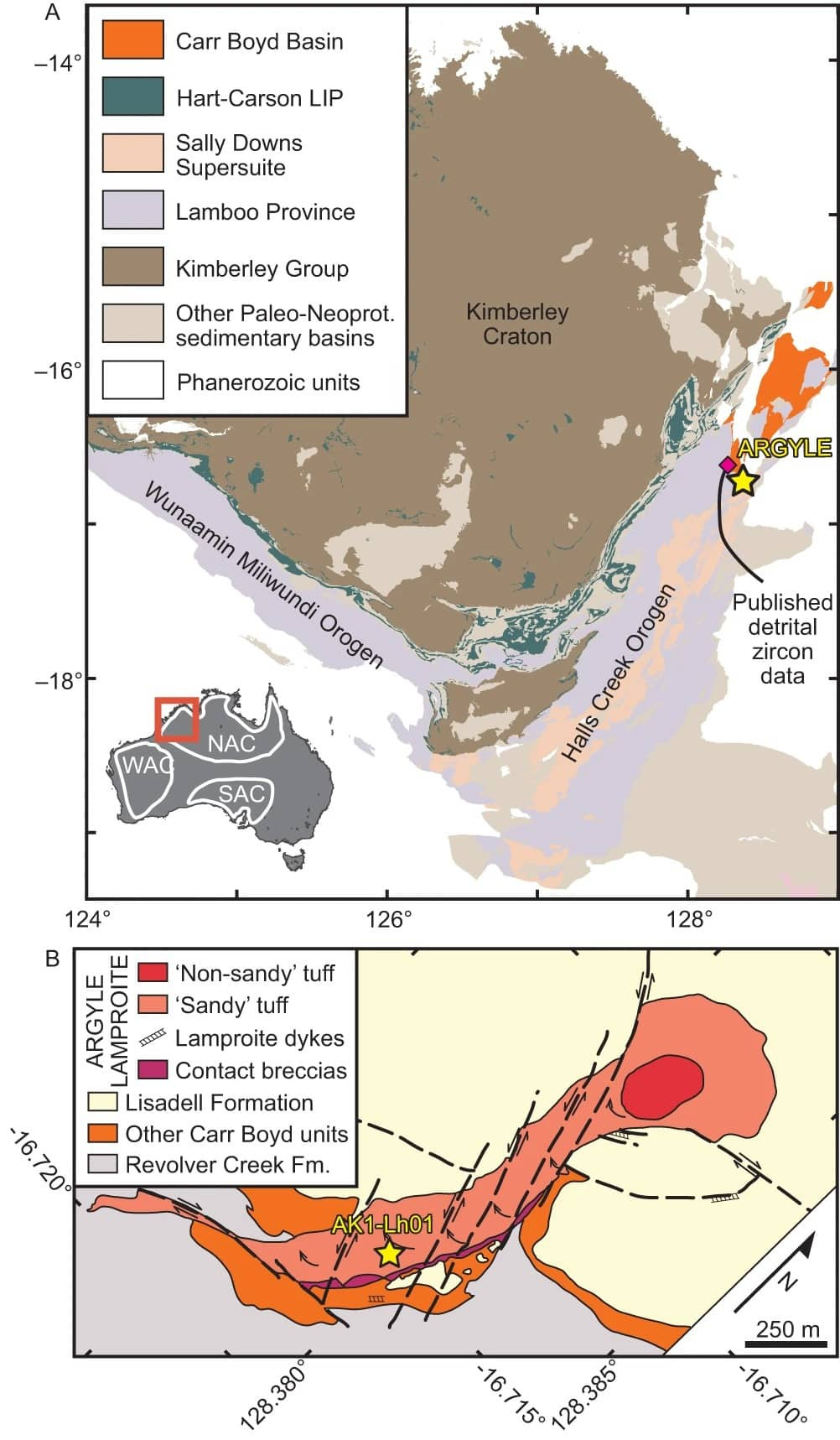
Although originating in a different cratonic environment, the Botswana diamond exhibits a comparable sequence of plastic deformation followed by stress-free growth. Its sharply divided halves encapsulate contrasting geological histories within a single gemstone.
According to the GIA, more structural and spectroscopic findings will be published following the conclusion of ongoing imaging and classification efforts expected by mid-2026. The diamond remains uncut, preserved in its natural state to allow continued investigation.
- Categories:
- News







0 comments
Sign in to Comment