
Researchers have uncovered unusual underwater formations off the coast of Norway that are challenging conventional ideas about the Earth’s crust. Named sinkites, these structures reveal an astonishing geological reversal that has intrigued scientists worldwide. The full study, available in the journal Communications Earth & Environment, underscores a rare natural phenomenon that defies established norms.
Decades of observation and extensive seismic investigations left researchers puzzled over these deeply buried formations. Unlike typical seabed deposits, these mounds had no clear origin. Some experts hypothesized underwater landslides, while others suspected an upward push of mud and sand from beneath the surface. However, these theories failed to fully explain the evidence—until recent analyses provided clarity.
Subsurface Surprises Beneath the Sea
Under normal circumstances, sediment layers accumulate sequentially; older sediments rest at the bottom and younger deposits layer on top, reflecting the law of superposition. This fundamental geological principle shapes our understanding of Earth’s past.

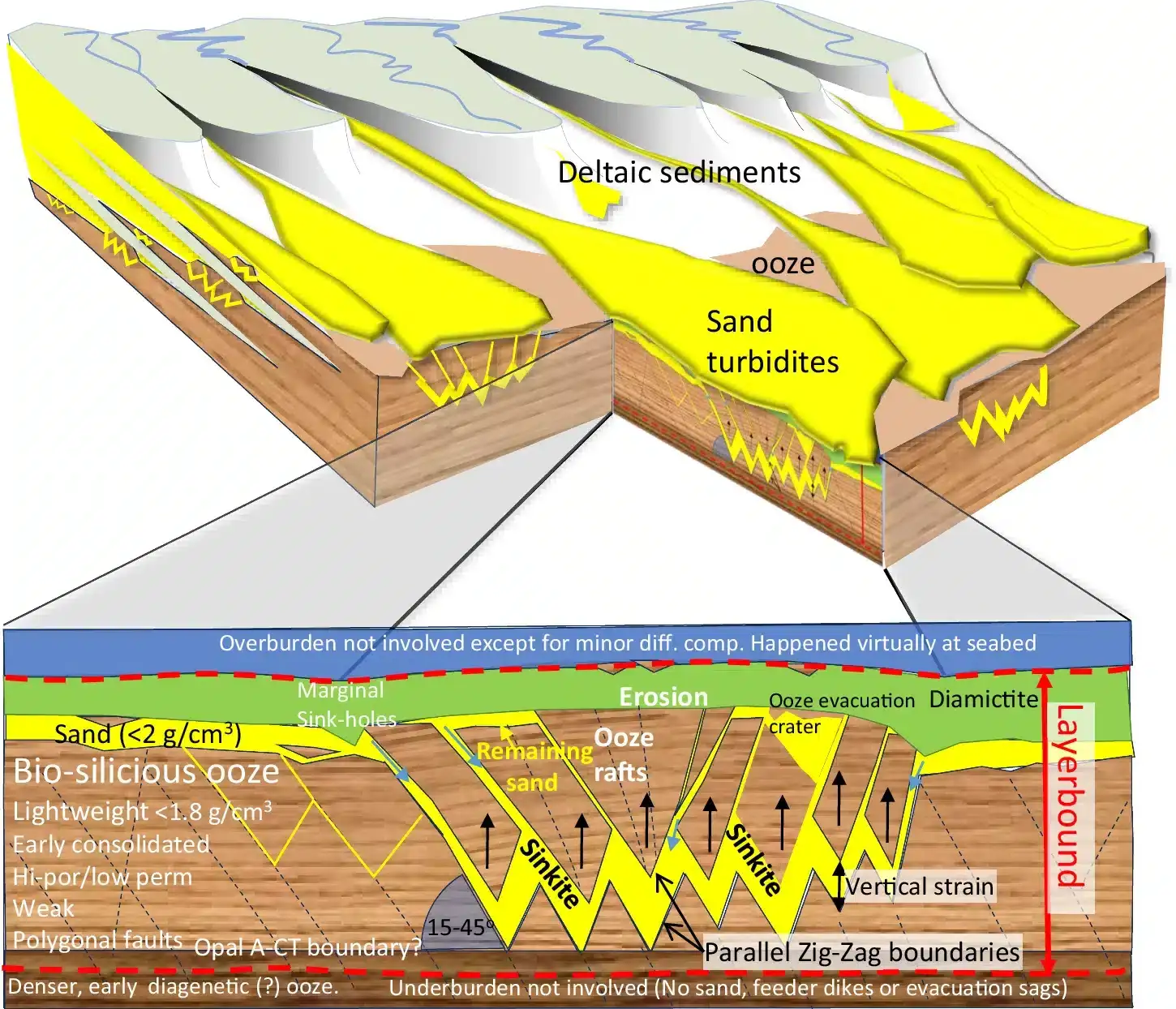
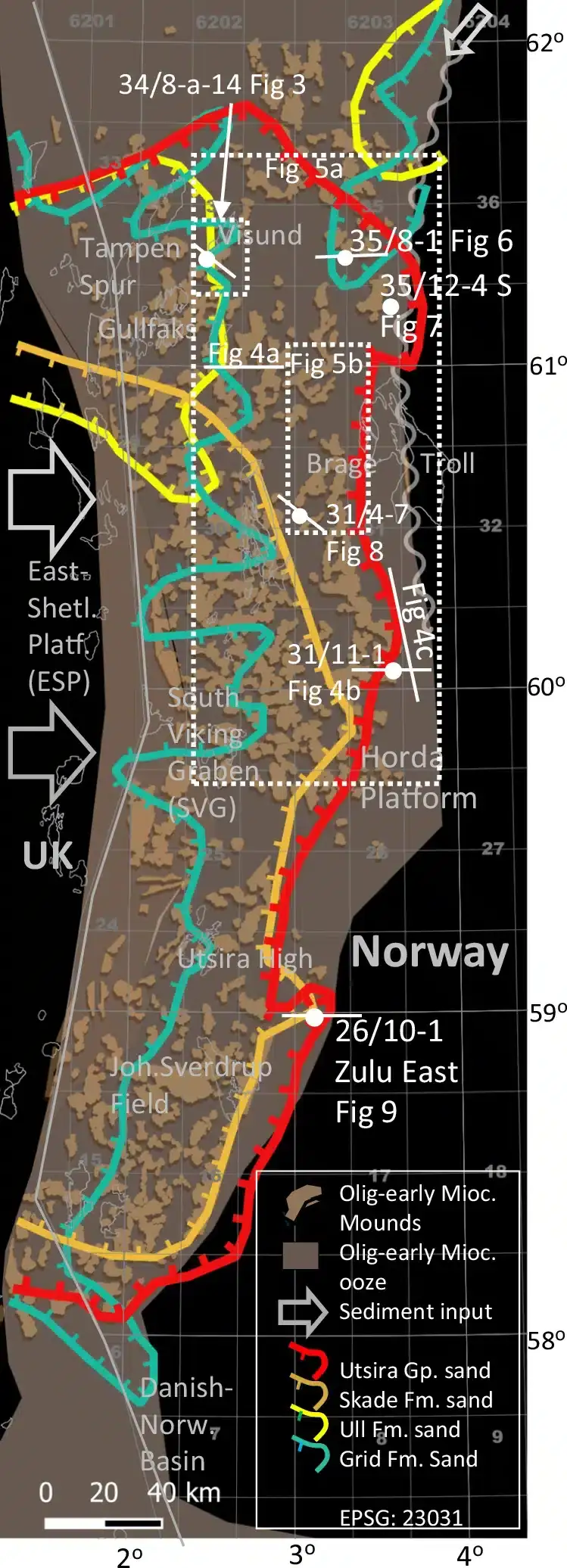
Yet, beneath the North Sea, the sinkites displayed an unexpected pattern. These expansive formations, some spanning over a kilometer in diameter, consist of younger, denser sand positioned below lighter, ancient organic-rich mud known as ooze. This inversion contradicts the traditional sedimentation sequence.
To decipher this anomaly, scientists from the University of Manchester and collaborators employed 3D seismic imaging combined with seafloor rock sampling. Their findings revealed a surprising process: instead of remaining atop, the younger sand layers had actually sunk through the older sediments.
Geological Shifts Triggering the Phenomenon
The research team attributes this downward movement primarily to seismic activity or abrupt pressure changes during the Miocene to Pliocene epochs, approximately 20 million to 2.6 million years ago. These conditions caused the sand to behave more like a viscous liquid, enabling it to migrate through fractures and fissures in the bedrock and settle beneath the older, lighter ooze layers.
“What we’ve found are structures where dense sand has sunk into lighter sediments that floated to the top of the sand,” said Mads Huuse, a geophysicist from the University of Manchester, who worked on the study.
The team coined the term “sinkites” to describe these sunken sand formations, while dubbing the overlying lighter sediments “floatites.” These names, though simple, effectively capture the unique layer inversion observed.
Implications Beyond Curiosity
Though these submerged sand domes beneath the North Sea first appear as geological curiosities, their formation has meaningful consequences. The inversion of younger, denser sand beneath older, lighter sediment could transform how scientists evaluate subsurface reservoirs relevant to oil and gas exploration and emerging carbon capture and storage strategies.
Mads Huuse highlights that understanding sinkites offers new insights into fluid flow and barrier properties within Earth’s deep crust, potentially revolutionizing models of subsurface seal integrity. Moreover, this could be just the beginning; ongoing research is investigating whether similar geological inversions exist elsewhere, challenging long-held Earth science paradigms.
- Categories:
- News




0 comments
Sign in to Comment