
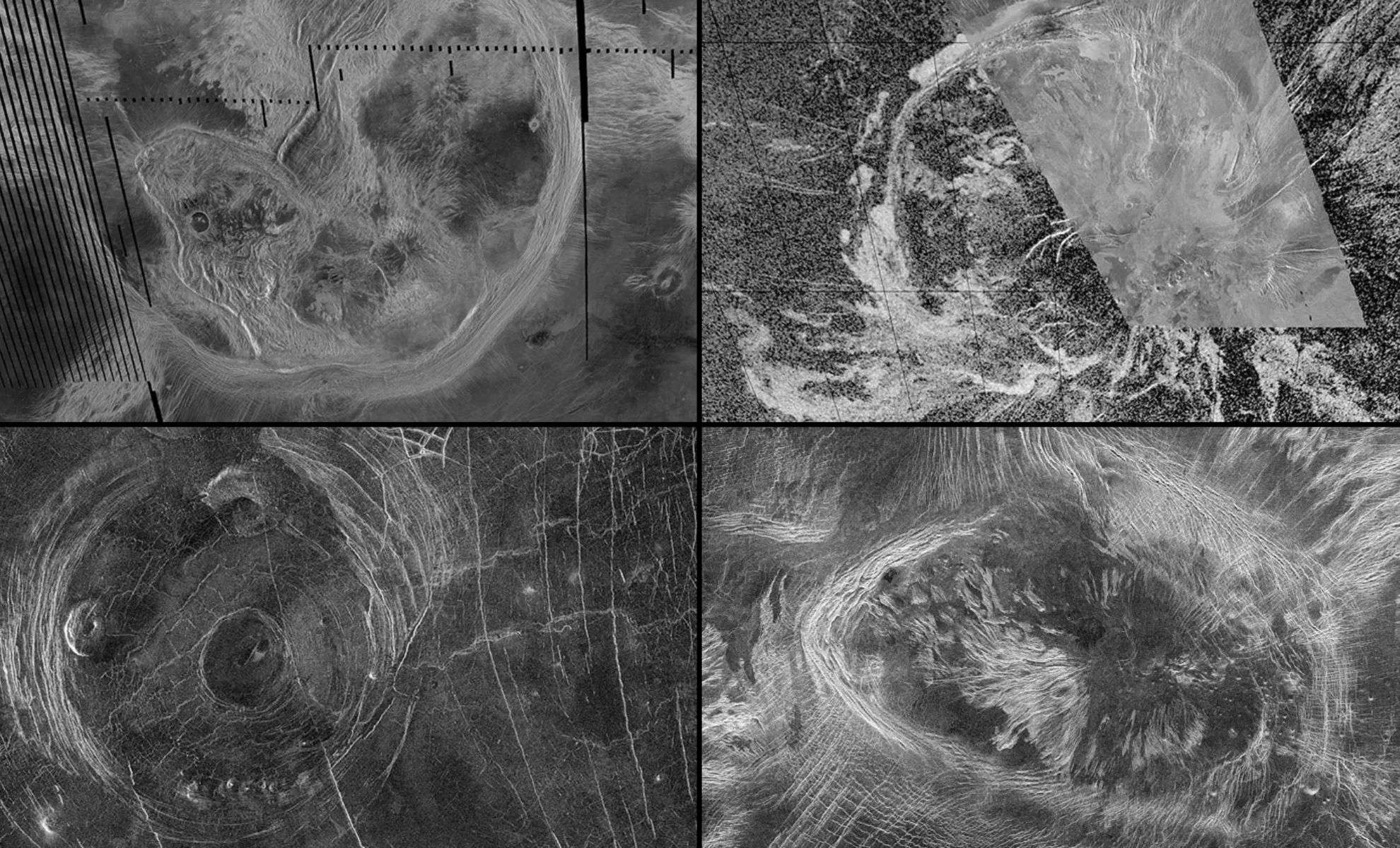
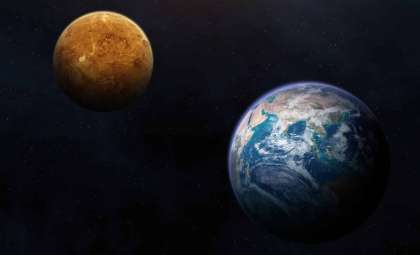
Scientists revisiting radar measurements from NASA’s Magellan spacecraft have revealed strong indications that tectonic forces may still be influencing the crust of Venus. Published on May 14, 2025, in Science Advances, this study sheds new light on the inner workings of Earth’s often called sister planet. By examining three-decade-old data, researchers detected tectonic markers around large surface formations known as coronae, hinting at ongoing or recent crustal changes. These discoveries challenge existing views of Venusian geology and may provide valuable clues concerning Earth’s ancient geodynamic past before plate tectonics dominated.
Unlocking Venus’ Interior Mysteries with Magellan Data
This research relies on data from NASA’s Magellan orbiter, which operated in the early 1990s using radar to pierce Venus’ thick cloud cover. Though the mission ended years ago, its gravity and topography maps of Venus remain among the most precise. The focus was on coronae—huge, circular or elliptical structures spanning from a few tens to hundreds of miles. Unlike Earth’s crust, which is shaped by moving tectonic plates, Venus’ surface seems to be molded by rising plumes of hot mantle material pushing upward from below.
Gael Cascioli, lead investigator and planetary scientist at both the University of Maryland, Baltimore County and NASA’s Goddard Space Flight Center, explained: “Coronae are not features present on Earth today; however, they may have existed in Earth’s youth, prior to the dominance of plate tectonics. By integrating gravity and topography data, this study offers fresh perspectives on potential sub-surface dynamics currently affecting Venus’ surface.”

Investigating the Coronae: Uncovering Active Geological Mechanisms
The researchers employed three-dimensional geodynamic simulations to model how coronae form and evolve through mantle plumes—buoyant currents of molten rock ascending from the planet’s depths. These plumes rise until they interact with the lithosphere, causing the surface to bend and crack in circular patterns characteristic of coronae. These vast geological structures are prevalent on Venus and represent some of its most distinguishing surface features.
Studying 75 coronae, the team identified that 52 showed gravitational traits consistent with ongoing or recent mantle upwelling. This supports the idea that Venus remains geologically active, driven by Earth-like internal mechanisms including subduction, lithospheric dripping, and possible episodes of volcanic renewal. Coauthor Anna Gülcher, planetary scientist at the University of Bern, noted: “Coronae are widespread on Venus and have inspired numerous formation theories. The exciting implication is that multiple active processes likely contribute to their development. It’s plausible these were also active during Earth’s early geological history.”
Venus as a Glimpse into Earth’s Formative Tectonics
The absence of conventional plate tectonics on Venus has long intrigued scientists. However, this study suggests that Venus has a distinct yet dynamic tectonic system. Notably, the team observed subduction-like movements near some coronae, where mantle plumes push the crust outward and downward. Such behavior aligns with tectonic activity thought to occur on early Earth, driven by intense internal heat before modern plate tectonics emerged.
A key process discussed is lithospheric dripping, where cooler, denser crustal segments gradually sink into the mantle. This phenomenon is believed to take place beneath some Venusian coronae and provides another parallel to Earth’s earliest tectonic environment. Understanding Venus’ inner workings may thus offer a valuable window into Earth’s primordial geodynamic conditions, inaccessible through geological records alone.
Future Exploration: Anticipated Breakthroughs from the VERITAS Mission
To confirm and broaden these insights, NASA’s forthcoming VERITAS mission (Venus Emissivity, Radio science, InSAR, Topography, and Spectroscopy) aims to gather far more detailed information. Expected to launch no earlier than 2031, VERITAS will employ advanced synthetic aperture radar and spectroscopic techniques to produce high-resolution 3D maps of Venus’ surface and delve into its internal structure. Crucially, it will also obtain precise gravity data that may verify whether the coronae remain geologically active today.
Suzanne Smrekar, who leads VERITAS and is a planetary scientist at NASA’s Jet Propulsion Laboratory, stated: “VERITAS will deliver gravity maps of Venus with two to four times better resolution depending on the region—a leap forward that could transform our knowledge of Venusian geology and its parallels to Earth’s early history.”
- Categories:
- News




0 comments
Sign in to Comment