
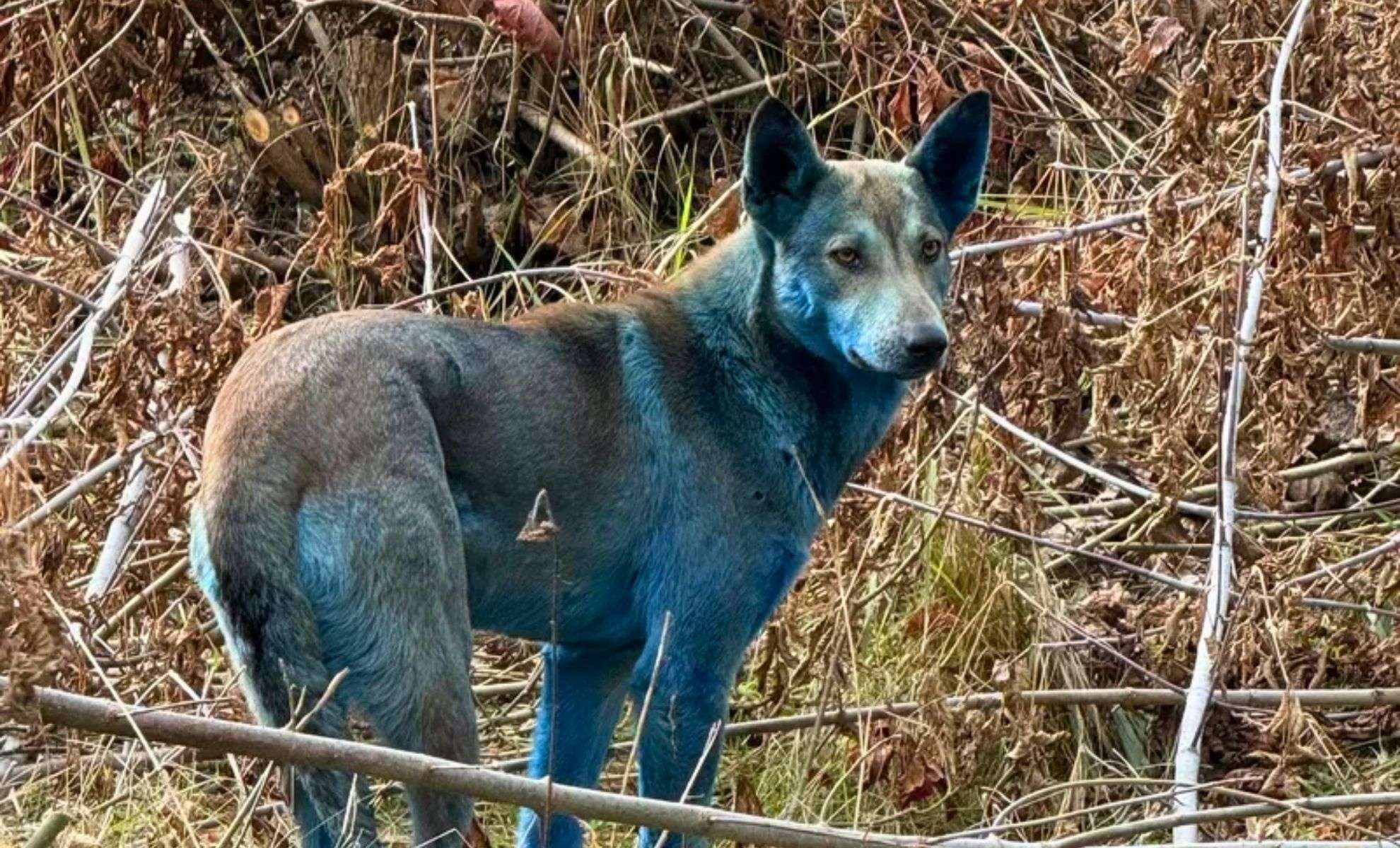
In early October 2025, researchers exploring the Chernobyl Exclusion Zone captured unexpected images of several dogs whose fur appeared almost entirely bright blue. These striking photos, taken by the Dogs of Chernobyl program, quickly gained attention and sparked widespread curiosity.
Many speculated if radiation might have triggered this unusual coloring, or if it was some form of mutation after decades of nuclear contamination. However, the explanation, though less sensational, sheds light on how these animals manage to live and adapt in one of the planet’s most radioactive places.
Blue Fur Caused by External Substance, Not Genetics
The Dogs of Chernobyl team clarified that the dogs’ blue hue is neither genetic nor the result of radiation exposure. Dr. Jennifer Betz, the program’s Veterinary Medical Director, shared that after multiple unsuccessful attempts to capture these animals for examination, they pinpointed a probable cause.

“They appear to have been rolling in a substance that had accumulated on their fur,” said Dr. Betz.
The researchers believe the blue tint likely originated from a leaking portable restroom found near the area where the blue-coated dogs were observed. Although this remains a hypothesis, the team noted the chemical residue seemed to extensively cover the animals’ fur.
During sterilization programs, the team identifies treated dogs with temporary crayon marks—usually green, red, blue, or purple—applied to the top of their heads. These markings fade within days.
“This coloring is only on top of their head and is completely different from the dogs that we encountered that were almost covered head to toe in blue substance,” Betz emphasized.
No Immediate Threat to the Health of Blue Dogs
Though their vivid coat is startling, no indications of illness or injury have been detected among these blue-dusted dogs.
“The dogs appear healthy, as do all of the other dogs that we have encountered during our time in Chornobyl,” said Dr. Betz. She added that unless the animals were to ingest a large quantity of the chemical, the exposure would likely be “mostly harmless.”
Since 2017, the project run by the nonprofit Clean Futures Fund has been actively monitoring, neutering, and caring for hundreds of stray dogs descended from domestic pets abandoned after the 1986 nuclear disaster.
While the sight of brightly stained animals might seem alarming, similar cases have previously appeared within the former Soviet Union, where industrial waste is often improperly managed.
Similar Cases Reported in Russia
Back in 2021, a group of dogs with brilliant blue fur was documented in Dzerzhinsk, Russia, near an inactive chemical manufacturing facility. Investigators suggested these animals had been coated in copper sulfate, a blue industrial chemical. This parallels the recent Chernobyl event and highlights how chemical pollution, rather than radiation, continues to pose problems in abandoned industrial sites.
In Chernobyl, this unusual blue fur adds a thought-provoking element to ongoing ecological research. The stained coats underscore the enduring impact of decaying human infrastructure on wildlife, revealing how animals interact with the long-lasting legacies of industrial activity.
Wildlife Resilience in the Aftermath of Disaster
More than 35 years after the 1986 explosion at Reactor No. 4, the Chernobyl Exclusion Zone has transformed into a fascinating sanctuary for various species. Numerous animals have flourished in the absence of human presence, with some showing genetic traits that help them cope with environmental challenges.
Among them, descendants of pets left behind during the evacuation now roam freely, facing unique hazards and freedoms. With the blue fur mystery mostly solved, these dogs exemplify the complex interactions between wildlife and the human-altered environment.
- Categories:
- News








0 comments
Sign in to Comment