
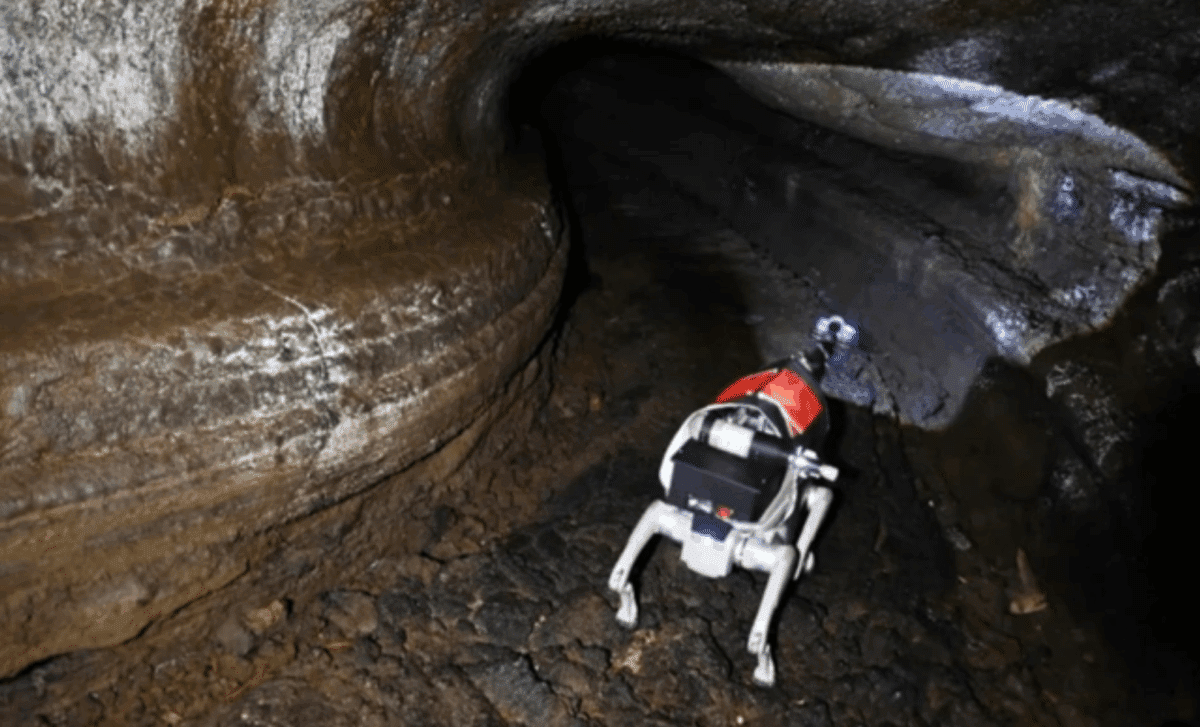
Researchers in China are advancing preparations for future moon missions by deploying robotic dogs in environments that replicate the lunar surface. As reported by the South China Morning Post, this initiative supports the groundwork for prospective human habitats on the moon. By merging robotics, AI, and planetary science, this project explores terrains potentially suitable for sustaining human presence.
Adapting Robotic Canines to Lunar Landscapes
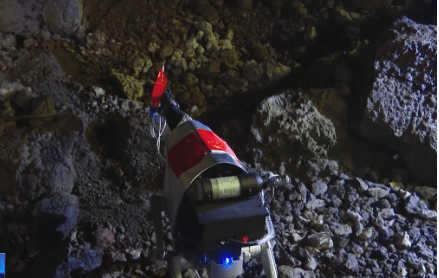
Chinese scientists have introduced robotic dogs designed to maneuver across surfaces mimicking the moon’s ruggedness. These test settings feature rocky areas and cramped cave-like structures, including lava tube caves, seen as promising spots for establishing lunar bases. Far from being simple gadgets, these robots come equipped with advanced sensors, cameras, and mobility tech to evaluate new methods for navigating difficult extraterrestrial terrain.
A representative from the Beijing Artificial Intelligence Research Institute explained, “Trial runs in lava cave-like zones akin to lunar conditions have propelled our robotic technology one step closer to enabling space exploration.” This project underscores the role of combining robotics with AI in initial moon scouting missions, aiming for robots to identify locations, gather geological data, and chart hazards ahead of human arrival.

Artificial Intelligence Enhancing Space Robotics
The robotic dogs are outfitted with AI-based navigation capabilities that enable dynamic responses to unforeseen obstacles like slopes or crevices, replicating challenges encountered on the lunar terrain. Training these robots on Earth in such realistic conditions refines their autonomous functions, vital for successful extended lunar missions.
Beyond mobility, the initiative also tests sensor durability against radiation, temperature fluctuations, and abrasive lunar dust. This AI-supported approach offers a safe method to predict equipment responses to harsh environments. Researchers aim to develop a cooperative human-robot system that enhances both safety and operational efficiency in moon missions.
Strategic Use of Lava Caves for Lunar Habitation
Testing within lava caves reflects a strategic focus, given their potential to shield inhabitants from space radiation and extreme temperature variations. Using robotic dogs to scout these environments helps engineers anticipate challenges in constructing and maintaining subterranean lunar bases.
The project emphasizes robots designed for versatility, capable of tackling tasks from preliminary exploration to detailed geological investigations. Such adaptability is crucial due to the unpredictable conditions of the lunar surface. This iterative process ensures continuous improvement in robotic capabilities with each generation.
Implications for Global Space Exploration
China’s work epitomizes the growing global reliance on autonomous machines to push the boundaries of space exploration. The development of robotic dogs showcases how innovations in AI and mobility reduce human risk and speed up scientific progress. These robots act as a tangible link between controlled simulations and real-world applications, yielding invaluable insights for moon missions and beyond.
By fusing robotics, artificial intelligence, and environmental testing, China is forging a practical path toward long-term lunar exploration. As space missions increase in complexity, such autonomous systems are expected to become central in enabling humans to explore new frontiers safely and efficiently.
- Categories:
- News







0 comments
Sign in to Comment