
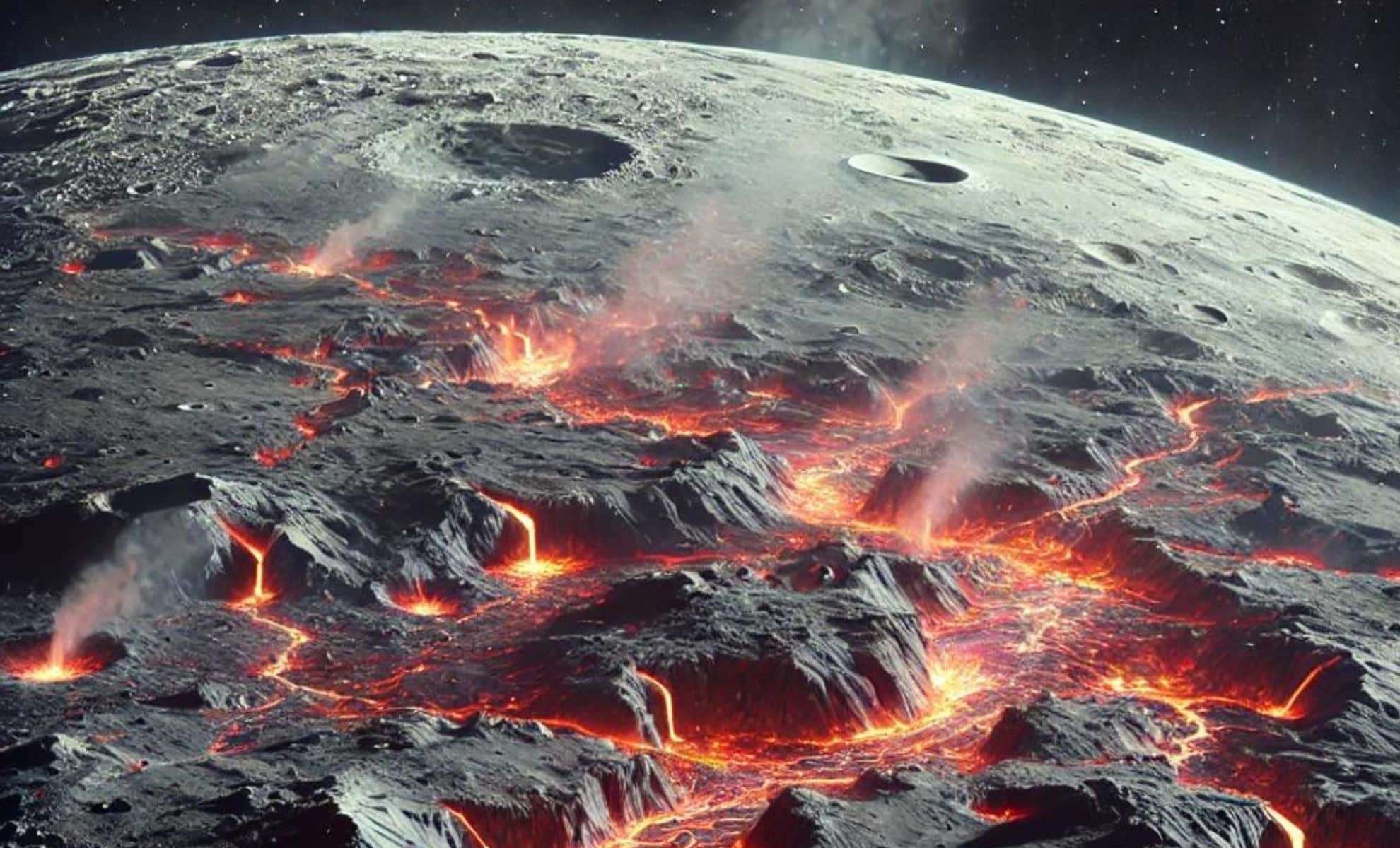
The latest insights from China's Chang’e 5 mission point to volcanic events on the Moon much more recent than scientists once assumed.
This remarkable finding suggests lunar eruptions may have taken place as recently as 120 million years ago, overturning the long-standing idea that volcanic activity on the Moon ceased over a billion years ago. Published in Science, the study focuses on volcanic glass beads brought back by Chang’e 5, revealing a surprisingly young volcanic timeline.
Chang’e 5 Sample Analysis Reveals Young Volcanic Glass
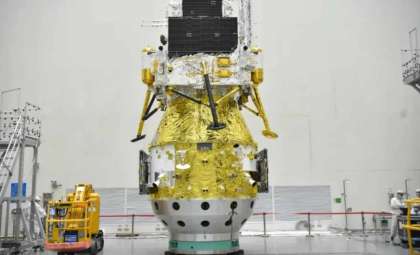
The Chang’e 5 mission, which successfully returned lunar material to Earth in late 2020, delivered the first new moon samples in over four decades. The spacecraft gathered 3.82 pounds (1,731 grams) of lunar soil from Oceanus Procellarum. Within these samples, scientists identified small glass beads created by volcanic processes. After examining approximately 3,000 beads, researchers determined that three originated from volcanic activity.

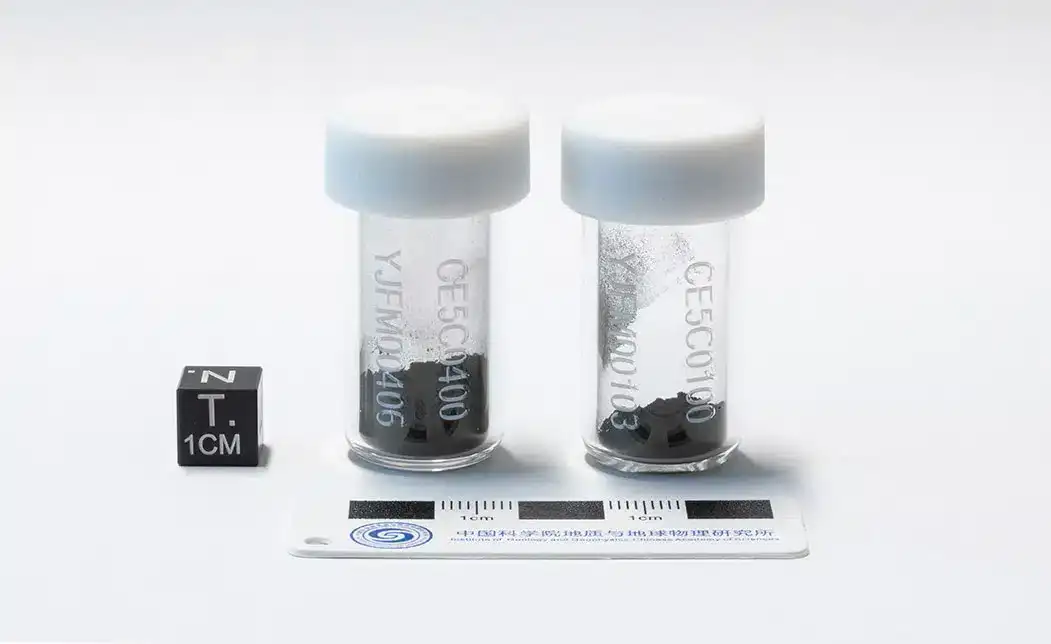
Employing uranium-lead dating, researchers determined these beads formed roughly 123 million years ago, with an uncertainty of 15 million years. This relatively recent date is astonishing given the Moon’s age of about 4.5 billion years. “The realization that these volcanic glass beads solidified when dinosaurs thrived on Earth is quite remarkable,” stated Dr. Bi-Wen Wang, the lead scientist from the Chinese Academy of Sciences’ Institute of Geology and Geophysics. This discovery challenges previous timelines and hints that the Moon’s volcanic activity extended much later than once believed.
Reevaluating Lunar Geological History
Traditionally, it was thought the Moon cooled and ceased geological activity more than a billion years ago. Due to its smaller size compared to Earth, it was assumed the Moon lost its internal heat faster, ending volcanic processes by around 3 billion years ago. This view aligned with the dating of lunar basalt plains, the dark surface areas formed from ancient lava flows. Yet, the identification of much younger volcanic glass disrupts this assumption by showing evidence for lingering volcanism during the Moon’s more recent past.
The presence of radioactive heat-producing elements such as uranium, thorium, and potassium inside the Moon’s mantle may explain ongoing magmatic activity. These elements generate heat through radioactive decay, potentially keeping some mantle regions hot enough to sustain magma generation longer than previously considered. Dr. Wang added, “These new findings suggest the Moon shares more characteristics with Earth than previously believed.” Specifically, subsurface magma chambers could have remained active well into the more recent lunar epochs powered by radioactive heating.
Updating the Timeline for Lunar Volcanism
The discovery significantly revises established views on when volcanic eruptions occurred on the Moon. While earlier research indicated volcanic activity peaked roughly 3 to 3.8 billion years ago—creating the vast mare surfaces we observe—Chang’e 5 data suggest eruptions continued sporadically, possibly until around 120 million years ago. This revised chronology reshapes understanding of the Moon’s thermal and geological evolution.
Previous signs of recent volcanism came from irregular mare patches (IMPs) believed to be younger than 100 million years, based on crater counting methods. However, no direct laboratory evidence existed until now to confirm such recent activity. The volcanic glass beads uncovered by Chang’e 5 serve as conclusive proof of late-stage volcanic eruptions occurring after the Moon was assumed dormant.
Commenting in a Science editorial, Drs. Yuri Amelin and Qing-Zhu Yin lauded the painstaking efforts behind this work, calling the search for volcanic glass among thousands of beads “a needle in a haystack.” They emphasized, “Such detailed analysis has unveiled not only young volcanic activity but also important new directions in lunar geological research.”
Is the Moon Still Geologically Active?
This evidence of recent volcanic activity prompts questions about whether the Moon might still harbor active magma chambers. Despite billions of years of cooling, the presence of radioactive isotopes inside could sustain localized heating and produce magma, albeit at low volumes. Dr. Wang’s team suggests more research, including refined computer modeling, is necessary to assess current lunar magmatic potential.
“The possibility that the Moon continues to generate magma remains an open question,” the study notes, underscoring the value of ongoing observation. Planned missions like NASA’s Artemis program, along with forthcoming international lunar expeditions, will provide opportunities to further investigate if volcanic activity persists below the lunar surface.
The Path Forward for Moon Exploration
These revelations highlight the importance of sustained lunar exploration to deepen our grasp of its geological past. With upcoming human missions, such as NASA’s Artemis initiative, scientists look forward to examining sites that could illuminate the Moon’s volcanic activity. Future expeditions might focus on volcanic vent regions or revisit Oceanus Procellarum, the site of Chang’e 5 sample collection.
As Dr. Wang noted, “The Moon’s volcanic history is far more intricate than previously understood.” The discoveries from Chang’e 5 not only rewrite the Moon’s geologic timeline but also open exciting new research avenues on lunar volcanism’s role and its similarities to Earth’s geology.
- Categories:
- Astronomy ,
- News ,
- Science







0 comments
Sign in to Comment