
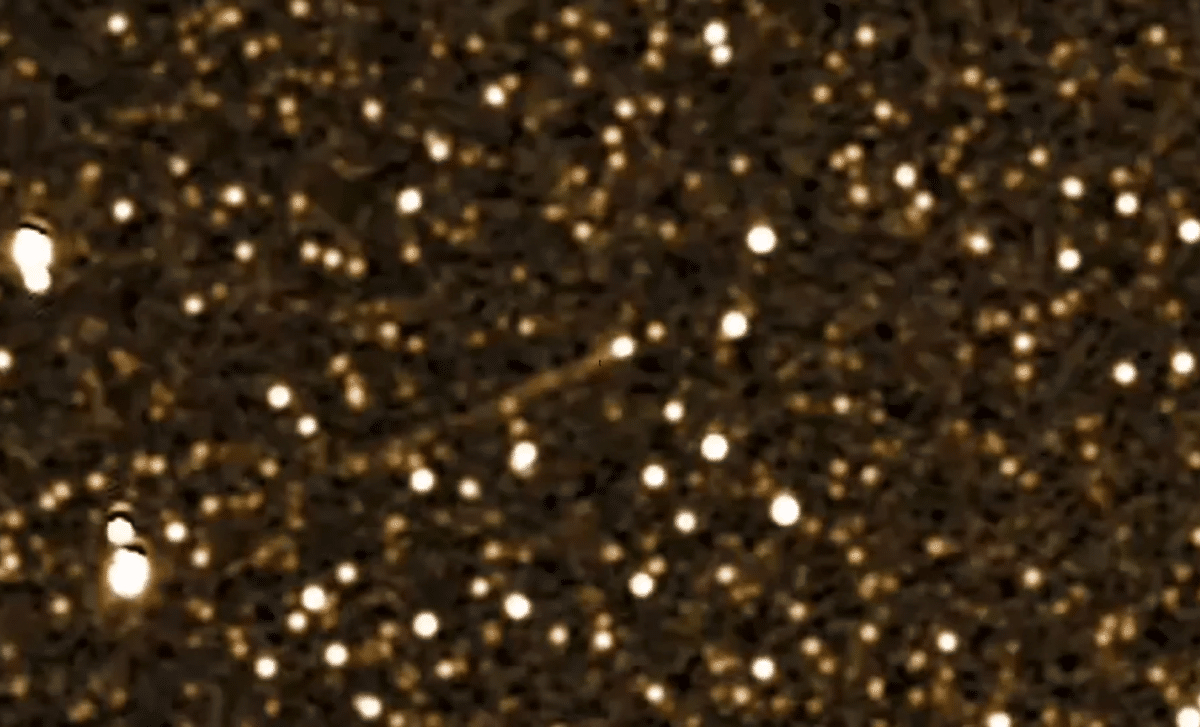
In a remarkable achievement in space observation, NASA’s spacecraft meticulously monitored Comet C/2025 R2 (SWAN), snapping hundreds of images every few minutes across a span of 40 days. This innovative mission offers an unprecedented window into the evolution of comets and the complex interplay with solar wind forces. Through this endeavor, NASA deepens our understanding of these icy visitors from the outer solar system and their dynamic encounters with the Sun’s environment.
Revealing the Dynamics of Comet SWAN
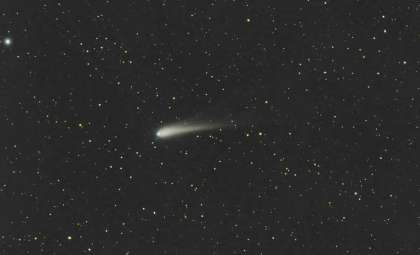
NASA’s latest high-frequency timelapse observation of Comet SWAN has captured intricate details in an exceptionally condensed timeframe. From August 25 to October 2, 2025, the spacecraft obtained images every four minutes, offering a seamless, detailed chronicle of the comet’s trajectory. The resulting footage beautifully illustrates Comet SWAN’s passage near Mars and the star Spica, granting scientists an extraordinary perspective on cometary behavior influenced by the Sun’s solar wind.
Previous comet observations typically recorded data once daily, but this mission shattered that timing norm with a rapid capture rate. Craig DeForest, the lead scientist of the PUNCH mission from the Southwest Research Institute in Colorado, highlighted this advancement: “Other comets have been tracked at once-per-day cadence for years. What’s new here is the few-minute cadence of observation.” This swift image capture exposed subtle changes in the comet’s tail as it responded to solar wind forces.

Delving Into the Science of the Timelapse
NASA’s investigation centered on deciphering how solar wind impacts the physical properties of cometary nuclei. As Comet SWAN neared the Sun, sublimation caused gases and dust to emerge, forming a luminous tail. The spacecraft’s continuous imaging unveiled this tail being perpetually pushed away from the Sun by the solar wind, allowing researchers to study these interactions in real time.
Gina DiBraccio, a heliophysicist and acting director of NASA’s Solar System Exploration Division at Goddard Space Flight Center, stressed the value of diversified observational viewpoints:
“Watching the sun’s effects from multiple vantage points — and with different types of instruments — is what gives us a complete picture of the space environment.”
Employing a variety of instruments to monitor the comet enhanced understanding of how solar wind and other cosmic phenomena influence cometary motion and morphology.
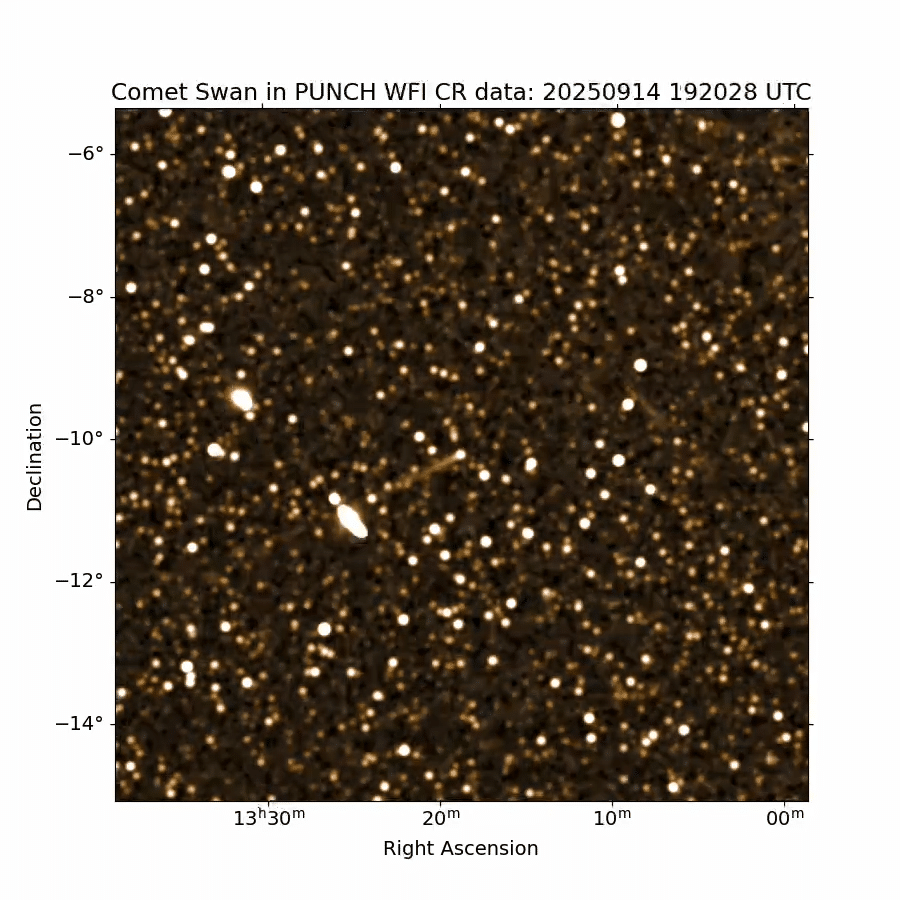
An Extraordinary Intersection: Comet SWAN Meets Interstellar Object 3I/ATLAS
Adding to the spectacle, the timelapse documented the fleeting presence of the interstellar traveler 3I/ATLAS. This rare visitor, which passed through our solar system recently, shared the same region of sky with Comet SWAN, appearing briefly as it zipped beneath the comet. This serendipitous encounter afforded astronomers a unique chance to observe an interstellar body alongside a comet within our solar neighborhood.
The appearance of 3I/ATLAS carries significance because such interstellar visitors are exceptionally scarce. Studying them during their passage through our solar system can yield invaluable insights into the broader cosmos beyond our stellar environment.
Advancing Space Weather Research
NASA’s groundbreaking timelapse of Comet SWAN advances the frontier of space weather science by illuminating how solar wind influences cometary structures. The mission’s findings will aid researchers in comprehending solar wind interactions that affect technologies and human activities both in space and on Earth.
“We use these same tools to track and analyze how space weather impacts our astronauts, our spacecraft, and our technology here on Earth,” DiBraccio explained.
Understanding comet responses to solar wind fluctuations offers critical clues for predicting the impacts of solar storms on Earth's communication networks, satellite operations, and electrical grids. This research holds important consequences for the safety and sustainability of human ventures into space and the reliability of terrestrial infrastructure.
- Categories:
- News




0 comments
Sign in to Comment