
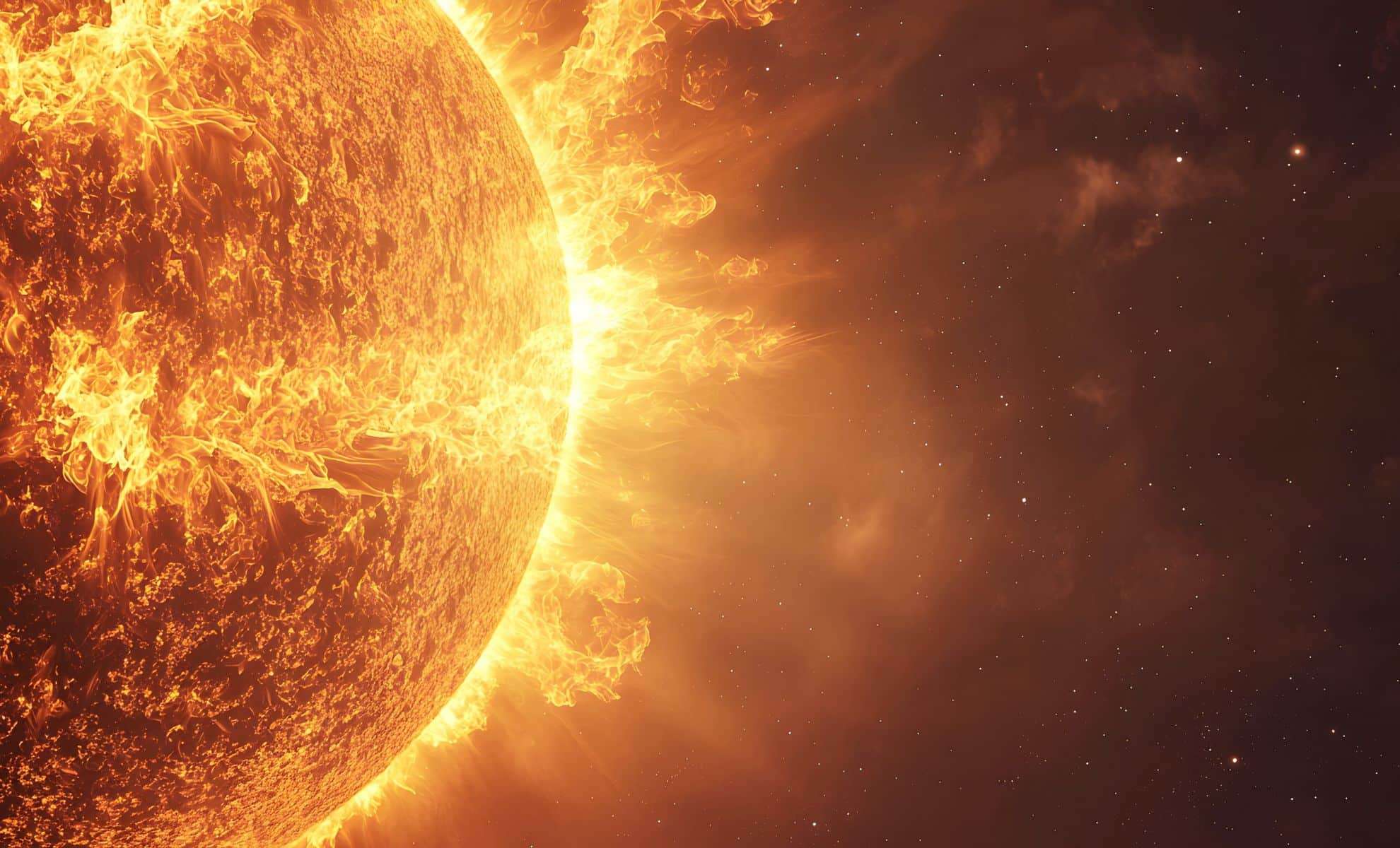
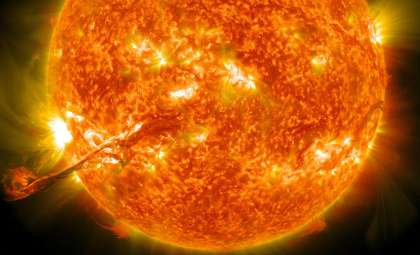
Following a nearly month-long lull, the Sun has unleashed a trio of substantial solar flares, indicating a surge in its activity levels. Over the course of a single weekend, three M-class flares erupted in close proximity, breaking a 22-day period of solar calm. These events, which originated from the sunspot group AR 4168, have grabbed the attention of space weather experts who are now closely tracking for potential coronal mass ejections (CMEs) that might reach Earth later this week. As reported by the space weather platform SolarHam, these were the first M-class flares since July 12, marking a sudden upswing in solar activity.
The trio of flares occurred between August 3 and 4, starting with an M2.9 flare at 10:01 AM EDT (1401 GMT) on August 3. Eventually, two more M-class flares followed: an M2 flare shortly after at 1:05 AM EDT (0505 GMT) on August 4, and an M1.4 flare within 16 minutes of that. These flares emerged from the rapidly evolving AR 4168 sunspot region, which saw its magnetic structure become more complex over the weekend. This growing solar dynamism has raised questions regarding the flares’ potential effects, as well as the possibility of subsequent CMEs impacting Earth's near-space environment.
Understanding Solar Flares and Their Importance
Solar flares are intense bursts of electromagnetic radiation released from the Sun’s atmosphere when magnetic energy near sunspots is abruptly discharged. These flares are categorized into five classes based on their intensity: A, B, C, M, and X. Each category signifies a tenfold increase in energy output compared to the previous one, with M-class flares considered moderate in strength. These solar events can interfere with radio signals and disrupt satellite operations. The more powerful X-class flares are capable of triggering widespread radio blackouts and damaging Earth-based electronic systems.

Because of their potential to impact Earth, solar flares are closely monitored. Although the recent flares, including the M2.9 event on August 3, have not yet caused major disturbances, conditions remain unpredictable. As solar activity rises, specialists are preparing for the possibility of stronger flares, particularly from sunspot AR 4168, which shows signs of magnetic instability.
The Significance of Sunspot AR 4168
Sunspot AR 4168 has become a major point of interest for solar scientists. Over the weekend, this region experienced rapid development, adopting a more intricate magnetic architecture. This heightened complexity can lead to stronger solar flares, including the possibility of X-class eruptions. As noted by Spaceweather.com, both AR 4168 and nearby AR 4167 now contain unstable “delta-class” magnetic fields, well-known for fueling powerful solar outbursts.
The Sun’s magnetic fields contribute to sunspot formation by concentrating magnetic energy. When these fields twist and interact, they can trigger energy releases manifested as solar flares. The growing complexity and instability of AR 4168’s magnetic topology make it a focal region for potential significant solar events.
Monitoring Potential Coronal Mass Ejections (CMEs)
With the recent flare activity escalating, space weather analysts are watching cautiously for coronal mass ejections (CMEs), which are enormous bursts of charged particles and magnetic plasma sent out into space. While no major disturbances have been definitively linked to these flares so far, the M2.9 flare might have launched a minor CME directed toward Earth. Space weather scientist Vincent Ledvina commented, “This now marks the second Earth-directed CME from this region with potentially more to follow.”
Predicting CME behavior is challenging, and their effects on Earth can vary in severity. Even if the initial CME connected to the M2.9 flare is weak, it could still impact Earth’s magnetosphere. Such an impact can disrupt satellite communications, navigation systems, and electrical grids. Experts continue to monitor these developments carefully as the Sun’s escalating activity could spawn further CMEs shortly.
Challenges in Space Weather Prediction
Effective forecasting of space weather is hindered by limited real-time observations and the scarcity of specialized monitoring satellites. Space weather forecaster Sara Housseal celebrated the end of the solar calm with, “Flare drought is over!” but emphasized that the recent flares might herald more active space weather days ahead, underscoring the complexities involved in accurately predicting these solar phenomena.
Forecasting depends on a mix of satellite instruments, terrestrial observatories, and simulation models. But with incomplete data, especially for subtle or slow-moving CMEs, forecasts can be uncertain. As solar activity intensifies, the demand for enhanced monitoring capabilities and refined predictive models continues to grow.
Implications for Earth and What to Expect
Although no immediate impacts have been reported, the flares and potentially resulting CMEs could influence Earth’s near-space environment in the near future. With AR 4168 remaining magnetically complex and active, solar activity is expected to persist. This raises concerns over possible interference with satellite signals, GPS navigation, and power distribution if stronger CMEs reach us.
Scientists are also anticipating possible auroras, which emerge when solar particles interact with Earth’s magnetic field. While current solar activity is unlikely to cause severe disruptions, it highlights the ongoing influence of the Sun and the need for continued vigilance against solar weather hazards.
Continuing Surveillance of AR 4168
Currently, AR 4168 stays under close observation by space weather researchers. Given its evolving magnetic complexity and the likelihood of stronger flares and CMEs, this sunspot region remains a hotbed of interest. Though recent flares have been moderate, the potential for more intense solar outbursts persists.
- Categories:
- News








0 comments
Sign in to Comment