
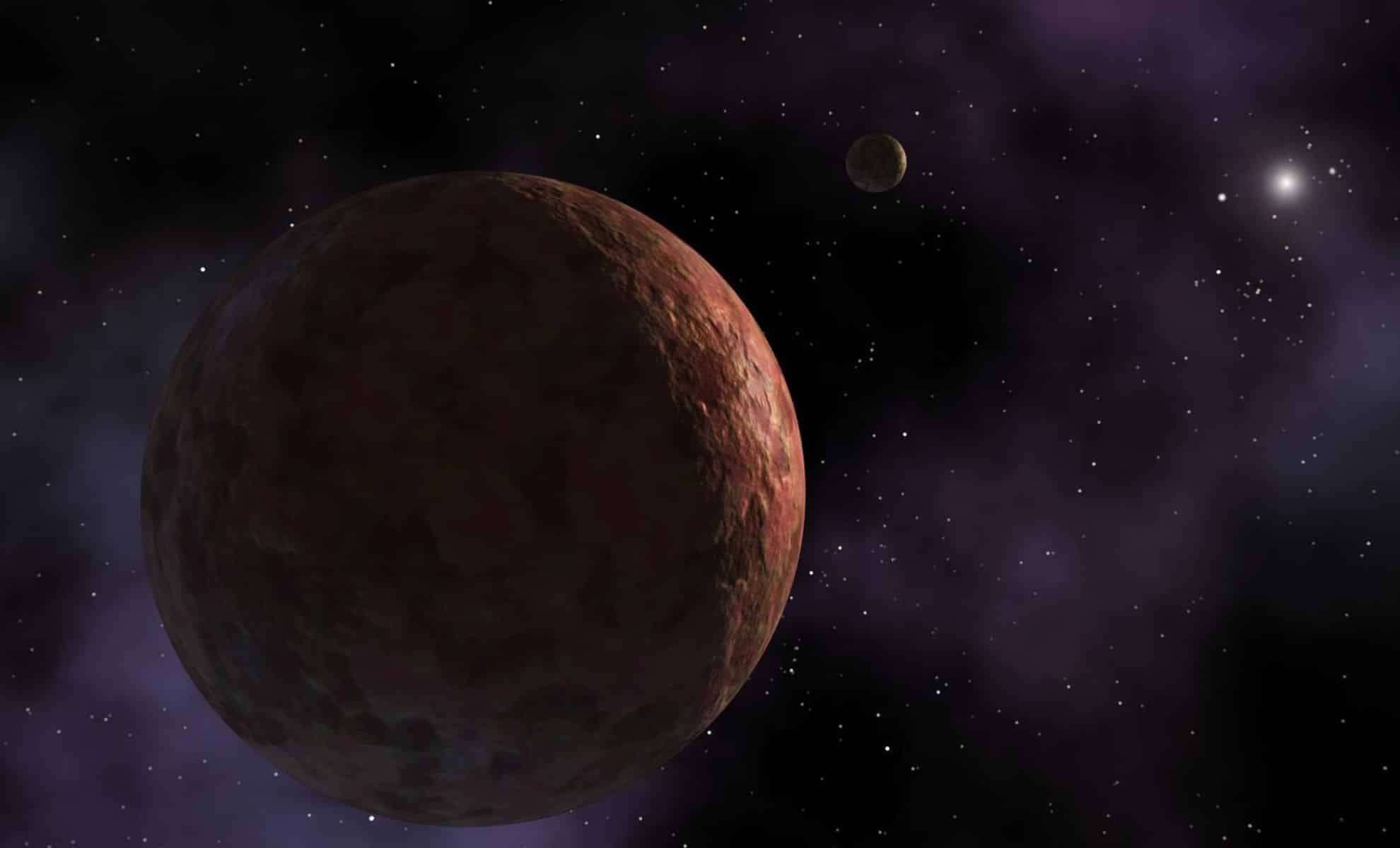
In a recent publication on the arXiv preprint platform, scientists introduced two cutting-edge propulsion methods that might allow humans to journey to Sedna, one of the most distant and intriguing objects in our solar system. Known for its unusual orbit and distinctive features, Sedna has captivated astronomers for years. The suggested propulsion technologies—direct fusion drive (DFD) and solar sails with thermal desorption—could bring a mission to this remote world into the realm of possibility. More information is available in the paper titled “Feasibility study of a mission to Sedna—Nuclear propulsion and advanced solar sailing concepts” (DOI: 10.48550/arxiv.2506.17732). This advancement paves the way for expanding exploration beyond the solar system’s familiar boundaries.
The Remote and Mysterious Sedna
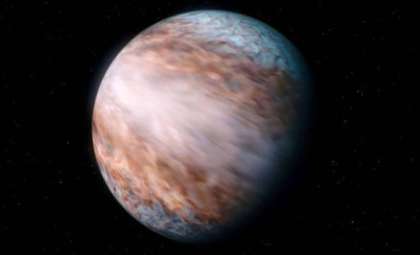
Located far beyond Pluto’s orbit in the outer solar system, Sedna is a reddish dwarf planet with an exceptionally long orbital period exceeding 11,000 years. Classified as a sednoid, this object follows a highly elliptical path extending well past Neptune, and it is considered the first identified member of the inner Oort Cloud. Studying Sedna’s composition and trajectory could offer valuable clues about the solar system’s early development and the gravitational influences that shaped it. Its markedly red surface indicates complex chemical processes, potentially shedding light on organic materials existing in the solar system’s farthest regions.
Despite its frigid temperatures, which never rise above −240°C, Sedna represents a unique destination for scientific discovery. Investigating its surface, atmosphere, and any possible satellites could greatly enhance our knowledge of the solar system’s outermost frontier.

New Propulsion Ideas for a Journey to Sedna
Reaching Sedna requires propulsion systems capable of traversing vast distances under challenging space conditions. The recent feasibility study highlights two promising options, each with specific benefits and limitations:
- Direct Fusion Drive (DFD): The DFD is a nuclear fusion-based propulsion engine designed to supply sustained thrust along with electric power for onboard instruments. Though still largely theoretical, this technology represents a significant advancement over existing methods. The suggested 1.6 MW design can maintain continuous propulsion and a high specific impulse, allowing a spacecraft to reach Sedna in roughly 10 years. Additionally, the DFD could enable orbital capture for detailed observations once the spacecraft arrives.
- Solar Sailing Enhanced by Thermal Desorption: This approach modifies traditional solar sail technology by incorporating thermal desorption, a process where atoms or molecules are ejected from a surface when heated, producing thrust. Employing gravity slingshots from Jupiter, this method could accelerate travel times to about 7 years. However, it supports only a high-speed flyby, not an orbit. Its main advantage is the space probe wouldn't carry heavy fuel, relying instead on solar energy and gravitational boosts from massive planets.
Balancing Speed and Mission Depth
The study emphasizes the key trade-off between speed and duration of study. The solar sail offers a quicker trip, reaching Sedna in 7 years, but limits the mission to a fleeting flyby. Conversely, the fusion drive requires about 10 years to arrive but provides the capability to enter orbit around Sedna, enabling extensive examination of its surface and environment. A flyby, while faster, provides only limited data, leaving much unexplored.
Each propulsion method has distinct advantages depending on mission goals. A speedy flyby could be appealing for initial reconnaissance, but for comprehensive scientific exploration, the fusion drive's potential for orbital study is compelling.
- Categories:
- News









0 comments
Sign in to Comment