
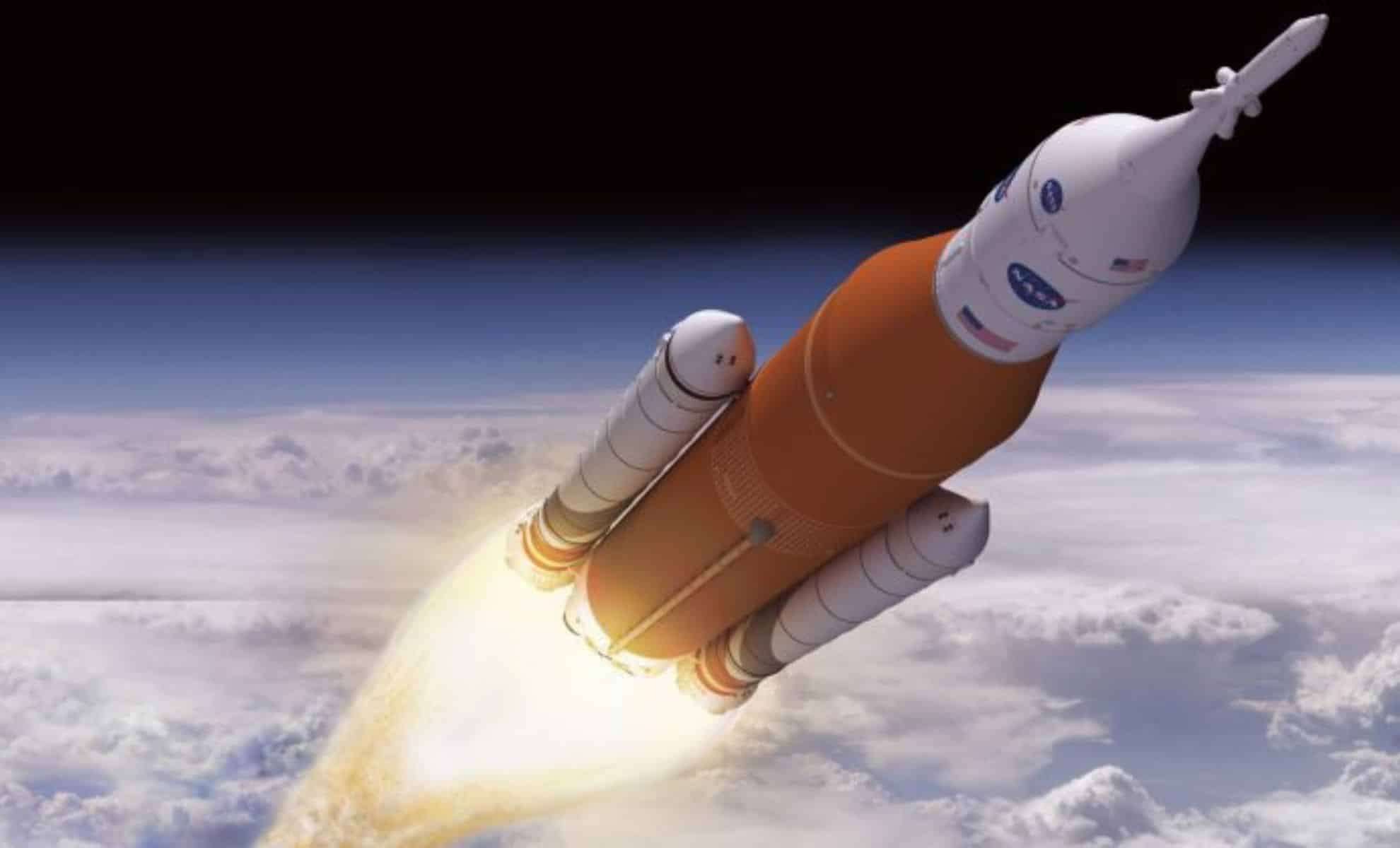
Dr. Charles Buhler, a seasoned NASA engineer associated with the Space Shuttle, ISS, and Hubble projects, claims his team has identified a novel force that could generate thrust without the need to expel propellant. This phenomenon, if confirmed, contradicts established physical laws and could transform the future of space exploration.
This potential development might enable spacecraft to propel themselves solely through electric field manipulation, removing reliance on traditional fuels. Despite the excitement, experts remain cautious due to the skepticism faced by prior unconventional propulsion attempts like the EmDrive, which failed to prove viable upon rigorous evaluation.
A Potential Paradigm Shift in Physics
Announced in 2023, the research originates from Exodus Propulsion Technologies, a firm co-established by Buhler, dedicated to exploring electrostatic propulsion methods. Unlike conventional engines that operate by combusting fuel to push spacecraft forward, their technique purportedly harnesses asymmetrical electric fields to produce thrust — a mechanism that does not fit within current theoretical frameworks.

In an interview with The Debrief, Buhler emphasized the significance of their findings: "The most important message to convey to the public is that a major discovery occurred. This discovery of a new force is fundamental in that electric fields alone can generate a sustainable force onto an object and allow center-of-mass translation of said object without expelling mass."
This breakthrough might herald a new era wherein spacecraft no longer require thrust-producing fuel, thereby streamlining their design and extending their mission capabilities.
The Quest for Reactionless Propulsion and Its Challenges
The pursuit of propulsion without exhaust has intrigued scientists for decades. The controversial EmDrive, proposed in 2001 by British innovator Roger Shawyer, claimed to generate thrust by trapping microwaves within an asymmetrical cavity, defying momentum conservation principles. While initial trials suggested minor thrust, subsequent rigorous studies have widely discredited these claims.
NASA’s Eagleworks team detected a faint force in 2016, but later investigations, such as the 2021 tests at Dresden University of Technology, were unable to reproduce the results, casting doubt on the device’s efficacy.
Buhler’s group recognizes these historical controversies but asserts their approach is fundamentally distinct and not just a repetition of past flawed concepts.
The Underlying Mechanism of the Newly Claimed Force
According to Buhler, their propulsion concept relies on generating an uneven electrostatic pressure distribution, which causes a net force capable of propelling an object. The team's experiments have reportedly achieved thrust sufficient to counterbalance Earth’s gravitational pull, a milestone unheard of for propellantless drives.
“Essentially, what we’ve discovered is that systems that contain an asymmetry in either electrostatic pressure or some kind of electrostatic divergent field can give a system of a center of mass a non-zero force component,” Buhler explained. “So, what that basically means is that there’s some underlying physics that can essentially place force on an object should those two constraints be met.”
This finding, if corroborated, could require revisiting foundational physics theories to accommodate new insights about force interactions in electrostatic environments.
Scientific Scrutiny and Calls for Independent Validation
The broader scientific field remains cautious about propulsion concepts that appear to contravene Newton’s Third Law of Motion, which mandates equal and opposite reactions for every action. Without thorough peer reviews and external tests, the consensus is likely to remain skeptical, viewing these claims as experimental artifacts.
Buhler concedes that further investigation is essential, stating, “It’s going to take a physicist much smarter than me to come up with all of that.” He welcomes independent verification efforts to confirm whether this "new force" represents a genuine scientific breakthrough or a misinterpretation of data.
- Categories:
- News







0 comments
Sign in to Comment