
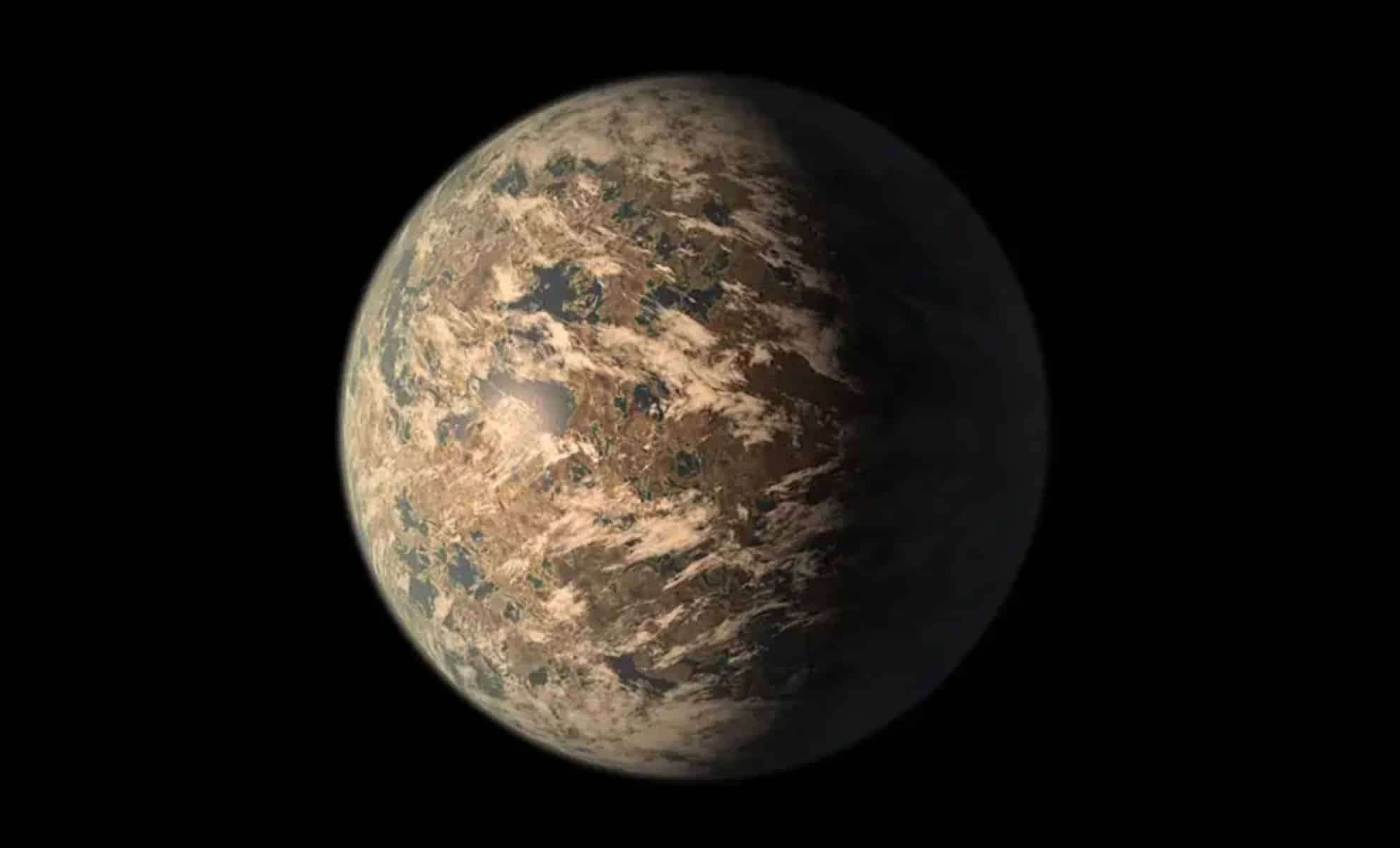
Exciting new research has revealed intriguing characteristics of the exoplanet TRAPPIST-1e, located approximately 40 light-years from Earth. Published in The Astrophysical Journal Letters in 2025, the study indicates this rocky, Earth-sized planet may possess conditions suitable for life. Observations made with the James Webb Space Telescope (JWST) detected subtle evidence of an atmosphere capable of supporting life.
TRAPPIST-1e’s Spot in the Habitable Zone
Orbiting within the habitable zone of its dim red dwarf star, TRAPPIST-1e occupies the so-called “Goldilocks zone,” where temperatures allow liquid water to persist. Positioned 40 light-years away, this location makes TRAPPIST-1e one of the most promising planets to study for potential habitability.
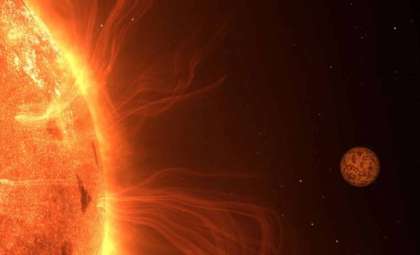
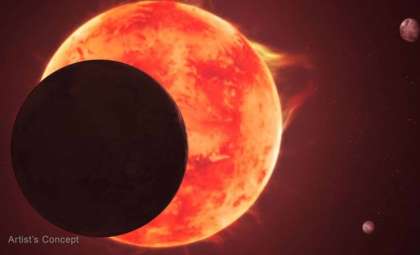
Unlike our Sun, a yellow dwarf, TRAPPIST-1 is a cooler and more volatile red dwarf, prone to solar flares that can jeopardize planetary atmospheres. Still, TRAPPIST-1e maintains a distance within its star’s habitable zone that may shield it from harmful radiation, increasing its chances of holding onto an atmosphere essential for liquid water and life.

Investigating the Presence of an Atmosphere
Planets in the habitable zone require atmospheres to moderate surface conditions and support life. After extensive searches around TRAPPIST-1’s planets, JWST observations have now provided hopeful hints.
In 2023, Ryan MacDonald and colleagues employed JWST to scrutinize the transits of TRAPPIST-1e, when the planet passes across its host star. This technique allows scientists to analyze starlight passing through the planet’s atmosphere to identify its composition.
MacDonald explained that the spectral data exhibited “bumps and wiggles,” signs that may indicate a nitrogen-rich atmosphere. Given Earth’s atmosphere consists of 78% nitrogen, such a composition is crucial in creating a life-supporting environment.
An Atmosphere Resembling Earth’s?
While the JWST findings are preliminary, researchers advise caution in interpreting the results. MacDonald notes that the data favors a nitrogen-dominant atmosphere with possible traces of methane. Methane’s presence is particularly intriguing, as it is often linked to biological activity on Earth. However, alternative scenarios remain plausible, including TRAPPIST-1e being a barren planet lacking an atmosphere.
The team aims to validate these early results, which MacDonald regards as the most encouraging among the TRAPPIST-1 system’s planets. To hone their conclusions and eliminate uncertainties, 15 further JWST observations are planned over the coming year.
Continuing Quest for Signs of Life
Future studies will focus on identifying the specific gases present in TRAPPIST-1e’s atmosphere. Astrophysicist Ana Glidden from MIT remarks, “We are still at the dawn of discovering the scientific capabilities of Webb.” Confirmation of a nitrogen-rich atmosphere would pave the way for searching more complex gases like methane and carbon dioxide, potential indicators of biological processes.
Glidden stresses that despite the excitement, much work remains before definitive conclusions can be drawn about the planet’s habitability. The current data mark just the beginning. “This is a new era of exploration,” she adds, “in which we can examine starlight filtering through Earth-sized planets 40 light-years away to learn about their environments and possibility for life.”
MIT astronomer Sara Seager also highlights the significance of these findings, emphasizing that they bring us closer to unraveling TRAPPIST-1e’s true nature. Though questions remain, the prospect of this planet supporting life stands as one of the most thrilling in astrobiology today.
- Categories:
- News




0 comments
Sign in to Comment