
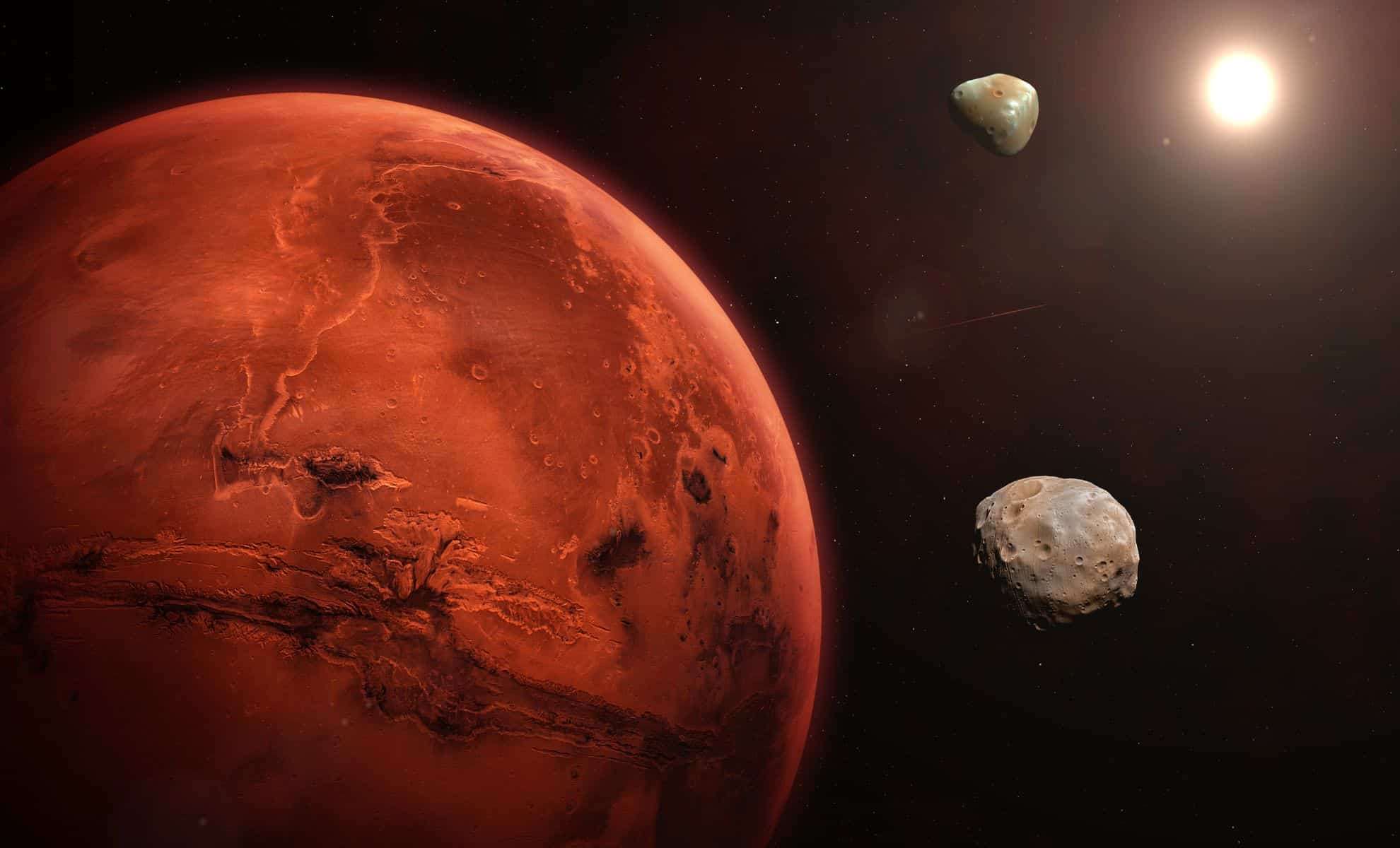
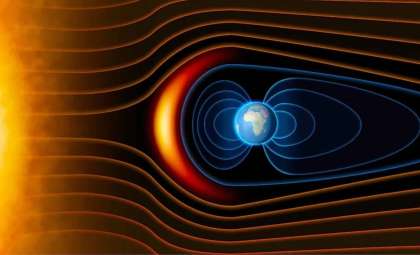
Recent findings from Harvard’s Paleomagnetics Laboratory reveal that Mars’ protective magnetic shield, or dynamo, may have remained active for hundreds of millions of years beyond earlier estimates.
This magnetic field, essential for blocking cosmic and solar radiation, is now believed to have persisted until roughly 3.9 billion years ago. The study, led by Sarah Steele and Professor Roger Fu, provides new insights into the planet’s early conditions, potentially extending the timeframe during which liquid water and possibly life could have existed.
Reassessing the Timeline of Mars’ Magnetism
Earlier studies posited that Mars’ dynamo shut down around 4.1 billion years ago, exposing the surface to damaging space weather. However, this new research, employing impact basin simulations, reevaluates this assumption. By examining the magnetic characteristics of large Martian craters, the team proposes that the faint magnetization observed in these craters likely corresponds to intervals of magnetic polarity reversals instead of the dynamo’s termination.

Roger Fu, a planetary scientist involved in the research, noted, “Planetary magnetic fields offer unique clues to the inner workings and early evolution of planets.” The prolonged magnetic activity suggests Mars’ atmosphere may have been better shielded and its environment more favorable for liquid water for a longer time, raising questions about the duration of its hospitable conditions and the implications for its geological and atmospheric history.
Martian Meteorites and Crater Magnetization Shed Light
A key component of the investigation involved studying the magnetic properties of Martian meteorites, including Allan Hills 84001. These space rocks, which originated from Mars’ ancient crust, show magnetic evidence indicating the dynamo’s activity extended into the late Noachian era, about 3.9 billion years ago. This supports previous conclusions while refining understanding of the magnetic field’s endurance through significant impact events that shaped Mars’ surface.
The researchers modeled the cooling and magnetic imprinting of such impact craters, finding that their formation coincides with the proposed extended dynamo lifespan. The crust’s magnetic minerals appear to record polarity changes, suggesting an active, fluctuating magnetic field during crater creation. Steele commented, “These craters most likely developed during phases of magnetic polarity shifts, not after the field had fully disappeared.” This challenges the notion of a sudden magnetic collapse, pointing to a more gradual decline.
What This Means for Mars’ Potential to Support Life
These revelations have major implications for Mars’ habitability timeline. If the dynamo lasted into the late Noachian period, the magnetic shield could have preserved an atmosphere conducive to stable water flows, creating environments suitable for microbial life. A longer-lasting field would have offered protection against harmful cosmic rays and solar winds, supporting conditions for liquid water on the surface.
Given that liquid water is fundamental for life, the revised timeline enhances the plausibility of prolonged habitable conditions on Mars. This aligns with recent findings from NASA’s Perseverance rover, which has uncovered traces of ancient rivers and lakes in the Jezero Crater, reinforcing evidence that Mars may have supported life-friendly environments over extended periods.
Looking Ahead: Exploring Mars’ Magnetic and Geological Past
The study underlines the importance of ongoing Mars exploration with an emphasis on magnetism and geology. Upcoming missions such as NASA’s Mars Sample Return plan to transport Martian rocks back to Earth for in-depth examination, advancing our knowledge of the planet’s magnetic field history. Understanding these changes is vital to comprehending planetary development and assessing life’s potential beyond Earth.
Scientists also highlight the value of targeted studies in areas like deep crater floors or volcanic sites where magnetic readings might reveal more about Mars’ interior dynamics. Fu stressed, “We’re gradually unraveling the story of Mars’ early environment, and every new discovery refines our picture of the solar system’s past.”
As research continues, this study marks a significant step toward decoding the conditions under which Mars might have first harbored life.
- Categories:
- Astronomy ,
- News







0 comments
Sign in to Comment