

For many years, the scientific community has debated the ultimate destiny of the cosmos, considering outcomes ranging from a heat death to the gradual extinction of astronomical bodies. A novel investigation conducted at Radboud University in the Netherlands is now challenging these long-standing views. Building upon Stephen Hawking’s 1974 insights into Hawking radiation, this research proposes that the universe may break down significantly earlier than earlier theories have suggested.
Published in Physical Review Letters, the paper by Heino Falcke, Michael Wondrak, and Walter van Suijlekom expands Hawking’s concept of particle radiation beyond just black holes and neutron stars. The team argues that a range of the universe’s most massive constituents could gradually shed their mass through this process. But rather than spanning billions of years, the researchers estimate the universe might unravel in roughly 10⁷⁸ years, significantly accelerating the anticipated timeline for cosmic disintegration.
Extending the Concept of Hawking Radiation
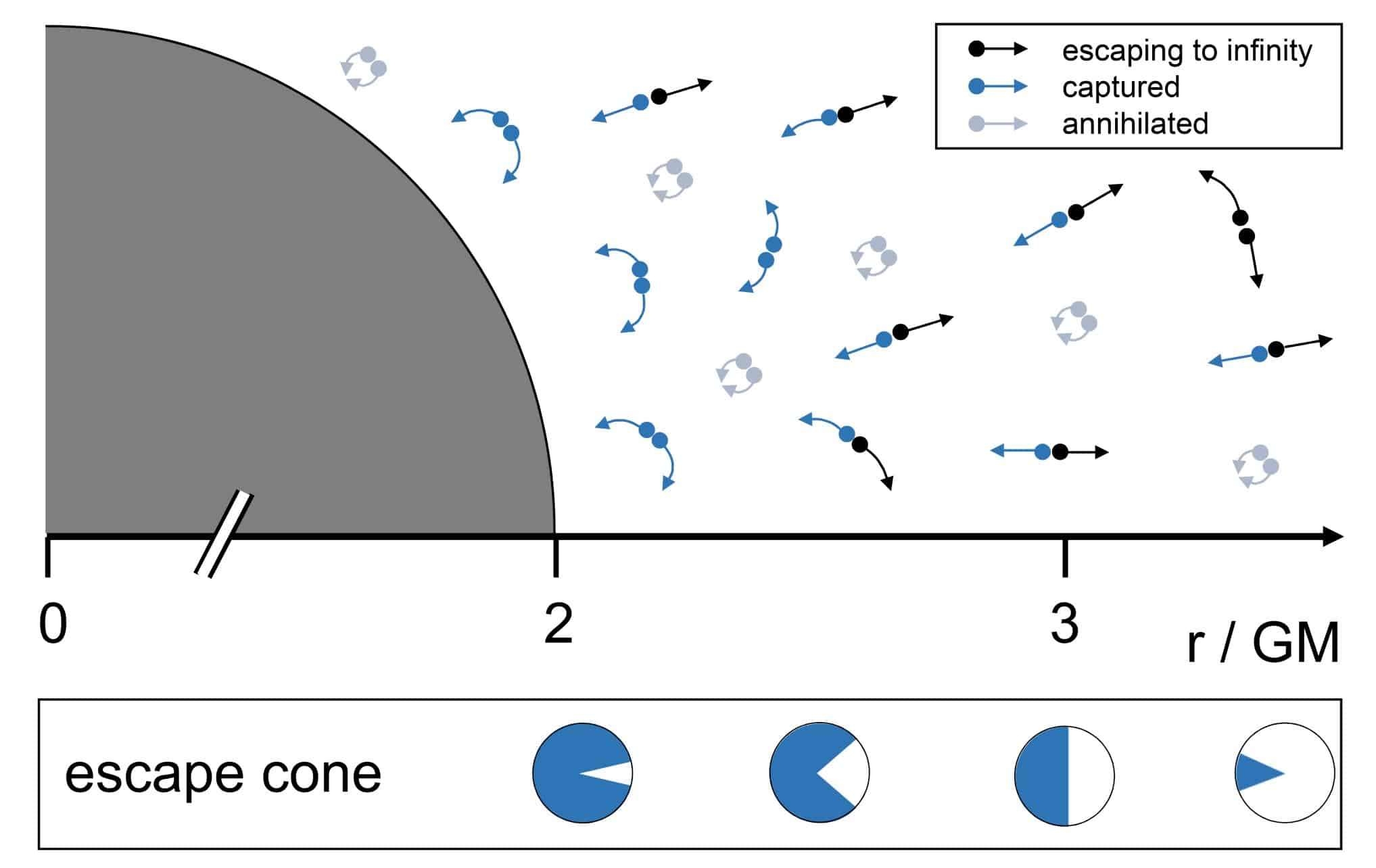
The investigation reexamines how the emission of Hawking radiation, known for causing black holes to diminish over time by releasing particles, could also affect other ultra-dense objects with intense gravitational forces. The authors applied these principles to entities like neutron stars, which are notable for their extraordinary density and immense gravitational fields.

The results showed that these stellar remnants experience evaporation processes akin to black holes, dispelling earlier assumptions that only black holes fade through such radiation. This implies that both neutron stars and black holes may decay within approximately 10⁶⁷ years, considerably earlier than the previously assumed longer lifespans for massive gravitational bodies.
Testing the Theory with Everyday Objects
The team also evaluated how their findings apply to everyday entities, such as the Moon and even humans. Their calculations suggest these lower gravity objects would disintegrate over an astonishing 10⁹⁰ years, highlighting the slow pace of this process in less dense bodies with weaker gravitational influence.
Despite these immense timescales, the authors caution that for humanity, earlier cosmic occurrences will likely dictate survival. Nevertheless, this work redefines our understanding of Hawking radiation’s role, prompting fresh questions about the cosmos and the forces that shape its eventual conclusion.
This innovative research opens new avenues for studying Hawking radiation, challenging established paradigms. As co-author Walter van Suijlekom remarks, “By posing such questions and examining extreme cases, we aim to better understand the theory and, perhaps one day, unravel the mystery of Hawking radiation.”
- Categories:
- Science







0 comments
Sign in to Comment