
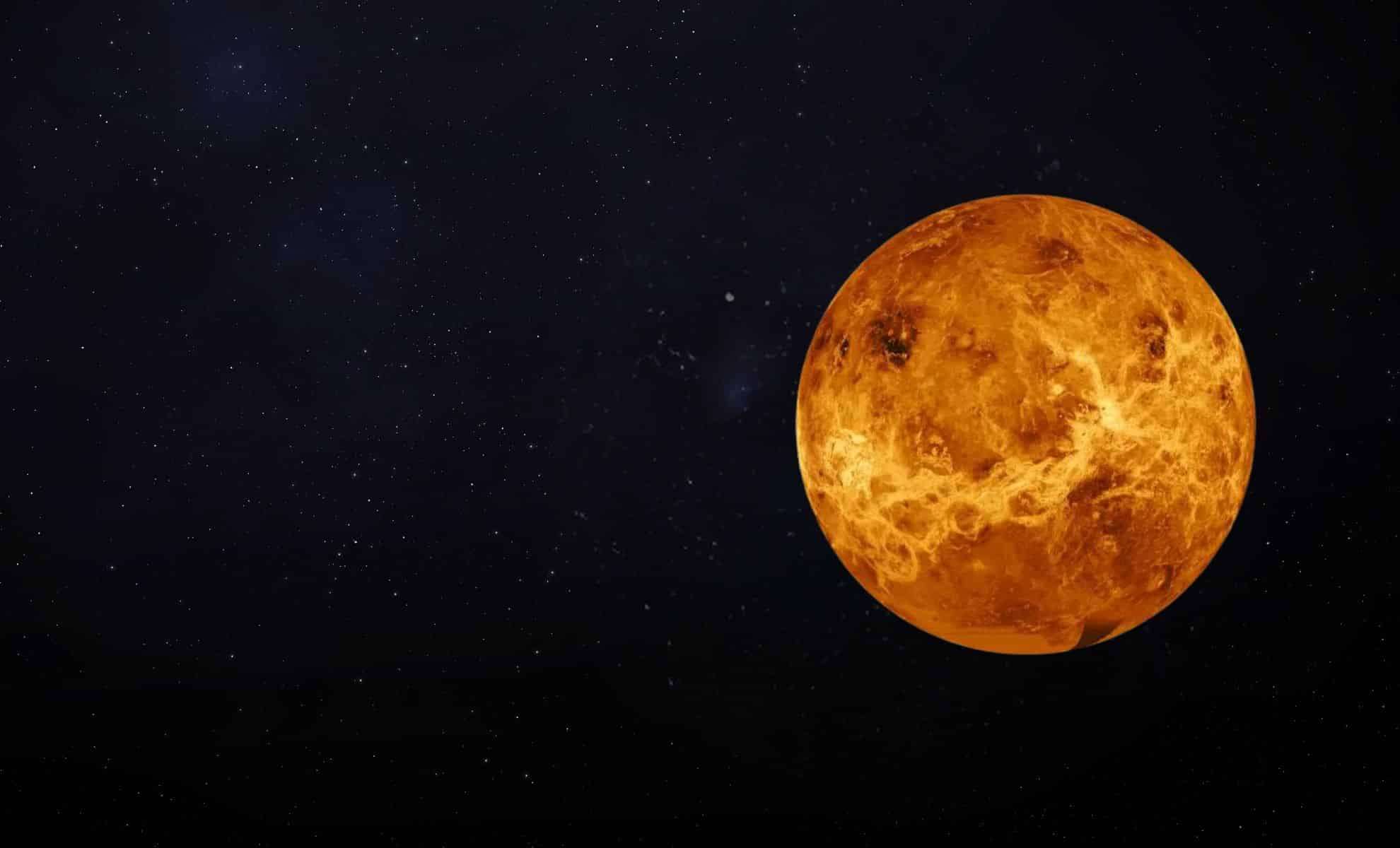
Venus, often called Earth’s sister planet due to its comparable size and composition, contains drastically less water—around 100,000 times less—than our home planet.
Decoding Venus’ Rapid Water Loss: What’s Draining Its Oceans?
Researchers from the University of Colorado Boulder employed advanced modeling techniques to investigate the peculiar water cycle on Venus and uncover the reasons behind its extreme dryness.
The simulations indicate that Venus is shedding nearly double the amount of water daily than previously estimated. This accelerated loss is driven by a process called “dissociative recombination,” where hydrogen atoms in the atmosphere gain enough energy to escape into space.

These computational studies present Venus as a vast natural chemistry experiment, emphasizing the complex chemical reactions swirling within its dynamic atmosphere.
Researchers have identified the ion HCO+—comprising hydrogen, carbon, and oxygen atoms and residing high in Venus’ atmosphere—as a key player in the planet’s ongoing loss of water.
Co-lead author Cangi explains that these findings help clarify why a planet once very similar to Earth now appears so inhospitable.
“Our goal is to determine the subtle changes that caused Earth and Venus to evolve into such dramatically different worlds.”
“Venus was not always a barren desert,” Cangi added.
HCO+ Ion’s Influence on Venus’ Water Depletion
Scientists propose that Venus originally held a water volume comparable to Earth’s during its formation. Yet, conditions shifted, and the planet’s atmosphere became dominated by thick carbon dioxide clouds, fueling the solar system's most intense greenhouse effect.
This caused surface temperatures to soar up to 900 °F, turning water into vapor that gradually escaped into space.
Understanding ancient water loss alone is insufficient—scientists aim to uncover the ongoing mechanisms driving Venus’s steady depletion of water.
Michael Chaffin, the study's co-lead and LASP research scientist, offers an analogy: “If I poured out my water bottle, some drops would remain. But on Venus, nearly every last drop vanished. Our research points to the elusive HCO+ molecule as the main agent behind this loss.”
When water vapor and carbon dioxide molecules interact in the upper atmosphere, HCO+ forms. Prior research suggests this ion also contributed significantly to Mars’s water loss.
Here’s the cycle on Venus: HCO+ forms constantly but doesn’t remain stable, as electrons collide with these ions causing them to break apart. This fragmentation releases hydrogen atoms that sometimes escape into space, progressively removing a vital ingredient for water.
Through their latest computations, scientists concluded that Venus’s extreme dryness can only be accounted for if the atmosphere contains much more HCO+ than formerly believed. Intriguingly, no direct detections of HCO+ near Venus have been made yet. According to Chaffin and Cangi, the necessary instruments to detect this ion have never been available.
“One of the surprising takeaways from our work is that HCO+ should rank among the most abundant ions in Venus’s atmosphere,” Chaffin stated.







0 comments
Sign in to Comment