
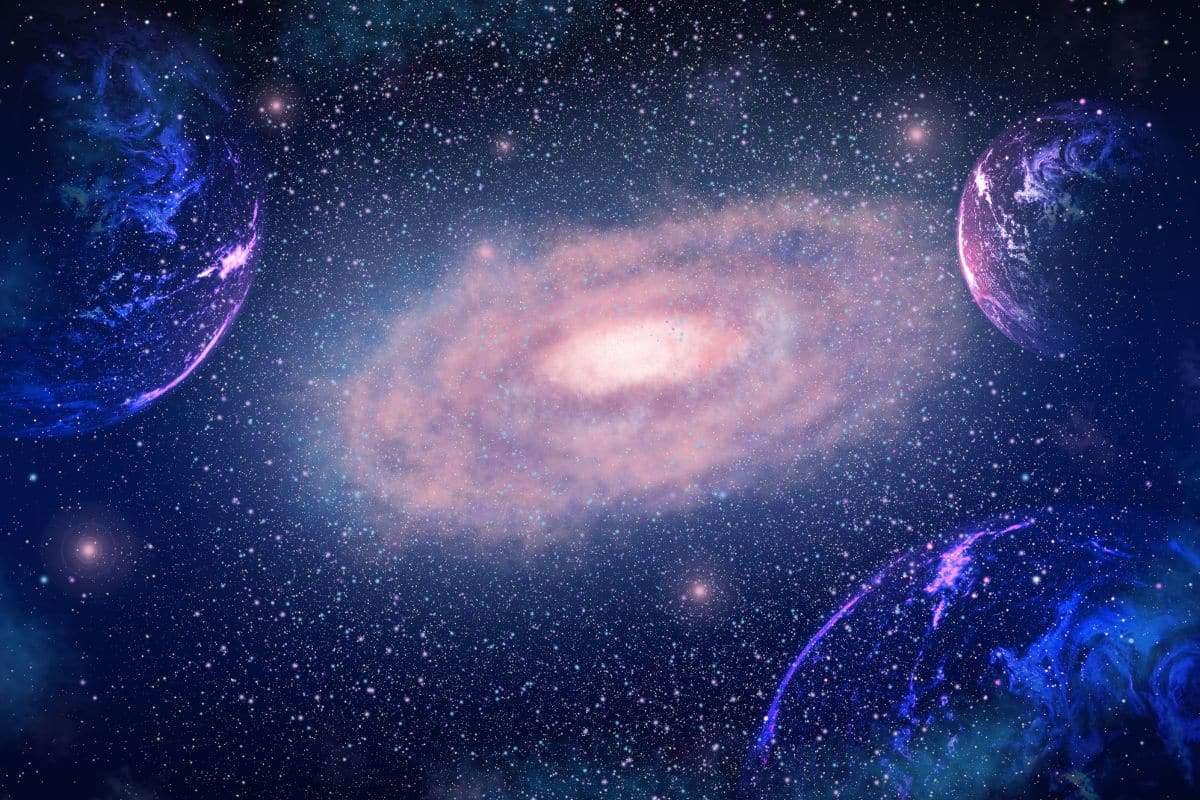
Water, essential for life as we know it, may have originated much sooner after the Big Bang than scientists previously believed. Recent findings indicate that water molecules could have come into existence between 100 and 200 million years post-Big Bang, offering new insights into the early universe’s evolution.
Origins of Water in the Cosmos
Water is made up of hydrogen and oxygen, elements that emerged at different periods. Hydrogen formed almost immediately after the Big Bang, along with helium and lithium, all of which were fundamental to the creation of the first stars and galaxies.
Oxygen, on the other hand, appeared later, produced in the cores of massive stars through nuclear fusion. When these stars ended their lives in dramatic supernova explosions, they expelled oxygen and other heavier elements into space. This spread of oxygen was crucial for water formation, but the timeline of when water began forming remained uncertain until now.

New Study Pushes Back Water’s Emergence
A research team led by Daniel Whalen at Portsmouth University, published in Nature Astronomy, explored how early supernovae may have contributed to water generation. Using advanced computer models, they simulated the explosive deaths of two types of stars:
- A star with a mass 13 times that of the Sun
- A much larger star, weighing 200 times the mass of the Sun
The simulations demonstrated that these supernovae released substantial oxygen that combined with existing hydrogen in space. As these elements cooled and interacted, they enabled water molecules to form far earlier than traditionally assumed.
Rapid Water Formation Revealed
According to the models, the smaller star’s supernova produced detectable amounts of water within 30 to 90 million years after the explosion. Remarkably, the larger star’s supernova accelerated this process, generating measurable water in just 3 million years.
This implies that water was present in the cosmos billions of years before Earth’s formation. If some of this water endured the turbulent conditions of early galaxy development, it could have been incorporated into nascent planetary systems.
Impact of Early Water on Planet Formation
A pressing question is whether this primordial water survived the harsh environment of the early universe. The birth of the first galaxies was characterized by intense radiation and gravitational chaos, factors that might have destroyed water molecules.
Nevertheless, if water endured these challenges, it may have been part of the earliest planetary systems—suggesting that the ingredients for life could have been available far earlier than scientists imagined. This reevaluation may change our understanding of how habitable worlds emerged across the universe.
These findings propose that water molecules formed much earlier in cosmic history than once thought and hint that life’s raw materials could have been widely accessible in the universe’s infancy.
- Categories:
- Science






0 comments
Sign in to Comment