
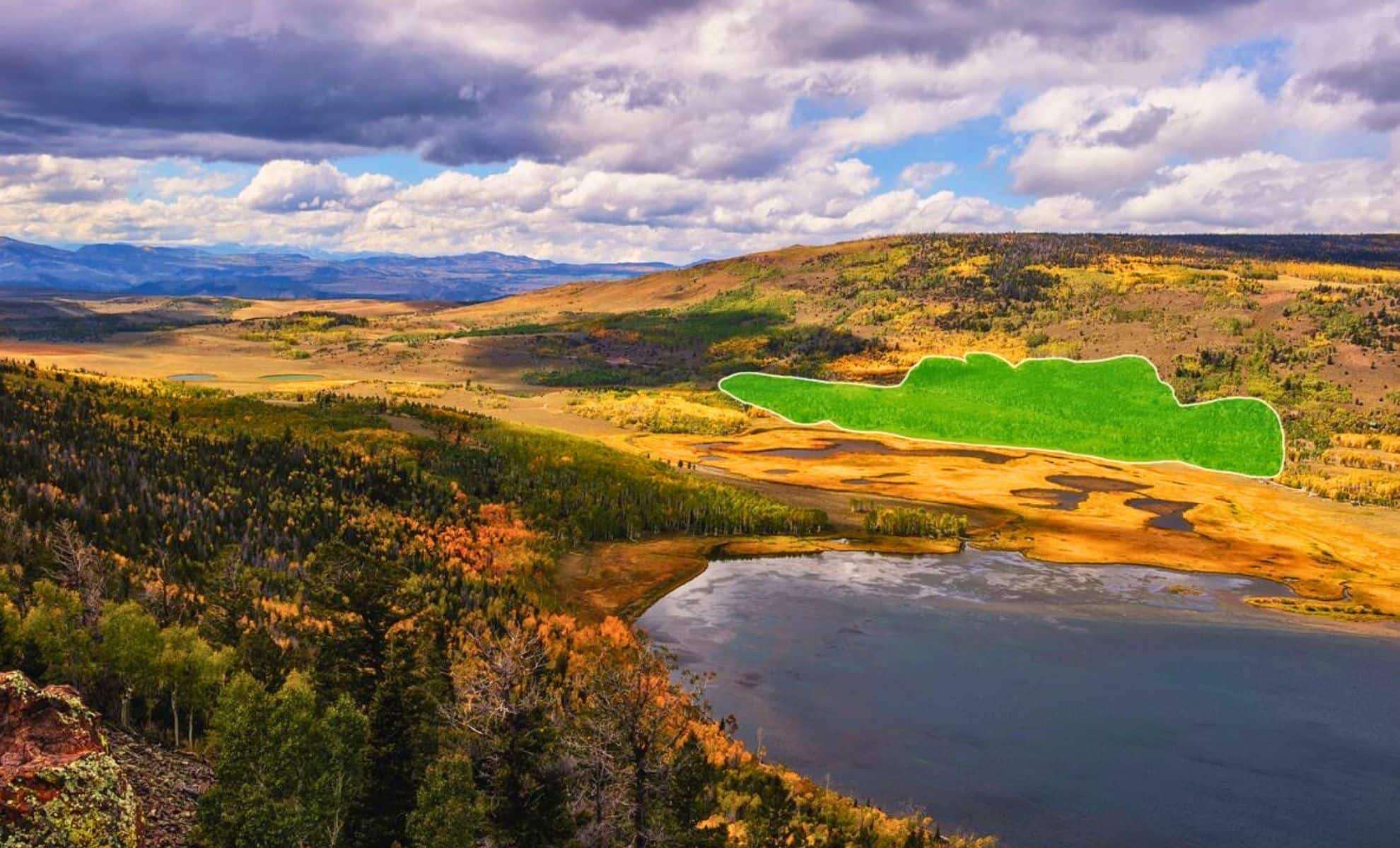
Deep within Utah’s Fishlake National Forest, an extraordinary giant exists—not as a towering peak or an expansive canyon, but as a seemingly ordinary cluster of trees. This is Pando, an enormous colony of quaking aspens that covers more than 106 acres. What’s astonishing is that this is not just a forest but the largest and possibly oldest living organism on the planet. Its true marvel lies not only in its immense scale but in its ability to survive through thousands of years.
The Everlasting Clone That Has Stood the Test of Time
Pando, whose name means “I spread” in Latin, is not a group of separate trees but a single connected organism. Nearly 50,000 trunks emerge from one vast shared root system underground. Scientists estimate its age to range between 16,000 and 80,000 years, surpassing the lifespan of most known human civilizations.
Though it may appear like an ordinary stand of trees, Pando is essentially a biological marvel, perpetually cloning itself to endure over time. Unlike typical trees that reproduce via seeds, it constantly sprouts new trunks from its roots, preserving its ancient genetic identity while enduring environmental changes.

A Hidden Genetic Wonder
For many years, researchers have been fascinated by Pando’s ability to persist. Recent investigations have revealed a wealth of genetic information in its roots, leaves, bark, and branches. Scientists discovered around 4,000 genetic mutations scattered throughout its extensive system—small adaptations accumulated over thousands of years. Despite these changes, Pando’s genetic composition remains remarkably consistent.
This stability has intrigued experts. How can a clone, which is essentially a genetic duplicate, persist and adapt over millennia without falling victim to typical genetic vulnerabilities? William Ratcliff, a prominent researcher studying Pando, suggests that its genetic variation might be more evenly spread throughout the organism than previously believed, providing resilience against environmental stresses.
Triploidy: The Genetic Edge Behind Pando’s Longevity
A key to Pando’s endurance is its triploidy—a rare genetic condition that gives it three sets of chromosomes. This characteristic may be central to its strength and longevity. Scientific studies indicate that triploidy contributes to greater cell size and durability, helping Pando withstand environmental challenges that have devastated other ecosystems.
Moreover, Pando’s unique structure serves as a protective advantage. Unlike a single tree that can be felled by disease or damage, the organism’s thousands of trunks reduce risk by distributing it throughout the colony. Even if some parts perish, the organism as a whole continues to flourish.
Protecting a Living Legend
Despite its ancient resilience, Pando faces growing threats. Human interference, grazing pressures from deer and elk populations, and climate change jeopardize this remarkable organism’s continued existence. Conservation efforts are intensifying to shield Pando from these dangers, highlighting its importance not only as a natural marvel but as a biological repository holding vital clues to evolution, cloning, and survival over deep time.
- Categories:
- News











0 comments
Sign in to Comment