
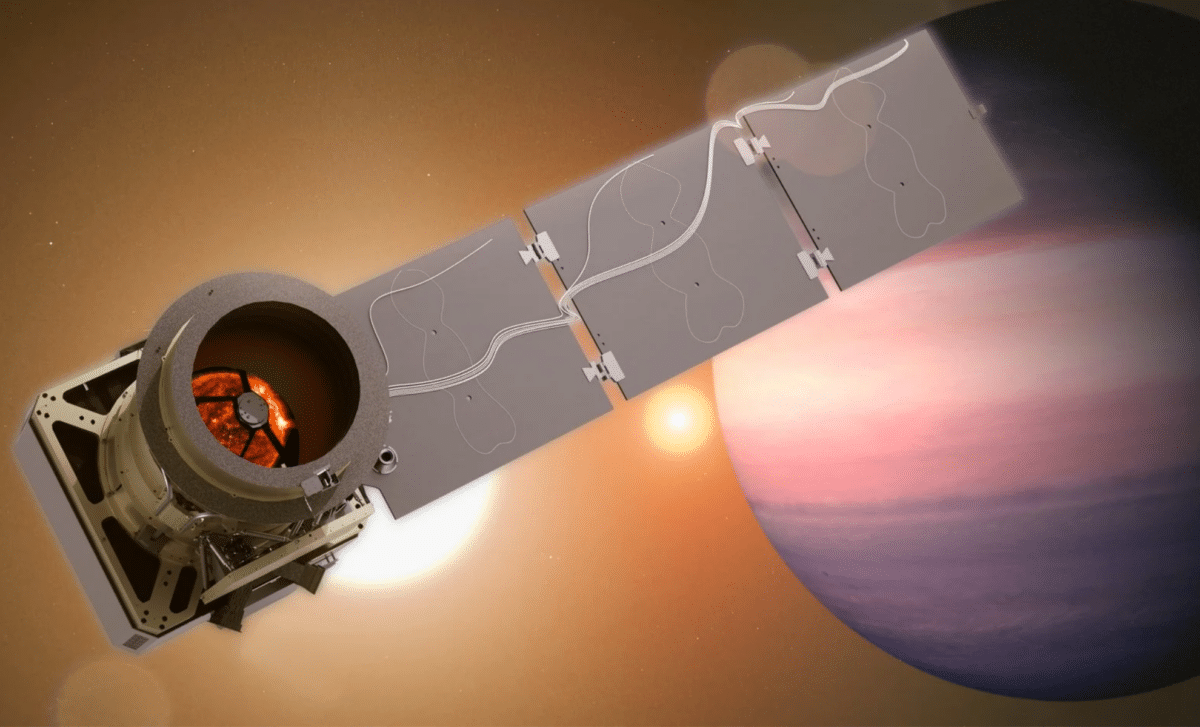
NASA’s Pandora exoplanet mission has provided its initial engineering visuals, heralding a groundbreaking advancement in exoplanet science. Launched earlier this year, Pandora showcases how compact, budget-friendly space projects can achieve precise measurements with sophisticated tools crafted to study far-off planets. While scientists anticipate more detailed data, these early images mark a pivotal milestone in decoding the secrets of planets beyond our solar system, a domain set to transform our cosmic perspective.
Exploring New Horizons: The Pandora Mission's Aim in Exoplanet Detection
Pandora, a component of NASA’s Astrophysics Pioneers Program, launched on January 11, 2026, from Vandenberg Space Force Base via a SpaceX Falcon 9 rocket. Unlike massive observatories, Pandora is an economical, small-scale mission dedicated to collecting vital information on exoplanets in both visible and near-infrared light. This initiative is a cooperative effort involving NASA, Lawrence Livermore National Laboratory (LLNL), Blue Canyon Technologies, Corning Incorporated, and other significant contributors.
Pandora’s main focus is to examine exoplanet atmospheres with remarkable precision. Equipped with two cutting-edge instruments—CODA, a Cassegrain telescope, and NIRDA, adapted from the James Webb Space Telescope—this mission will shed light on the makeup and dynamics of its target planets. According to Universe Today, Pandora will study 20 confirmed exoplanets, searching for crucial signs like water vapor and hydrogen that might suggest these worlds could support life.

As Pandora advances into its operational phase, its pioneering observations illustrate the significant scientific achievements small, cost-effective space missions can deliver. The early triumphs of Pandora highlight the promising future of affordable but impactful space exploration ventures.
Analyzing Pandora’s Maiden Images and Instrument Performance
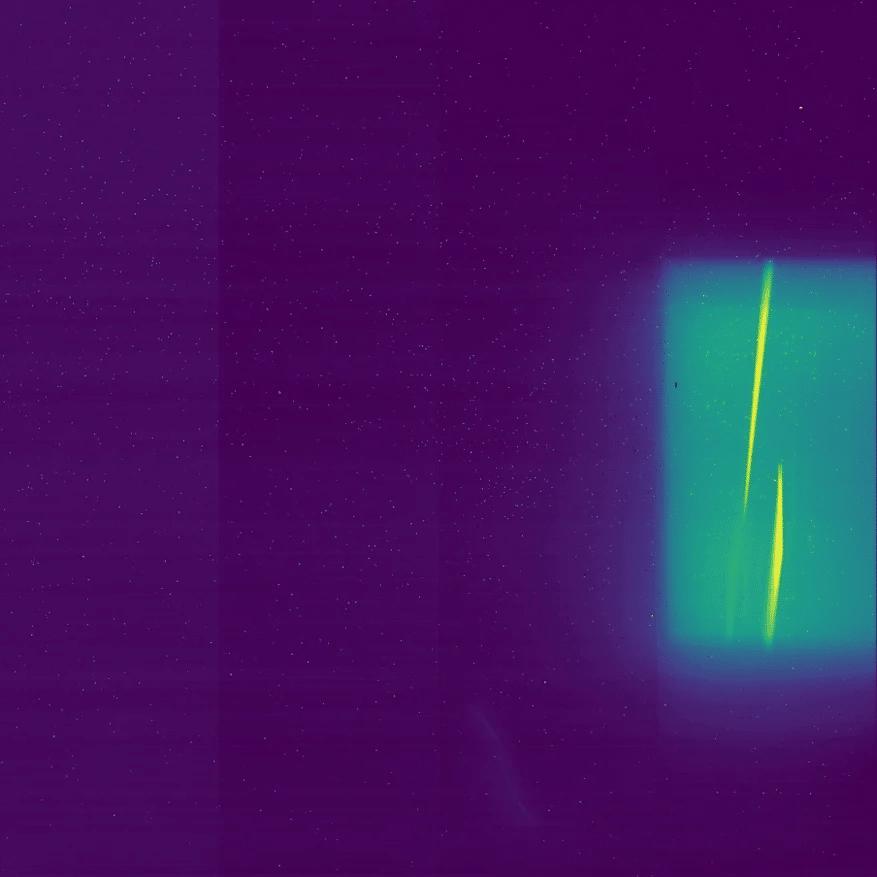
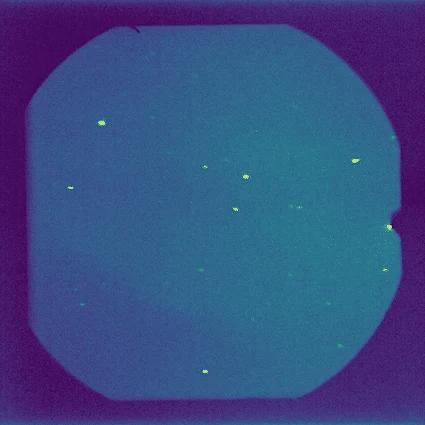
Released on January 19, 2026, the first engineering photos from Pandora offer impressive evidence of the spacecraft’s technical capabilities. Captured just eight days post-launch, these snapshots reveal the accuracy of Pandora’s instruments and its capability to maintain flawless focus on faraway exoplanets.
Among the first transmitted data was an image from NIRDA, showing light broken down into vertical lines—an essential test of the instrument’s effectiveness. The image’s sharpness indicates Pandora is functioning at peak performance despite the harsh conditions of space. Pandora’s technology detects both visible and infrared radiation, enabling scientists to spot even the faintest planetary signals.
“The team is exceptionally pleased with the system’s pointing stability,” says Jordan Karburn (LLNL), in a recent press release. “It was a driving factor that led to LLNL’s partnership with BCT to provide the spacecraft.”
This consistent stability is crucial for Pandora to observe exoplanets over lengthy durations without data distortion caused by motion or vibration, ensuring precise findings.
Furthermore, NIRDA’s cryogenic cooling system is performing reliably, maintaining a stable 110 Kelvin (-163º Celsius), which is vital for the infrared instruments to deliver dependable scientific results.
Looking Ahead: The Impact of Pandora’s Data on Exoplanetary Studies
Pandora is poised to revolutionize exoplanet research by moving beyond mere detection to detailed atmospheric characterization. The mission will revisit 20 confirmed transiting exoplanets, aiming to collect 10 transit observations per planet. This approach will enable detailed analysis of the variation in planetary light, providing richer information on their composition and atmospheric processes.
Its ability to simultaneously monitor visible and infrared wavelengths helps distinguish real exoplanet signals from stellar activity artifacts like starspots, advancing the accuracy of observations. Such progress could lead to discovering new exoplanets with atmospheres resembling Earth’s.
Operating in a Sun-synchronous orbit, Pandora can maintain uninterrupted focus on its targets without solar interference. This steady orbit offers sub-millimeter pointing precision during the spacecraft’s 97-minute orbit around Earth.
The high-quality data gathered will assist scientists in refining models concerning exoplanet variability and transit timing, enhancing knowledge about planetary systems throughout the galaxy.
- Categories:
- News








0 comments
Sign in to Comment