
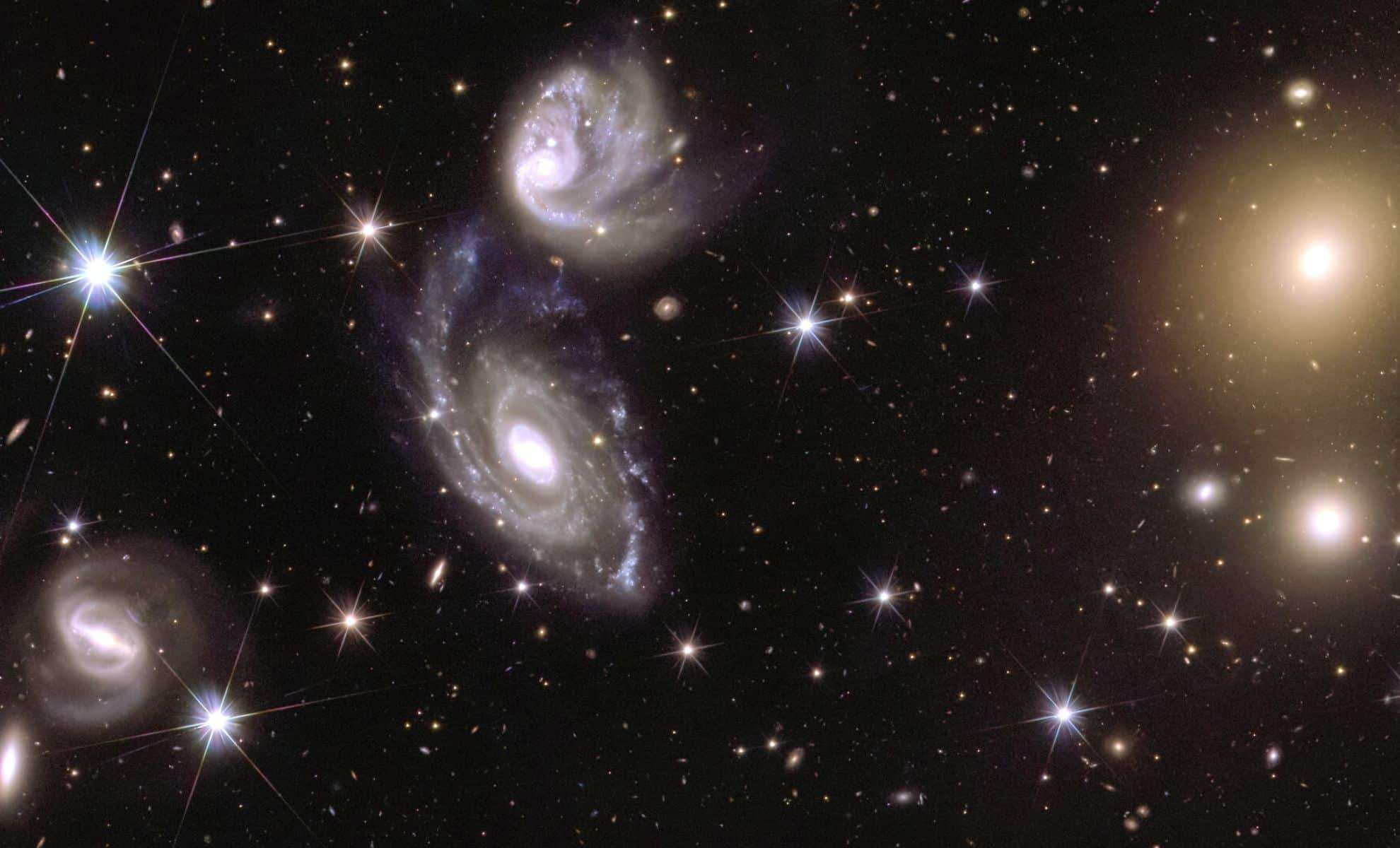
The European Space Agency’s Euclid Space Telescope has delivered its first impressive images, marking a milestone in its quest to map the universe in three dimensions like never before.
Unveiled on October 15, 2024, these breathtaking visuals reveal an extensive tapestry of stars and distant galaxies, providing valuable clues toward understanding the elusive dark matter and dark energy that dominate the cosmos.
An Immense 208-Gigapixel Cosmic Panorama
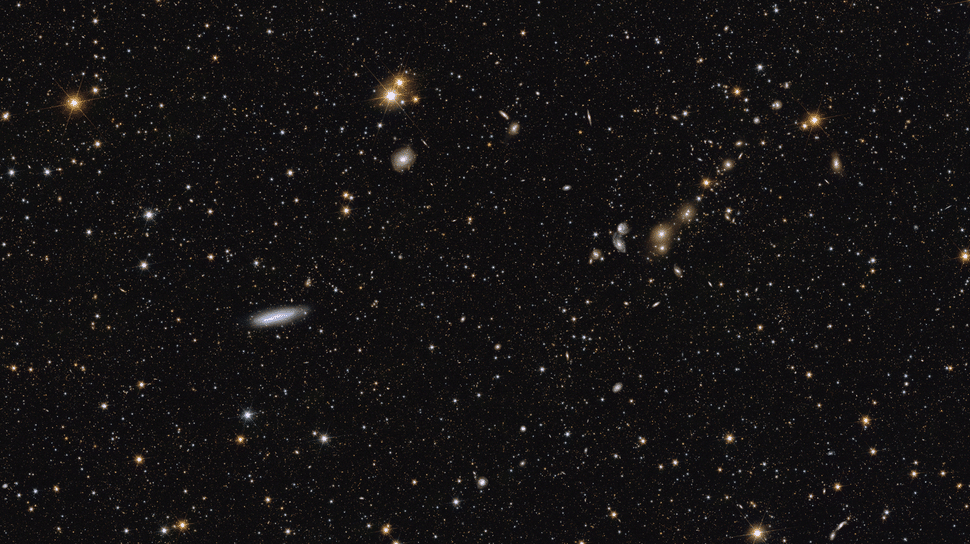
The initial image release from Euclid comprises a 208-gigapixel mosaic, compiled from data collected over a two-week observation window between March 25 and April 8, 2024. Described by the ESA as merely the beginning of a vast cosmic puzzle, this mosaic captures just around 1% of the total sky area Euclid aims to survey throughout its planned six-year mission. Even so, it is an extraordinary achievement, showcasing nearby Milky Way stars alongside over 14 million far-flung galaxies.

“This remarkable image offers a first glimpse into a map that will, over six years, chart more than a third of the sky,” said Valeria Pettorino, Euclid Project Scientist at ESA. “Although it represents just 1% of the ultimate coverage, it already holds diverse astronomical sources that will unlock new ways to characterize our universe.”
The observed section spans roughly 132 square degrees of the Southern Sky, an area over 500 times larger than the full Moon’s apparent size. By mission’s end, Euclid will have created a 3D map revealing galaxies situated as far as 10 billion light-years away.
Probing the Universe’s Dark Components
Euclid’s main objective centers on shedding light on fundamental cosmological mysteries, particularly concerning dark matter and dark energy, which together constitute approximately 95% of all cosmic matter. It employs a 600-megapixel camera combined with a near-infrared spectrometer to measure redshift, an essential parameter determining galaxy distances and their speeds as they move away from Earth. These measurements will help trace the universe’s expansion history and reveal how dark energy drives its acceleration.
“Euclid offers a novel window on the cosmos and will perform an extensive census of galaxies,” noted Luz Ángela García Peñaloza, cosmologist at Universidad ECCI in Colombia. “Every detailed image depicting galaxy distribution enriches our understanding of the universe’s mysterious dark components.”
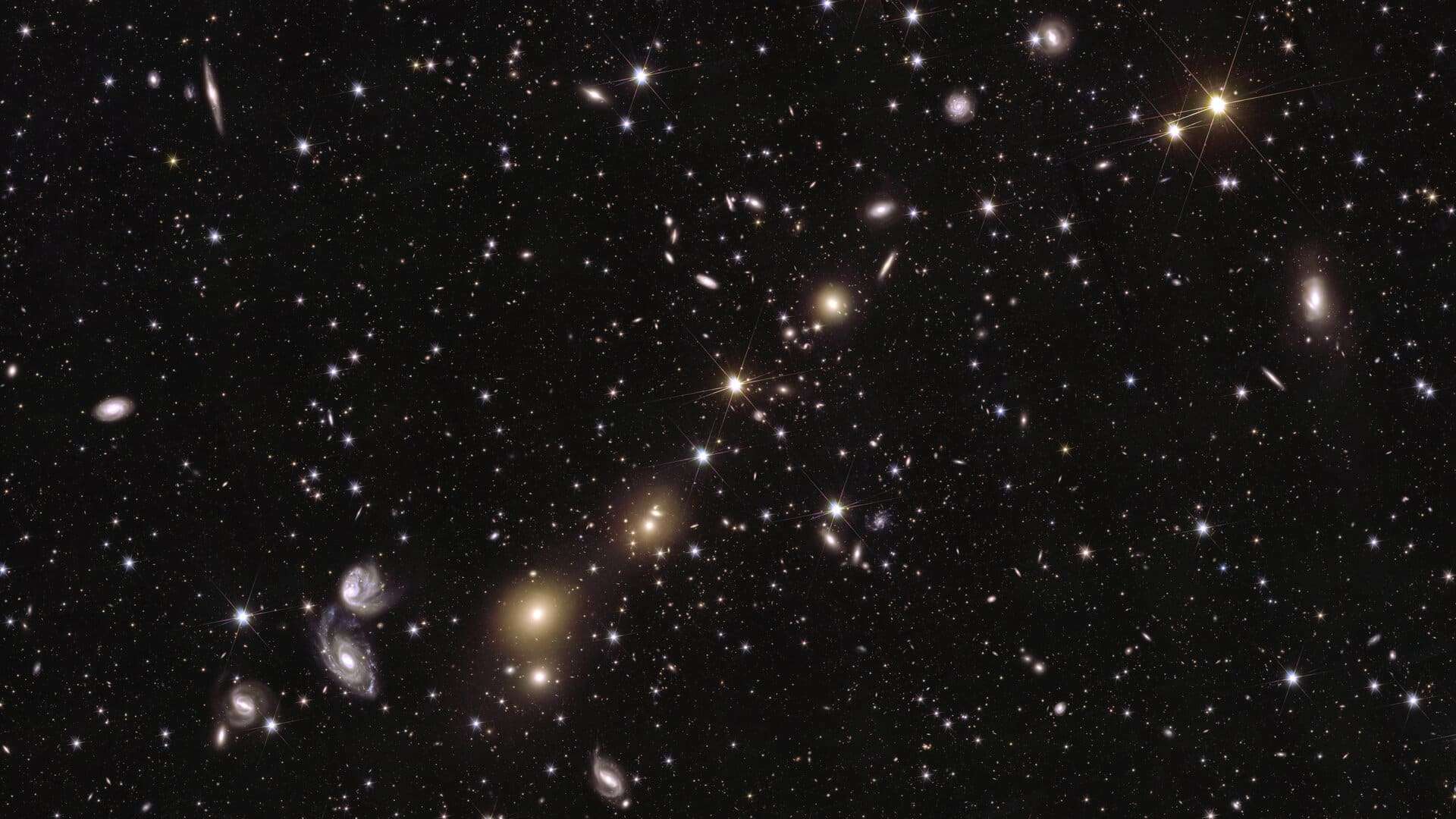
A particularly striking trait of the released images is their detailed depiction of individual galaxies and clusters. For example, the core of the Abell 3381 galaxy cluster, located 678 million light-years distant, is captured in remarkable clarity, enabling researchers to investigate intricate galactic features.
Revealing Galactic Cirrus Clouds
Among the notable discoveries is the visualization of galactic cirrus—delicate, faint clouds of gas and dust appearing as soft blue streaks amid Milky Way stars. These structures, reminiscent of Earth’s cirrus clouds, reflect starlight and emit brightly in infrared wavelengths. Euclid’s sensitivity across visible and infrared bands makes it uniquely capable of imaging such subtle features.
The telescope’s remarkable resolution allows scientists to zoom deeply into selected regions. One captured spiral galaxy, about 420 million light-years away, can be magnified up to 600 times, revealing its complex internal structure in exquisite detail.
What Lies Ahead for Euclid
These first images provide only a preview of Euclid’s immense potential. The first comprehensive set of cosmology data will be made available to researchers in 2026. Ahead of that, in March 2025, a 53-square-degree portion of the survey will be released, including insights into the Euclid Deep Field regions, offering even richer datasets.
As the mission advances, Euclid is poised to deepen our comprehension of cosmic architecture, its evolution, and the role of dark matter and dark energy. “This milestone marks just the beginning,” said García Peñaloza. “Exciting discoveries lie ahead, and Euclid will undoubtedly illuminate many enduring mystery’s of the universe.”
- Categories:
- Astronomy ,
- News







0 comments
Sign in to Comment