

Mars continues to intrigue both researchers and space aficionados, yet the formidable challenge remains: how to guarantee astronaut survival amid its extreme conditions. One of the key hurdles is finding a dependable water supply, critical for drinking, oxygen production, agriculture, and fuel generation.
A new study offers promising prospects. Led by planetary geologist Erica Luzzi from the University of Mississippi, scientists have located a site on Mars where ice deposits exist just below the surface.
Seeking Water on the Red Planet
Water is indispensable for life support. Any future Martian base will require much more than portable water containers. It must supply essential needs such as hydration, agriculture, and propellant production. Transporting all this water from Earth would be prohibitively costly and unfeasible. Hence, researchers emphasize finding indigenous water sources, a strategy known as in situ resource utilization (ISRU).

While Mars harbors immense ice reserves at its poles, these zones present challenges like extreme cold and limited sunlight, hindering solar energy reliance. Alternatively, mid-latitude regions provide a more moderate climate with suitable temperatures and sunlight levels conducive to human settlements.
Amazonis Planitia: A Promising Habitat
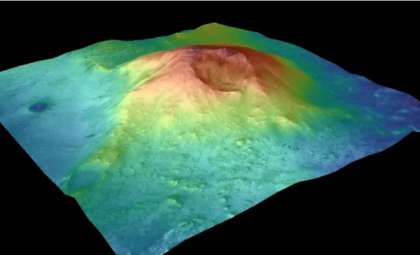
Luzzi’s team focused on Amazonis Planitia, a vast volcanic plain in Mars’ middle latitudes. Utilizing ultra-detailed images from NASA’s Mars Reconnaissance Orbiter, they identified key signs including bright crater rims, polygonal fractures, and subtle surface textures, all signaling subsurface ice. This ice lies within one meter of the surface, accessible to future astronauts or robotic drills.
This location is particularly enticing because it strikes an ideal balance between adequate sunlight and cold enough conditions to preserve ice. As Luzzi notes, “The mid-latitudes offer the perfect compromise – they get enough sunlight for power, but they’re still cold enough to preserve ice near the surface.”
Implications of Martian Ice Discoveries
Detecting ice so close to the surface carries significance beyond human missions. It may unlock clues about Mars’ environmental history and habitability potential. On Earth, ice preserves ancient biological remnants and can sustain microbial life in extreme settings.
Should Martian ice hold similar signatures, it could reveal whether life once existed. Luzzi’s team proposes that ice in Amazonis Planitia might encapsulate gases or organic compounds shielded from surface radiation for millions of years.
Future Mars Exploration Plans
Although the shallow ice find is a compelling advance, further studies need to verify its extent and ease of extraction. Upcoming missions armed with radar technology will assess ice thickness and distribution. Instruments like SHARAD aboard the Mars Reconnaissance Orbiter and the forthcoming Mars Ice Mapper, a joint effort of NASA and the European Space Agency, will play crucial roles in evaluating this area’s resource potential.
Subsequent steps will involve deploying rovers or landers equipped with drills and spectrometers to conduct on-site ice analysis. Giacomo Nodjoumi of the Italian Space Agency emphasizes, “We will never be sure of something if we don’t have a rover, a lander, or a human to take real measurements. Until we go there and measure it, we won’t be 100% sure.”
While crewed Mars missions remain at least a decade away, these ongoing discoveries steadily advance the vision of establishing human footholds on the Red Planet.
- Categories:
- News











0 comments
Sign in to Comment