
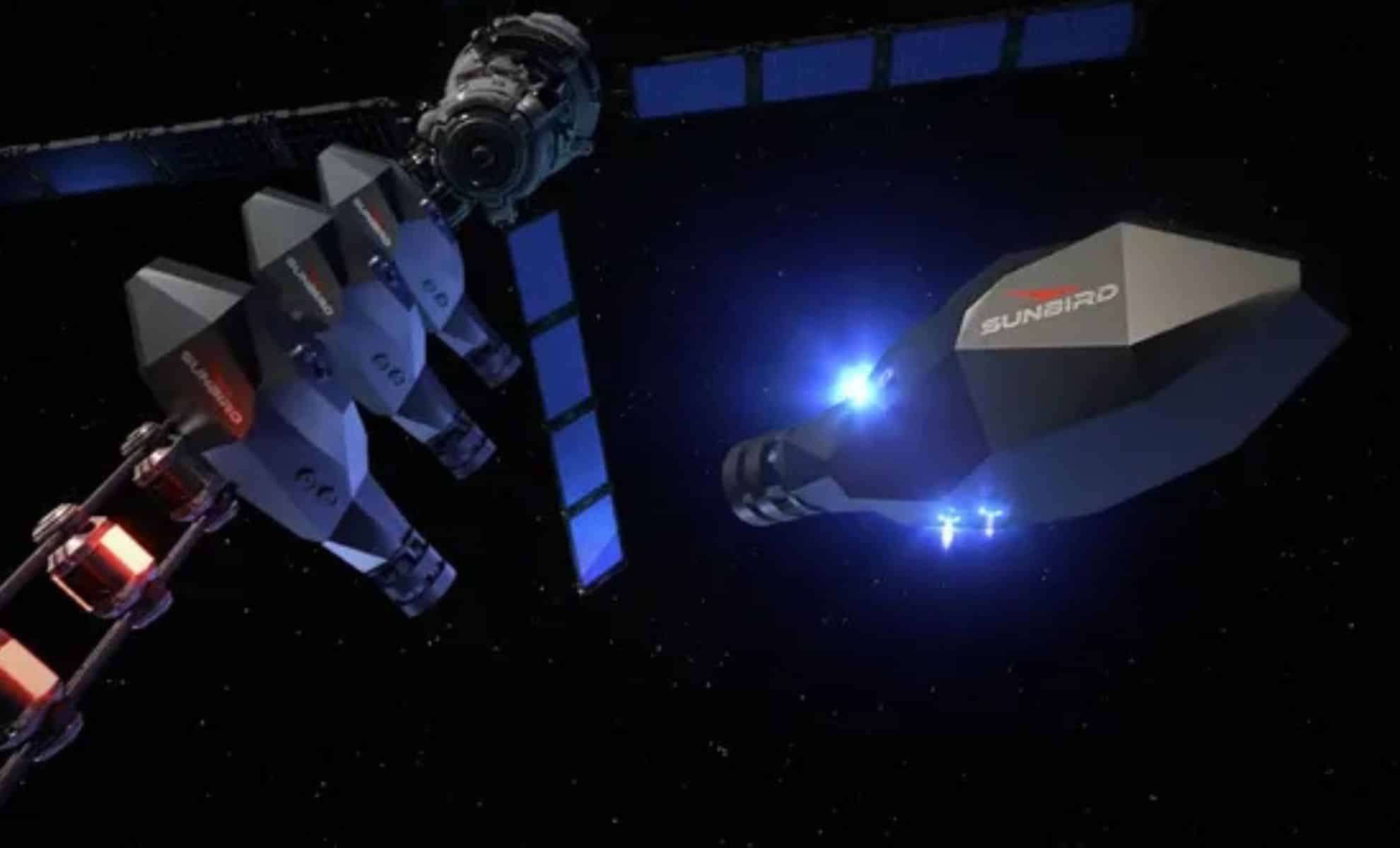
A UK-based startup operating in relative secrecy has revealed plans for a groundbreaking propulsion technology that seems like something from a sci-fi novel. Pulsar Fusion has introduced its ambitious project, Sunbird, a rocket powered by nuclear fusion designed to drastically reduce travel durations throughout our solar system, potentially transforming the future of space exploration.
First publicly disclosed in March 2025, the design is daring and the claims quite extraordinary. Although it will take years before launch-ready versions exist, the space community is eagerly watching this innovation unfold.
From Secret Development to Public Reveal
After over a decade of confidential progress, the Sunbird project was unveiled on March 6 and presented publicly shortly after at London’s Space-Comm Expo. Pulsar Fusion’s founder and CEO, Richard Dinan, explained that the goal is to build reusable “space tugs” that employ nuclear fusion propulsion to transport spacecraft between low Earth orbit and far-reaching destinations such as the Moon, Mars, or even Pluto, at speeds far beyond those of traditional rockets.

The propulsion mechanism is based on a Direct Fusion Drive (DDFD), which leverages the fusion of deuterium and helium-3—two hydrogen isotopes—to produce charged particles directly used for thrust instead of relying on chemical fuels.
Dinan emphasized, “For humanity to become an interplanetary species, achieving extremely high exhaust velocities is crucial, and fusion represents the pinnacle of what’s theoretically possible.”
A Novel Fusion Reactor Tailored for Space
While terrestrial fusion energy remains decades away from widespread application, Dinan asserts that space conditions might actually facilitate its development. Pulsar Fusion’s linear reactor design could function effectively within the vacuum and cold temperatures of space, sidestepping many challenges faced by conventional tokamak reactors which require strong magnetic fields and precise heat management.
Unlike Earth-based fusion that commonly uses deuterium-tritium reactions producing neutrons, the DDFD employs helium-3, a scarce isotope that emits protons, enabling more efficient conversion of fusion energy into directed thrust.
Obtaining helium-3 on Earth is costly due to its rarity. In future iterations, Sunbird might source helium-3 extracted from lunar deposits; however, initial prototype testing will utilize inert gases to simulate operational conditions.
The Potential Impact of Sunbird
If realized, Sunbird could halve the journey time to Mars and shorten travel to Pluto from nearly a decade to just four years. The fusion engine is designed to dock with current spacecraft already in orbit, acting like a towboat to propel them beyond Earth’s gravity well without massive launch vehicles.
A visionary concept accompanying this technology is the creation of orbital refueling hubs scattered across the solar system. These stations would enable fusion-powered tugs to travel back and forth efficiently, enabling quicker returns to Earth and significantly lowering mission costs.
Each Sunbird vehicle is expected to measure approximately 100 feet (30 meters) in length, fortified against space radiation and micrometeoroid collisions. Its distinctive, almost "extraterrestrial" appearance, as Dinan puts it, arises from pragmatic design considerations but is visually striking.
Expert Reservations and Upcoming Tests
Despite the enthusiasm, skepticism remains among some scientists. Paulo Lozano, an MIT professor specializing in astronautics, voiced careful uncertainty about the concept’s viability.
“Fusion remains a complex challenge, especially in compact setups,” Lozano told Live Science. He explained that while the theory behind it is sound, practical realization is still a long way off. Many experts are withholding judgment until more detailed data becomes available.
Dinan agrees there are hurdles ahead. Actual fusion testing hasn’t yet begun. The firm is currently preparing preliminary static trials using inert gases this year inside Europe’s largest vacuum chambers at their UK facility. No helium-3 or active fusion reactions will be part of these early experiments, which aim to assess system behavior under operating conditions.
- Categories:
- News









0 comments
Sign in to Comment