
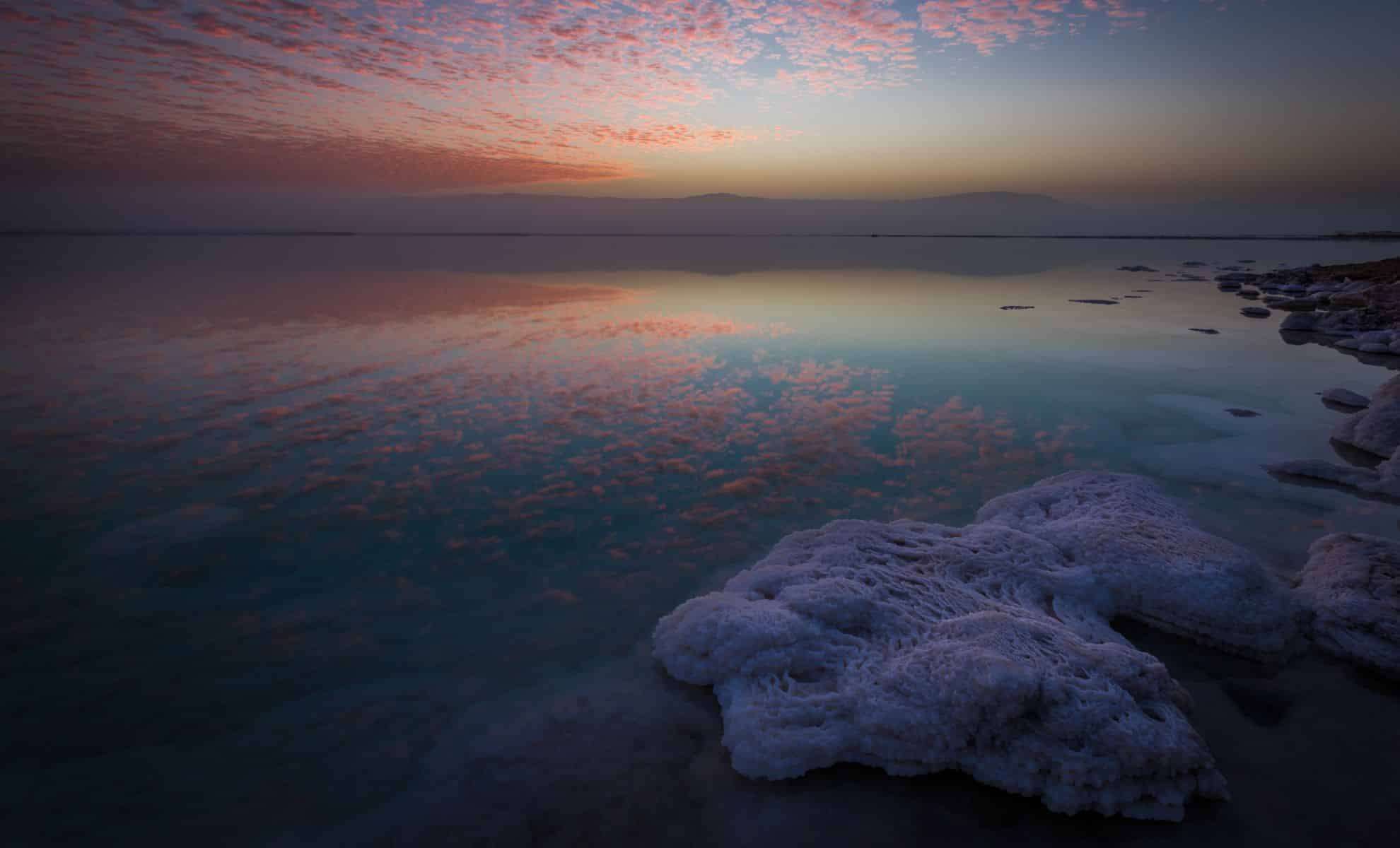
Researchers have documented a remarkable geological event dubbed “salt snow” occurring deep within the Dead Sea. This rare natural occurrence illuminates the processes behind the formation of vast subterranean salt deposits. The findings, detailed in the Annual Review of Fluid Mechanics by Eckart Meiburg from UC Santa Barbara and Nadav Lensky of the Geological Survey of Israel, represent a breakthrough in understanding salt accumulation beneath Earth’s crust.
Exploring the Realm of Enormous Salt Formations
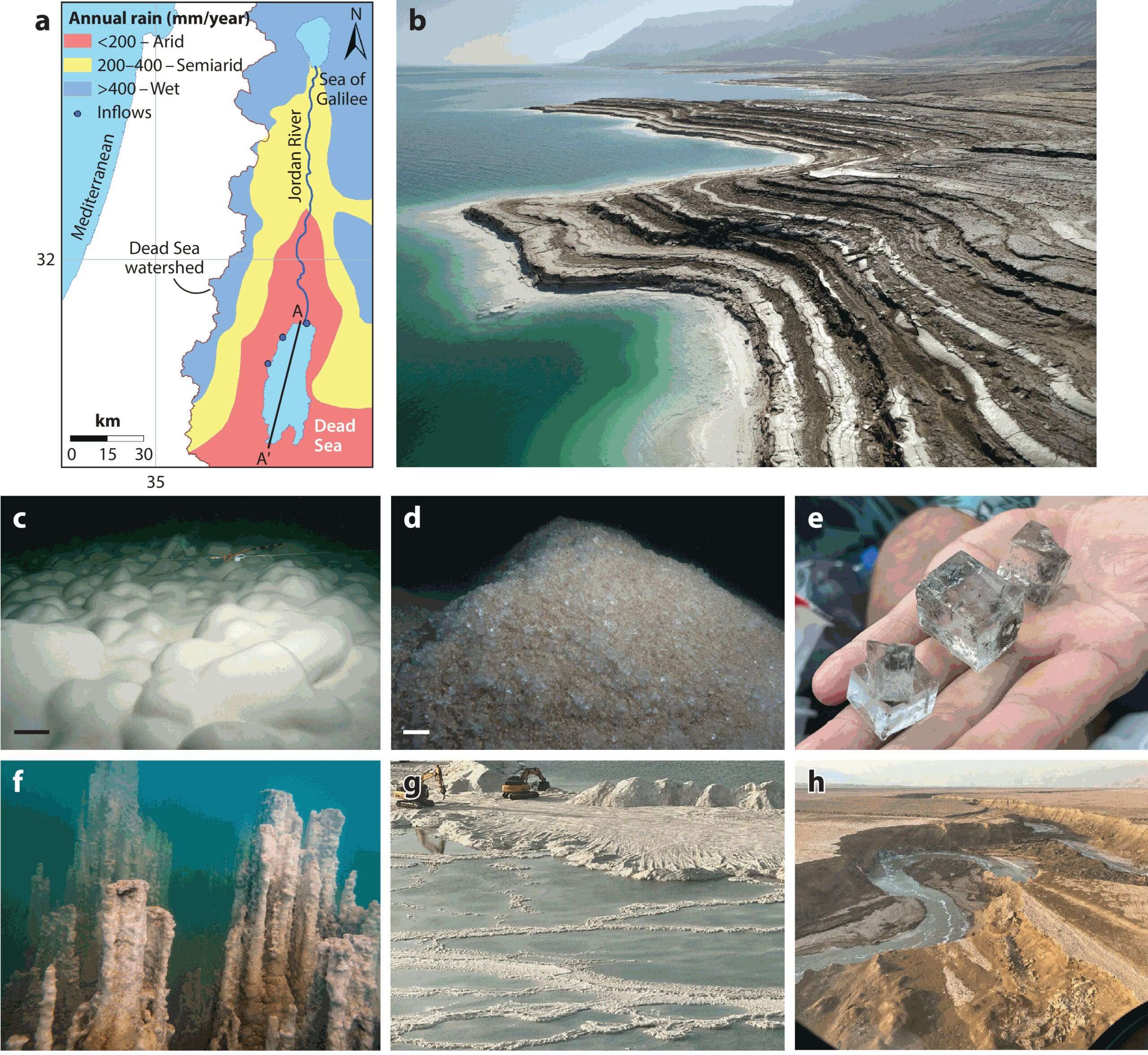
Distinct from other hypersaline bodies, the Dead Sea is actively generating enormous salt structures beneath its surface—some extending kilometers in area and towering over a kilometer thick. While similar massive salt deposits exist under the Red Sea and Mediterranean Sea, their formation ceased millions of years ago.
Meiburg notes, “The Dead Sea remains the sole natural site where we can directly observe the formation mechanism of these salt giants today.” This ongoing activity permits scientists to study processes like evaporation, brine circulation, and sediment stratification as they happen.

Summer Salt Snowfall: An Unexpected Discovery
In 2019, scientists observed halite crystals—commonly known as rock salt—precipitating within the water column during the summer months, a period when such formations typically do not occur. Traditionally, these halite crystals develop in colder, denser waters where salt concentration exceeds solubility limits.
This summertime crystallization resulted from a process called double diffusion, where temperature and salinity differences trigger a complex vertical exchange. Warm, saline surface waters cool and descend, while colder, less salty bottom waters rise, creating conditions in mid-depth layers conducive to salt crystal formation. This generates the effect of salt snow drifting upward amidst warmer waters.
This continual seasonal mixing drives the year-round growth of various salt formations on the seafloor, including salt domes and chimneys. The dynamics differ markedly from other saline lakes where salt precipitation is limited to dry seasons and shallow zones.
Changing Layers Beneath the Sea
Before the 1980s, the Dead Sea exhibited a stable meromictic profile, with a warm, low-salinity layer overlaying colder, saltier depths that did not mix significantly throughout the year.
Following extensive diversion of the Jordan River, its main freshwater source, evaporation has increased and surface salinity has matched that of the depths. This has shifted the lake’s structure to a holomictic state, whereby the entire water column mixes annually.
This transformation altered the lake’s physical characteristics and timing of salt precipitation. Although seasonal stratification still occurs during warmer months, it is no longer persistent year-round. This creates a novel pattern of salt formation reminiscent of ancient enclosed basins.
Echoes of the Mediterranean’s Geological History
Today's Dead Sea conditions strongly resemble those during the Messinian Salinity Crisis (5.96 to 5.33 million years ago). At that time, tectonic closure of the Strait of Gibraltar halted water inflow from the North Atlantic, causing intense evaporation and thick salt layers to accumulate, now buried beneath the Mediterranean floor.
The Dead Sea serves as a modern, smaller-scale analog to this ancient system. Ongoing evaporation, varying salinity levels, and underwater springs continue to shape evolving subsurface salt structures annually. Studying these formations provides important insights into Earth’s geological evolution and guides future research on coastal erosion, climate variability, and resource management in highly saline settings.
With water levels dropping by approximately one meter annually, emerging shorelines and shifting sediments present a natural stage for investigating how salt deposition actively remodels the landscape.
- Categories:
- News

0 comments
Sign in to Comment