
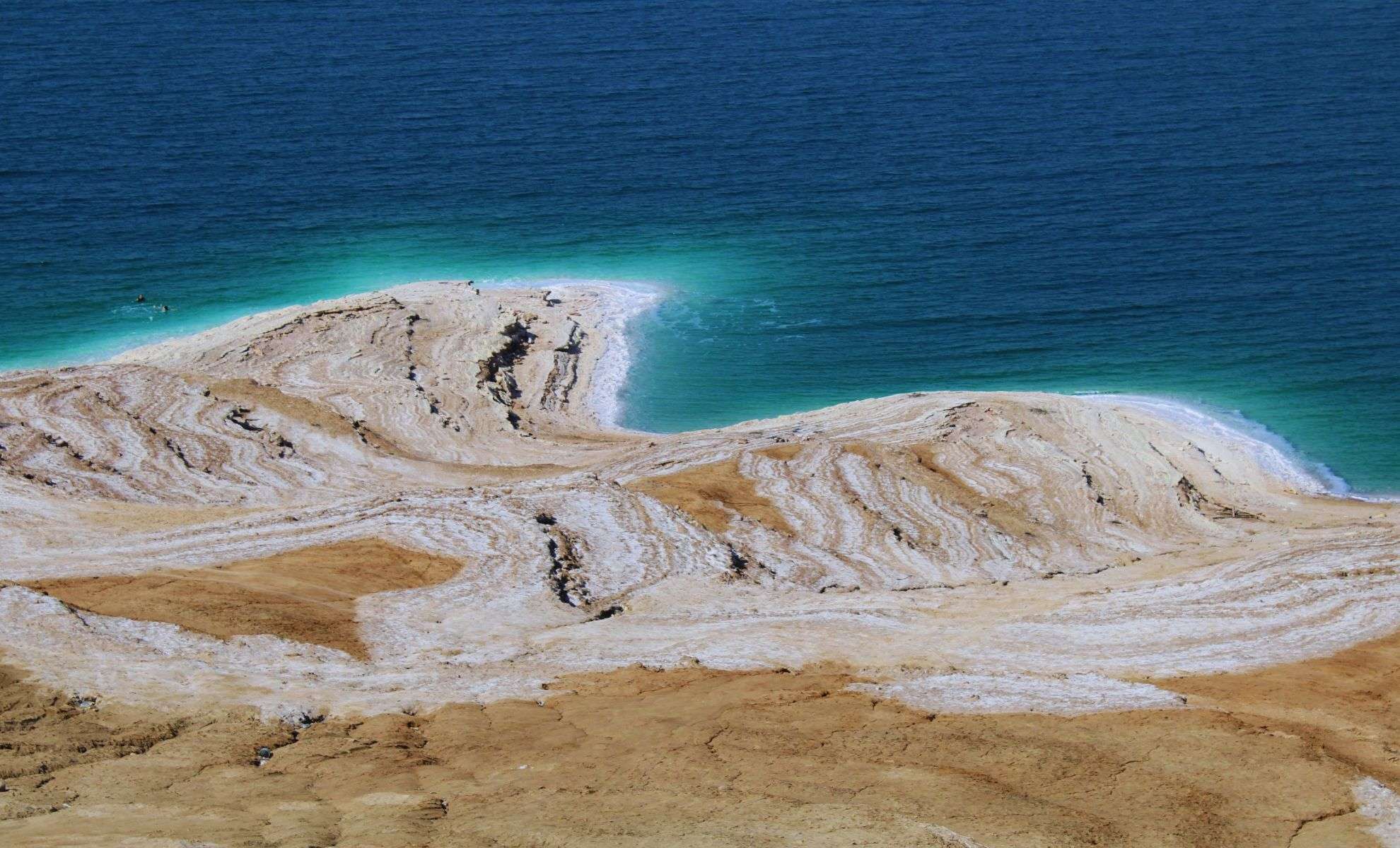
The Dead Sea serves as a unique natural setting to observe the processes behind the rise of enormous salt structures, often called salt giants. A recent investigation spearheaded by UC Santa Barbara’s Eckart Meiburg, featured in the Annual Review of Fluid Mechanics, uncovers the mechanisms responsible for the gradual accumulation of these vast salt deposits within the world’s lowest lake. The Dead Sea’s distinctive hypersaline water and continuous evaporation present a rare natural laboratory where scientists can witness the physical dynamics that shape such monumental salt formations.
Salt giants have been spotted in several saline bodies like the Mediterranean and Red Seas, yet the Dead Sea remains unmatched for closely studying the natural processes involved. This article examines the work of Meiburg and colleagues, detailing how factors such as evaporation, temperature variation, and layered water composition influence the development of these extraordinary geological features.
How Salt Giants Emerge in the Dead Sea
The Dead Sea’s renowned salt giants are immense, sprawling salt layers famed among geologists for their immense scale. Extending for kilometers horizontally and reaching depths exceeding a kilometer vertically, these salt deposits rank among the planet’s largest. As Eckart Meiburg states, the Dead Sea uniquely offers a chance to observe the formation of these features in action. His explanation: “How were they generated? The Dead Sea is really the only place in the world where we can study the mechanism of these things today.”

The development of these salt giants is intimately linked to the Dead Sea’s nature as a terminal lake, meaning it lacks any outlet for water. Consequently, evaporation stands as the dominant method for water loss, leaving salt gradually concentrated as water recedes. Over thousands of years, this evaporation-driven process has layered thick salt deposits on the lake bed. Scientists seek to understand how the ongoing interplay of evaporation, salinity levels, and temperature drives the formation of these large, yet not fully understood, salt formations.
The Influence of Water Layering and Evaporation
The stratification of the Dead Sea’s water is a key factor in salt giant formation. Historically, the lake had a meromictic state, with distinct layers of water at the surface and depths remaining separate throughout the year. This was because warmer, less dense surface water rested atop cooler, saltier water below. Meiburg explains, “It used to be such that even in the winter when things cooled off, the top layer was still less dense than the bottom layer. And so as a result, there was a stratification in the salt.” This layering allowed salt to deposit unevenly at varying depths, building thick salt layers gradually.
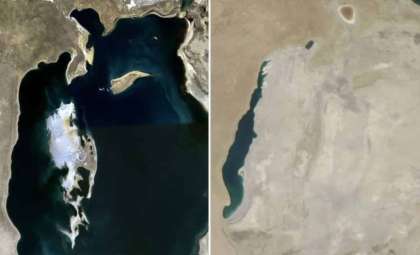
But beginning in the early 1980s, partial diversion of the Jordan River cut freshwater inflows into the Dead Sea, causing evaporation to outpace replenishment. This shift transformed the lake’s character from meromictic to holomictic, meaning surface and deep waters began mixing more frequently, especially during warmer seasons. Consequently, surface salinity surged, enabling salt to precipitate even in summer months.
Temperature Dynamics and the Creation of Salt Snow
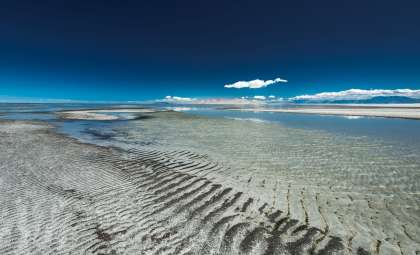
In 2019, Meiburg and his team uncovered a striking phenomenon dubbed “salt snow” in the Dead Sea. While halite (rock salt) crystal deposition is usually linked with cooler weather, salt continued to precipitate on the surface in the hot summer months. This was explained by the process of double diffusion occurring where the warmer, saltier surface water meets the cooler, denser deep water. Meiburg notes, “sections of the saltier warmer water of the top layer cool down and sink, while portions of the lower, cooler, relatively less dense water warm up and rise.” This exchange causes salt to crystallize even during high temperatures, forming delicate “salt snow.”
This unusual, year-round salt precipitation, driven by fluctuations in temperature and water density, plays a crucial role in building the towering salt giants found in the Dead Sea.
Insights from Comparing with Ancient Salt Layers
The vast salt giants in the Dead Sea offer a window into ancient geological events, such as the Messinian Salinity Crisis, when the Mediterranean Sea underwent massive transformations. As Meiburg explains, “There was always some inflow from the North Atlantic into the Mediterranean through the Strait of Gibraltar. But when tectonic motion closed off the Strait of Gibraltar, there couldn’t be any water inflow from the North Atlantic.” This closure caused extensive evaporation, dropping the Mediterranean’s sea level by 3 to 5 kilometers (2 to 3 miles) and leaving behind thick salt deposits similar to today’s Dead Sea formations.
These parallels show how current Dead Sea conditions replicate those that formed some of the most substantial salt layers on Earth. Once the Strait of Gibraltar reopened, water refilled the Mediterranean, ending that ancient salt crisis. Understanding this history aids scientists in interpreting how massive salt deposits develop and endure over geological time.
- Categories:
- News


0 comments
Sign in to Comment