
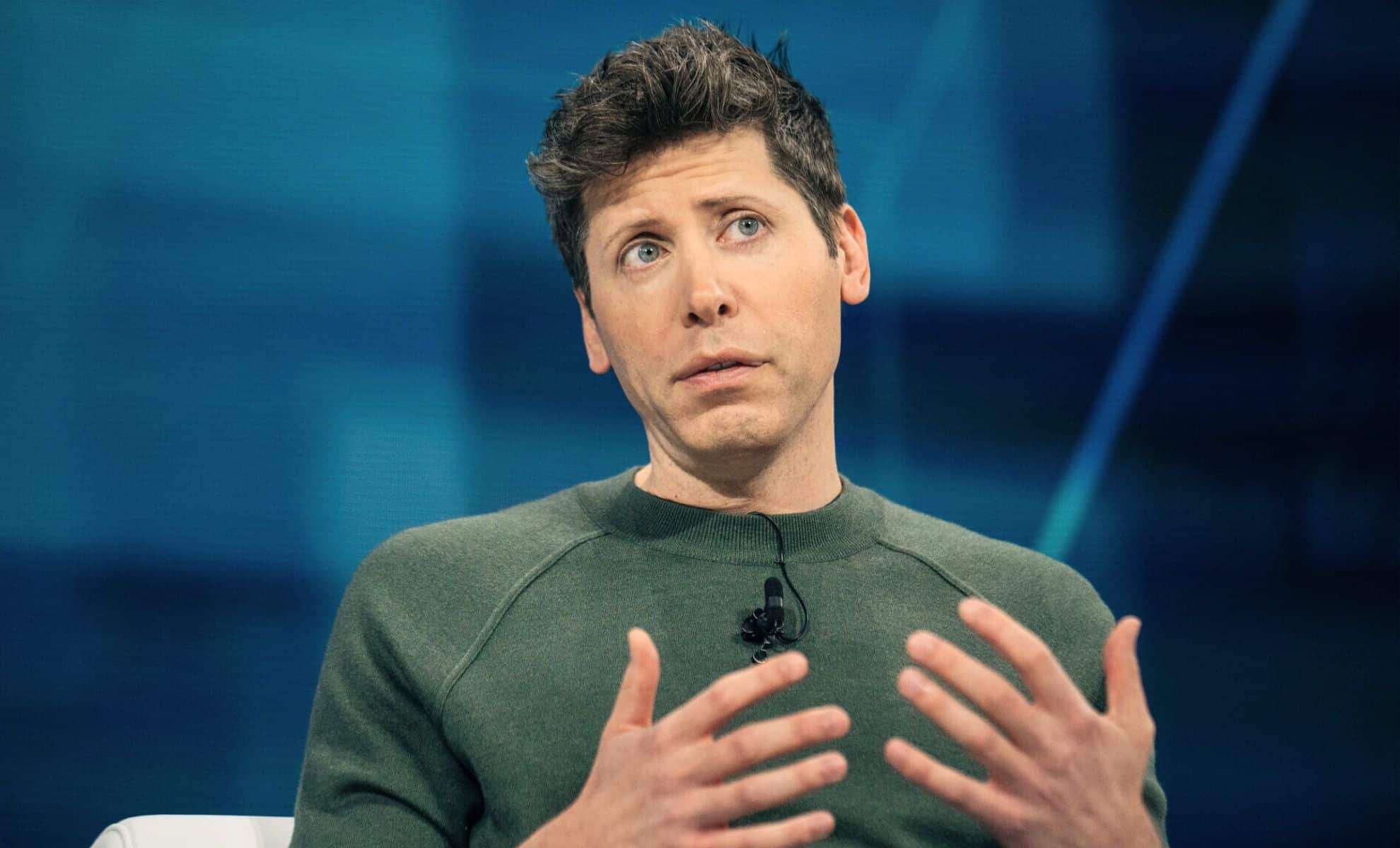
As OpenAI nears the launch of GPT-5, CEO Sam Altman has expressed profound unease—not over technical hiccups, but about the model’s transformative implications. During a recent podcast, Altman described testing GPT-5 as a disconcerting experience, likening its creation to the Manhattan Project, the covert American program that developed the atomic bomb.
His statements underscore a pivotal moment in the evolution of artificial general intelligence (AGI), where even pioneers in the field grapple with the uncertain landscape ahead.
An Ethical Crossroad for AI Innovators
In the interview, Altman revealed that GPT-5 triggered a “personal crisis of relevance” for him. Witnessing the AI solve challenges beyond his own abilities, he admitted, “I felt useless.” This candid reflection highlights growing anxiety within the AI community—not only about models becoming smarter but also about their potential to surpass human reasoning in significant, actionable ways.

Altman’s most striking remark was his historical analogy: “There are moments in science when people look at what they’ve created and ask, ‘What have we done?’” To him, GPT-5 marks such a moment—echoing feelings from the Manhattan Project era, when figures like J. Robert Oppenheimer recognized the irreversible global ramifications of their invention.
He emphasized that although GPT-5 may not be destructive like an atomic bomb, its swift advancement is set to challenge society with urgent ethical, social, and regulatory dilemmas.
Current Insights on GPT-5 Capabilities
OpenAI has yet to publish detailed specs for GPT-5, but early testers report significant enhancements, including:
- Advanced multimodal reasoning
- Enhanced long-term memory
- More reliable and sophisticated multi-step logic
In hindsight, Altman downplayed GPT-4’s abilities, describing it as “the dumbest model any of you will ever have to use again, by a lot.” For those already impressed by GPT-4, this statement signals an even more dramatic leap forward.
Should these improvements prove valid, GPT-5 might approach genuine AGI, able to perform nearly all cognitive tasks humans manage. This progress has intensified discussions about whether existing regulatory frameworks are sufficiently prepared.
Stakeholder Pressure and Corporate Dynamics
The rollout of GPT-5 unfolds amid competing pressures. As Times of India reports, OpenAI faces mounting expectations from Microsoft, a $13 billion investor eager to speed the release of enterprise AI applications amid escalating rivalry from Anthropic, Google, and Meta.
Simultaneously, pressure is rising internally for OpenAI to complete its transition to a for-profit structure by year’s end. Speculation suggests that formally declaring AGI—even prematurely—could enable OpenAI to renegotiate or terminate existing partnerships, including with Microsoft.
This sets up a complex balance: the drive to commercialize advanced technologies may conflict with concerns about safety, ethics, and longer-term societal impact.
Growing Threat of AI-Driven Fraud
Meanwhile, beyond philosophical debates, the immediate reality shows a surge in generative AI-enabled fraud. According to Haywood Talcove from LexisNexis Risk Solutions, malicious actors are already harnessing models like GPT-5 to orchestrate large-scale scams. Using AI to generate synthetic identities, automate impersonations, and conduct intricate fraud schemes, criminals have been diverting millions weekly from public assistance programs.
“Right now, criminals are using it better than we are,” Talcove warned.
With the ability to circumvent CAPTCHAs, fabricate identification documents, and rapidly engineer phishing campaigns, AI-powered fraudsters are outpacing traditional defenses. Security firms and law enforcement are racing to develop AI-based counterstrategies, yet experts worry this technological gap is expanding too rapidly.
- Categories:
- News











0 comments
Sign in to Comment