
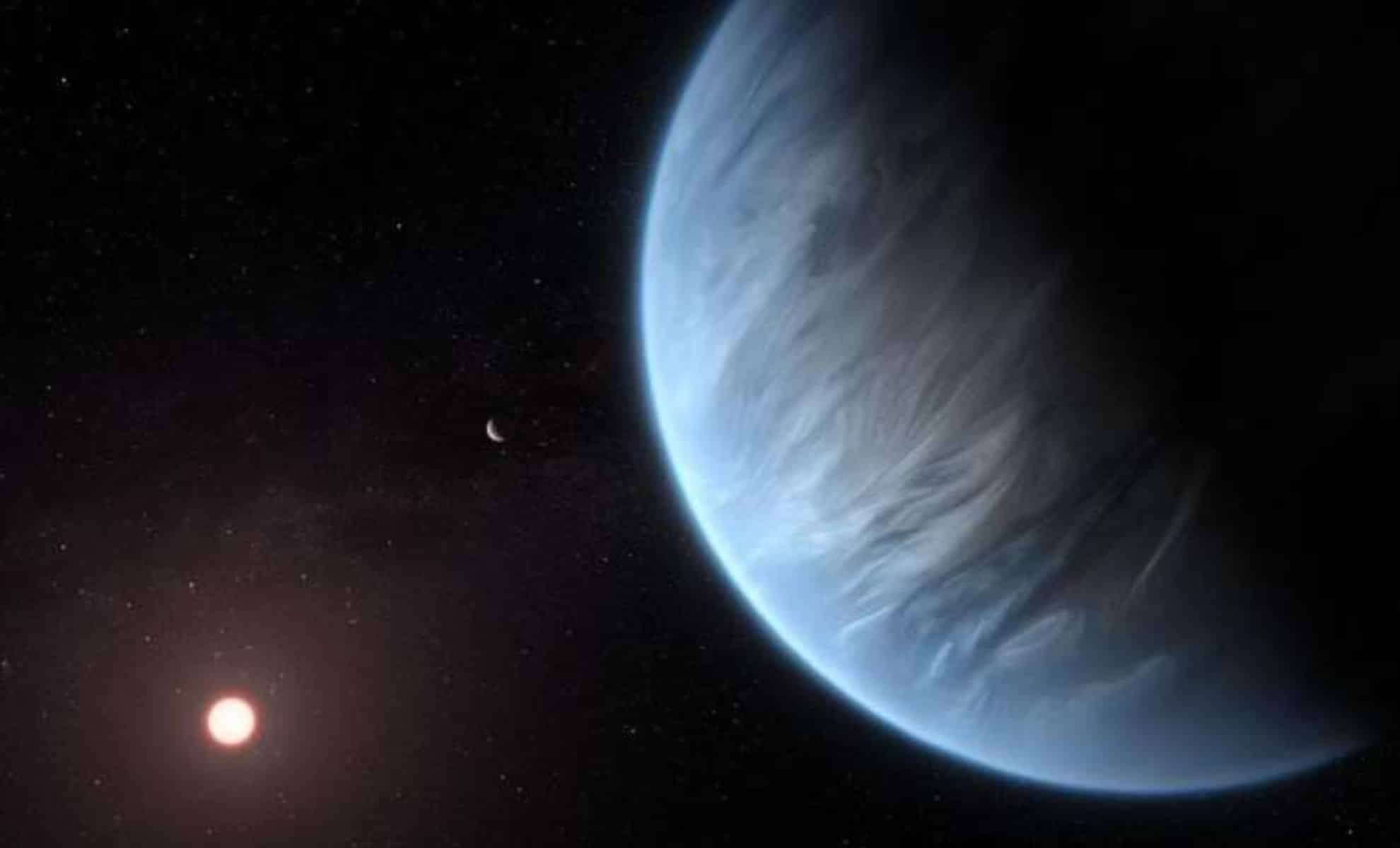
Recent claims from April 2025 suggesting the presence of possible life indicators on the exoplanet K2-18b have been scrutinized by a new scientific review. A research group at the University of Chicago revisited the atmospheric data and concluded that the previously identified signs of biological molecules lack robust support. The original report, put forth by scientists from Cambridge University, proposed that observations from the James Webb Space Telescope (JWST) uncovered signs of dimethyl sulfide (DMS) or dimethyl disulfide (DMDS)—substances on Earth typically linked exclusively to biological sources. However, the new publication titled “Insufficient Evidence for DMS and DMDS in the Atmosphere of K2-18b”, which is available on arXiv, advises prudence, emphasizing that the current data do not conclusively substantiate these claims.
Data Complexity Raises Doubts About Detection
The University of Chicago researchers rigorously examined not only the JWST observations but also data from other instruments such as NIRISS, NIRSpec, MIRI, alongside inputs from the Hubble Space Telescope. Their analysis indicates that the initial identification of dimethyl sulfide, a potential sign of life, may actually stem from overlapping signals of more prevalent, non-biological molecules. “The data available remains too uncertain to confirm any definitive detection,” remarked Rafael Luque, lead author and postdoctoral scientist. According to their report, discerning subtle atmospheric markers at such vast distances involves significant interpretation, and current error margins are too wide to draw firm conclusions regarding alien life.
Similarity in Spectral Patterns Challenges Interpretation
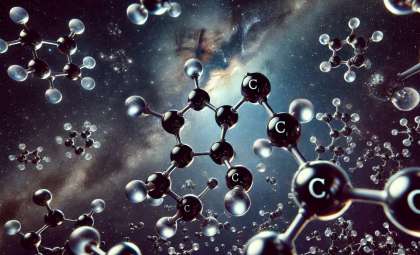
An important concern highlighted by the team is the inherent uncertainty in spectral data analysis. Identifying molecules depends on their specific light absorption patterns, yet many compounds have closely matching spectral signatures. “Any molecule with a carbon atom bonded to three hydrogens exhibits particular wavelength absorption,” Luque noted. “Dimethyl sulfide falls into this category, but numerous other molecules with similar structures could produce comparable signals in the Webb data. Even with improved datasets, pinpointing DMS conclusively will remain challenging.” One candidate often mistaken for DMS is ethane, a molecule already observed in planets like Neptune and Uranus, which are known to be uninhabitable. This suggests the spectral feature attributed to DMS might instead be a more common, non-living chemical.

Balancing Optimism with Scientific Caution
The authors stress the importance of cautious interpretation in the quest to find extraterrestrial life, cautioning against premature announcements that could undermine scientific credibility and public confidence. The search for biosignatures is central to astrobiology, yet it demands rigorous validation. “Determining if life exists beyond our solar system is the defining question of our research,” Luque emphasized. “Our field is advancing rapidly, but we need to avoid excitement that outpaces the evidence.” The example of K2-18b highlights both the promise of groundbreaking observatories like JWST and the challenges posed by analyzing remote atmospheres through complex, sometimes ambiguous, data.
- Categories:
- News







0 comments
Sign in to Comment