
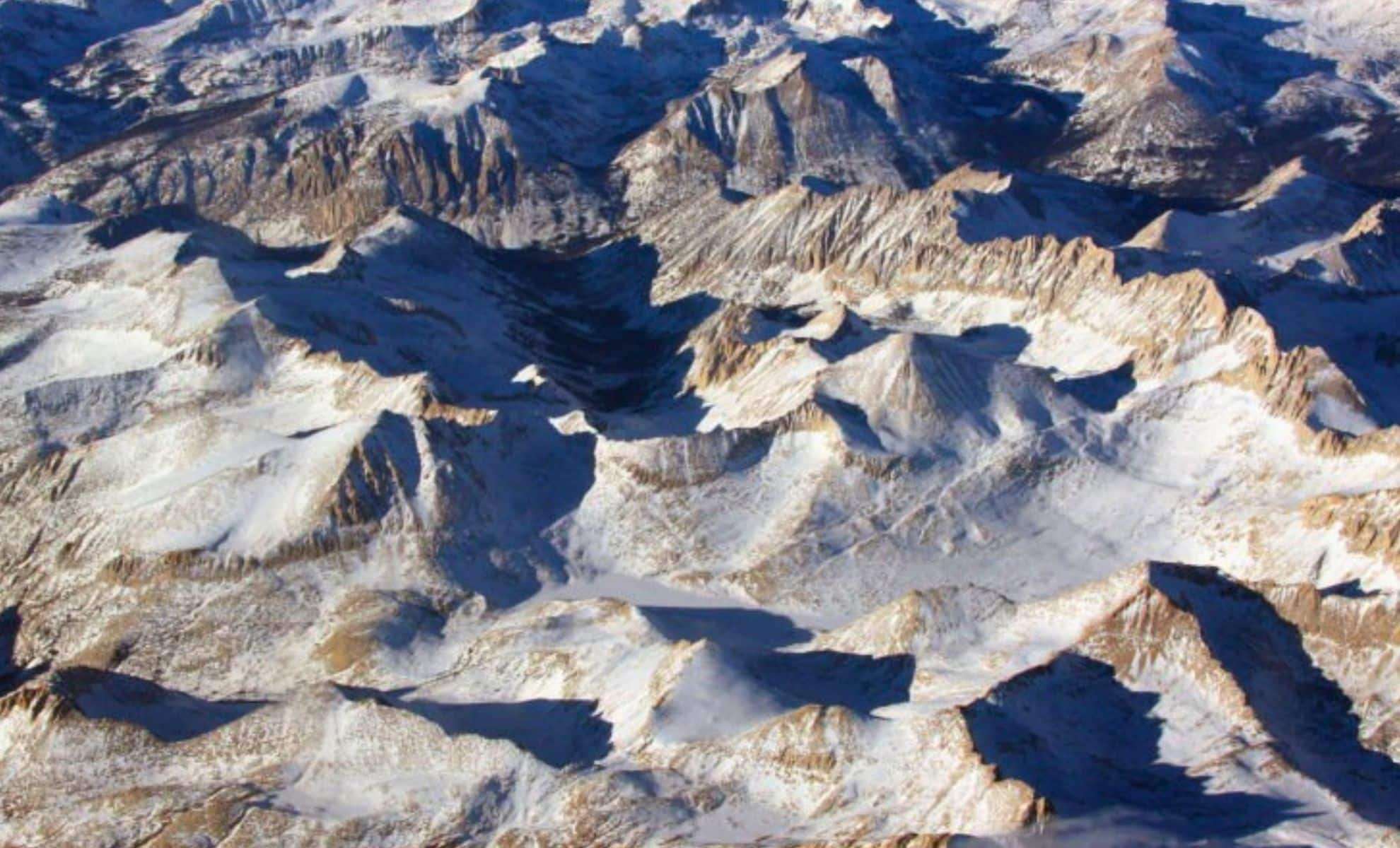
Researchers examining seismic activity in California have revealed compelling evidence of an uncommon geological event occurring deep under the Sierra Nevada mountains. This process, called lithospheric foundering, involves the detachment and sinking of the Earth’s rigid outermost layer into the mantle, and current data indicate that this phenomenon is actively progressing.
Deep Seismic Activity Sheds Light on Subsurface Dynamics
The investigation was initiated by Deborah Kilb, a seismologist at the Scripps Institution of Oceanography, who discovered an atypical pattern of earthquakes in California’s records. In the central Sierra Nevada, she observed tremors occurring at depths ranging from 20 to 40 kilometers, much deeper than the usual 10 to 18 kilometers noted in northern and southern parts of the state.
This finding prompted collaboration with Vera Schulte-Pelkum, a geophysicist from the University of Colorado Boulder, who was already studying distinctive rock deformation patterns in the region. Their complementary discoveries laid the groundwork for a deeper exploration of underground processes beneath the mountain range.

Seismic Imaging Provides Evidence of Crustal Shedding
By employing receiver function analysis, a method that analyzes seismic wave propagation through Earth’s layers, the team identified a prominent structure beneath the Sierra Nevada. Their results revealed that the lithosphere is currently undergoing detachment, confirming hypotheses previously only suggested for this area.
The study, published in Geophysical Research Letters, also validated earlier suspicions that the heavier lower lithosphere had separated from the southern Sierra Nevada millions of years ago, with new evidence demonstrating that similar changes are underway in the central section of the range. However, there is no indication of this process occurring in the northern Sierra Nevada yet.
The driving force behind this phenomenon is the difference in density within Earth’s layers. As Schulte-Pelkum explained, “To make it sit higher (in the first place), you have to get rid of some of the dense stuff.” This foundering removes dense materials by pulling them into the mantle, enabling the less dense upper crust to remain elevated.
The Mantle’s Changing Geometry Beneath Sierra Nevada
Seismic profiles exposed a distinct layer at depths between 40 and 70 kilometers within the mantle, showing a gradient of characteristics toward the north. In the southern Sierra Nevada, this layer appears fully separated.
In the central part of the mountain range, the detachment is ongoing, evidenced by deep seismic activity and layered rock structures exhibiting pronounced banding. Schulte-Pelkum likened this deformation to colored clay being compressed until spots align into stripes.
Moreover, these deep earthquakes may be triggered by crustal cooling as material is drawn downward. Kilb pointed out that because rock temperature changes slowly, the pulled-down crust remains brittle enough to fracture at depths where seismic events are normally uncommon.
Insights into Continental Evolution
The process of lithospheric foundering may illuminate the mechanisms behind the development of continental crust. Schulte-Pelkum noted, “We sort of owe our existence on land to these processes happening.” This tectonic activity helps preserve lighter minerals close to Earth’s surface, giving rise to the continents where we live.
Though imperceptible at the surface and occurring over extensive timescales, this peeling leaves lasting geological signatures. Scientists estimate that the southern Sierra Nevada completed its foundering phase 3 to 4 million years ago, while the central region remains geologically dynamic.
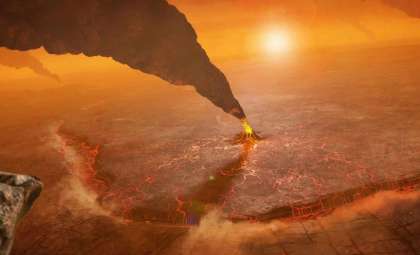
This phenomenon is not exclusive to California; the Andes in South America are also considered potential sites for lithospheric foundering, and even Venus exhibits signs of similar deep mantle behavior despite lacking plate tectonics.
There is ongoing debate about the causes of certain mantle anomalies beneath California’s Great Valley. While some attribute these to lithospheric foundering, others argue they result from subduction processes, where an oceanic plate moves beneath a continental plate.
Mitchell McMillan, a geologist at Georgia Tech not involved with the research, remarked, “There are really two competing hypotheses to explain all these data… and you don’t really get that very often in geology.”
Nonetheless, the current study integrates multiple data sources to support the idea that Earth’s surface is continuously evolving over very long periods. If lithospheric foundering persists, it could slowly reshape the Sierra Nevada’s vertical structure over hundreds of thousands to millions of years.
- Categories:
- News







0 comments
Sign in to Comment