
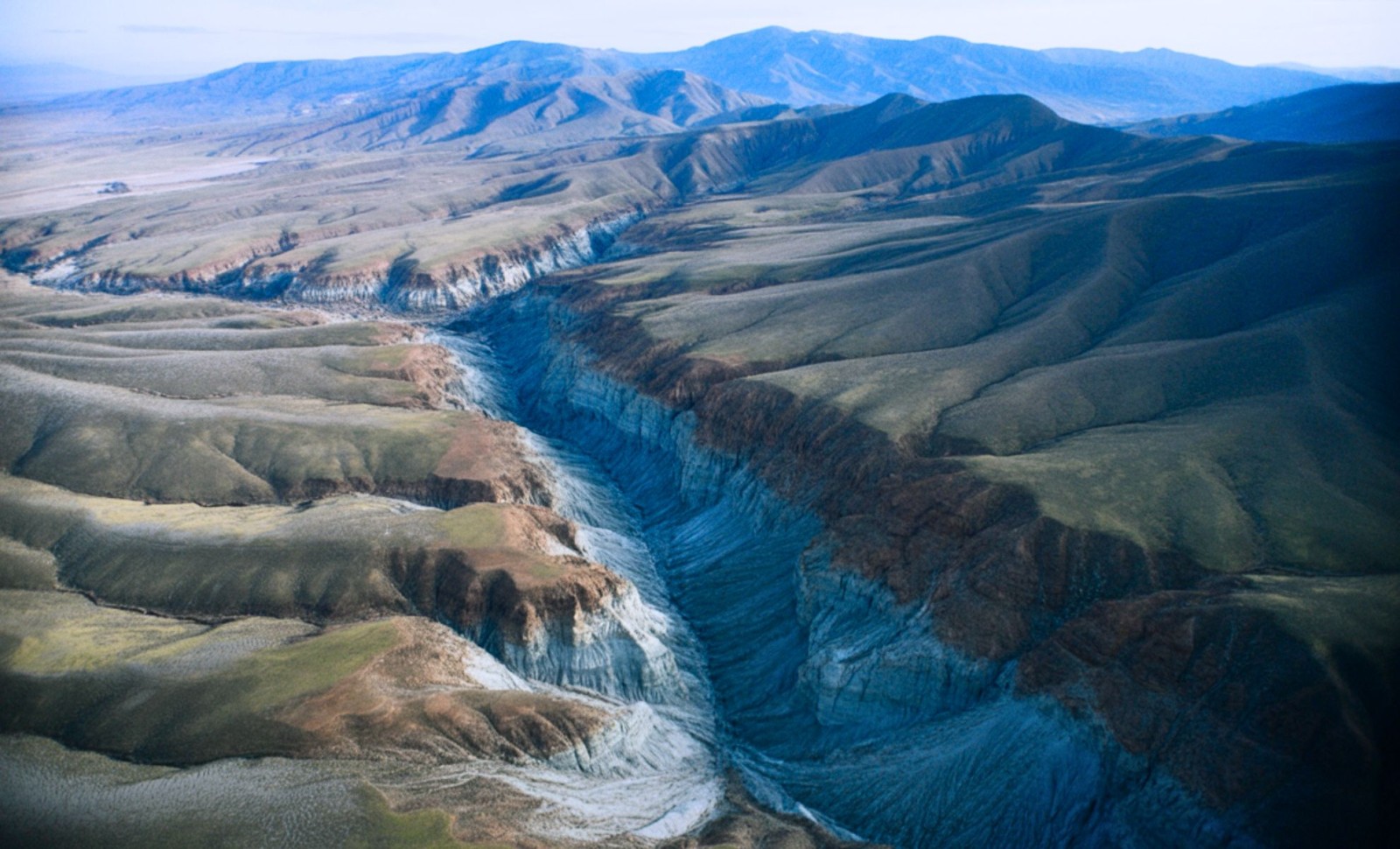
Seismologists have turned their focus to a massive underground fault running through Canada’s remote Yukon Territory, following groundbreaking research that reveals increasing seismic stress. Once believed inactive, the Tintina Fault now poses a significant earthquake risk comparable to recent large-scale tremors in Myanmar and Turkey.
The main concern is not just the Tintina Fault’s enormous length—exceeding 1,000 kilometers from British Columbia into central Alaska—but the fact that it has remained silent for more than 12,000 years. Emerging geophysical evidence points to accumulating strain, raising the possibility of a looming magnitude 7.5 or higher earthquake with serious consequences for infrastructure, risk assessment, and seismic preparedness.
The findings, featured in the July 2025 issue of Geophysical Research Letters, challenge long-standing views that this part of western North America is geologically stable. A team from the University of Victoria, University of Alberta, and the Geological Survey of Canada urge a reassessment of seismic risk maps in the Yukon and surrounding areas.

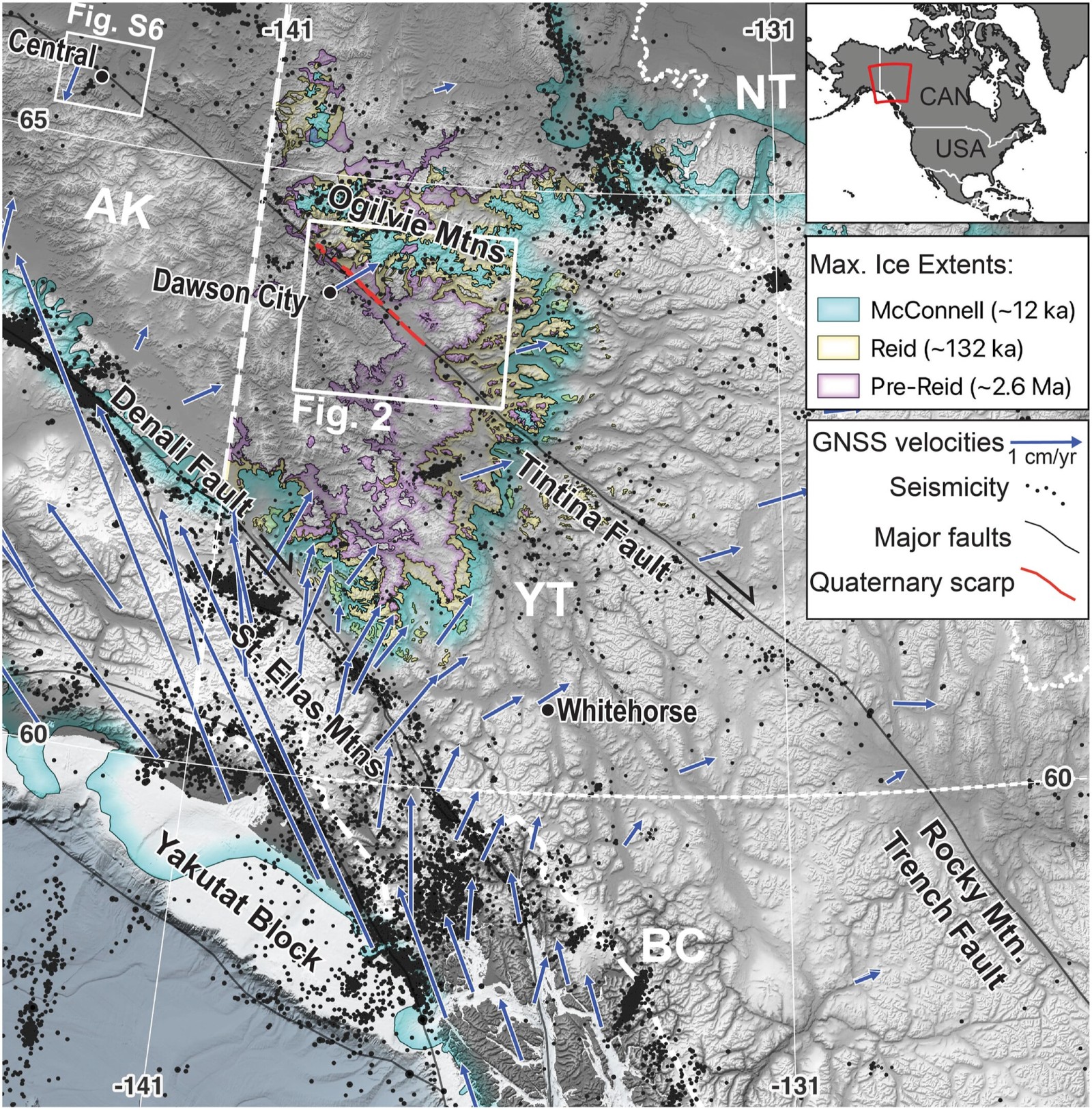
The implications extend beyond academic revisions. The Tintina Fault underlies key mining zones, major transportation routes, and environmentally sensitive lands. A rupture could have wide-reaching effects well beyond the immediate fault line.
A Fault Previously Overlooked by Seismic Studies
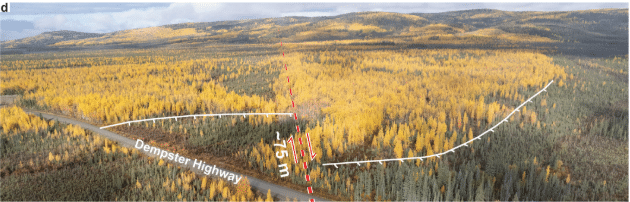
Previously categorized as inactive due to a lack of recent significant earthquakes or visible surface changes, the Tintina Fault has been reevaluated using advanced LiDAR technology and detailed topographic surveys that uncovered numerous fault scarps—surface features indicating past seismic displacements.
The research highlighted displacements in river terraces and glacial deposits, with movements measuring from tens to hundreds of meters. These features date back to periods between 132,000 years and as far as 2.6 million years ago, confirming fault activity throughout the Quaternary period.
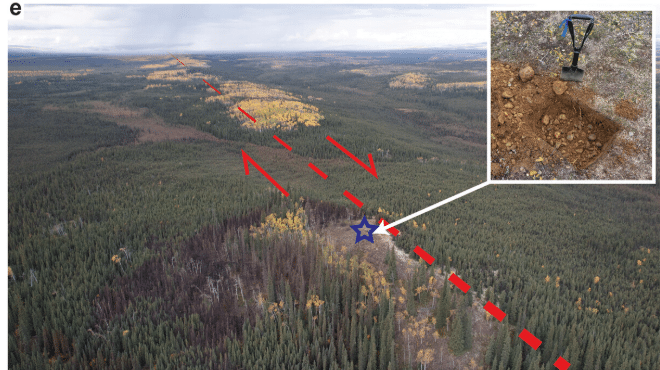
“Scarps intersecting Quaternary deposits and landforms confirm multiple surface-rupturing earthquakes during the late Quaternary,” the publication notes. Researchers utilized ArcticDEM hillshade imagery, LiDAR point clouds, and detailed mapping to precisely delineate the fault traces that coincide with the Tintina fault segments.
Seismic Pressure Quietly Mounting beneath the Surface
Although the fault has not experienced major earthquakes in the last 12,000 years, geodetic measurements reveal that it is steadily accumulating tectonic strain at a rate of roughly 0.2 to 0.8 millimeters annually. Over thousands of years, this slow buildup could result in a significant slip deficit, estimated as much as six meters of unreleased fault motion.
“Estimated slip rates for the central Tintina fault are between 0.2–0.8 mm per year based on geological offsets and postglacial timing,” the authors state.
This gradual strain accumulation is typical of faults responsible for large-magnitude strike-slip earthquakes, where lateral shifts build slowly before erupting in major ruptures. The study concludes a significant quake with magnitude around 7.5 may be imminent, akin to the 2025 Myanmar earthquake.
Although the Yukon has a sparse population, critical infrastructures such as the Dempster Highway, mining roads, and hydroelectric facilities fall within zones likely affected by a major quake. The rugged landscape and glacial history also elevate landslide risks following seismic shaking.
Could Post-Ice Age Crust Rebound be Heightening Seismic Hazard?
The study also explores how glacial isostatic adjustment—the earth’s crust rebounding after Ice Age glacier melting—may influence tectonic stress on the Tintina Fault. Since the Yukon Plateau was heavily covered by glaciers during the Pleistocene, ongoing uplift might be adding strain on the fault.
“Glacial isostatic adjustments can affect the timing of fault rupture,” the researchers explain. They call for detailed paleoseismic investigations like trenching and sediment analysis to examine how earthquake patterns might have shifted due to these post-glacial influences.
This could clarify whether seismic cycles on the Tintina Fault are speeding up, stabilizing, or evolving in response to climate-driven geological feedback mechanisms.
An Underestimated Seismic Hazard with Far-Reaching Consequences
Perhaps the most striking finding is how a major fault system of this scale remained undetected in hazard models. Despite its key role in western North America’s tectonic architecture, the Tintina Fault’s activity was overlooked, highlighting the limitations of conventional fault monitoring methods.
“The identification of previously unrecognized active faults like this one stresses the importance of regular updates to seismic hazard assessments, even in seemingly stable intraplate regions,” the authors conclude.
As climate shifts, glacier retreat continues, and human development spreads into previously remote areas, understanding and preparing for these hidden tectonic threats becomes increasingly critical.
- Categories:
- Science










0 comments
Sign in to Comment