
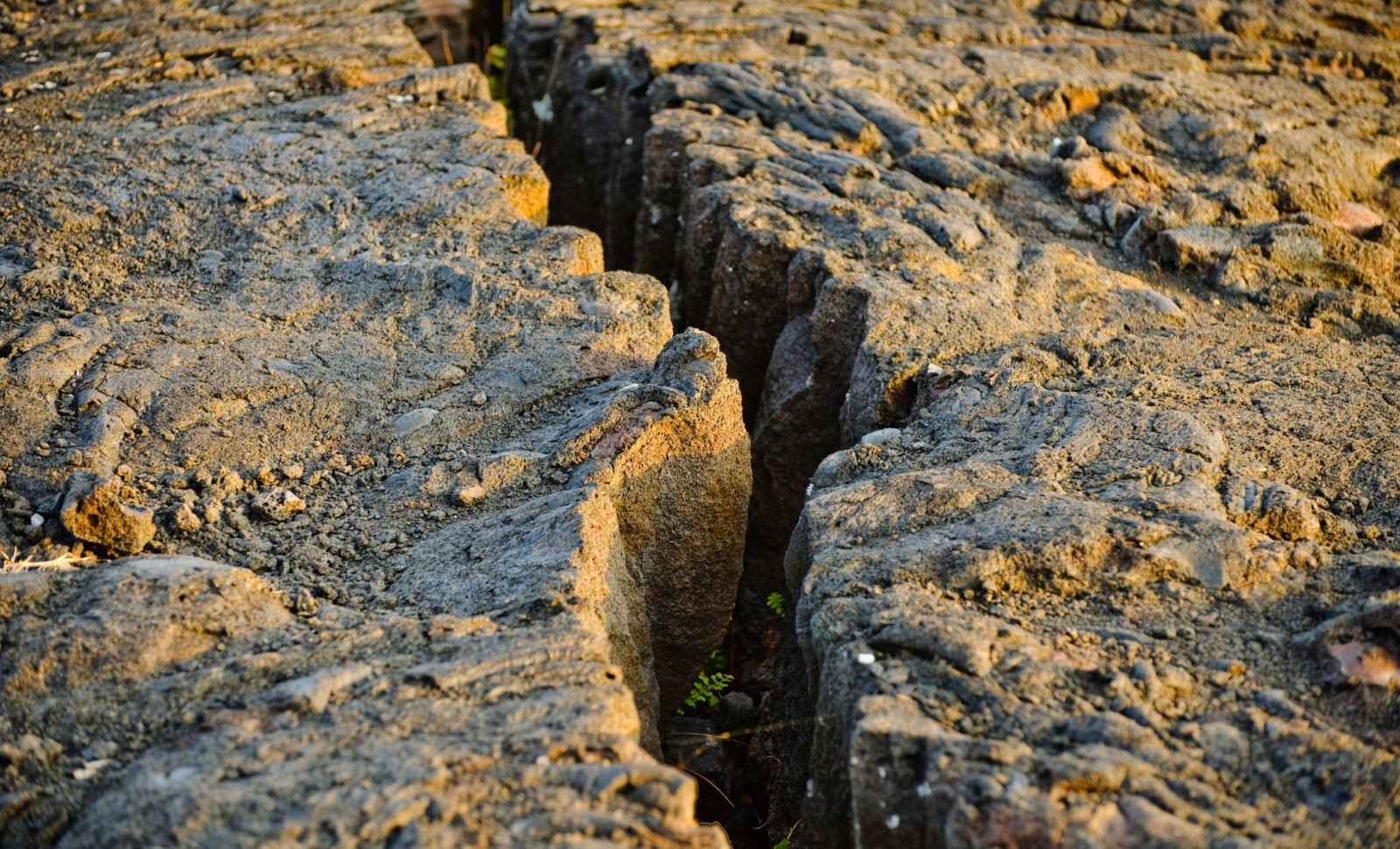
Researchers have detected a gradual but persistent expansion beneath central Turkey, reshaping our understanding of the area's seismic activity. A fault once thought to be inactive is now identified as slowly separating the Earth's crust.
The Tuz Gölü Fault, spanning the heart of Anatolia, has been overlooked in comparison to Turkey's more dynamic fault regions. However, recent research led by scientists from Curtin University reveals that this fault is not merely slipping sideways but is actually widening, prompting a new perspective on the tectonic dynamics of the region.
Unveiling Anatolia’s Quiet Rift
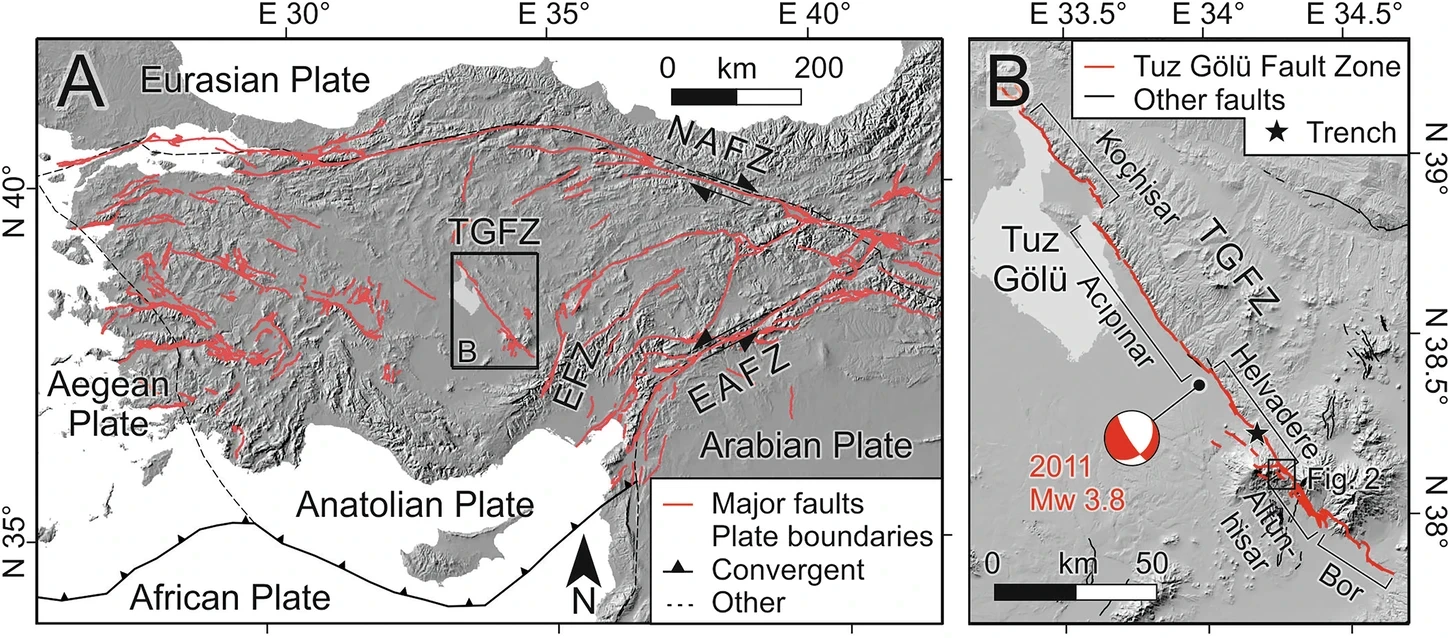
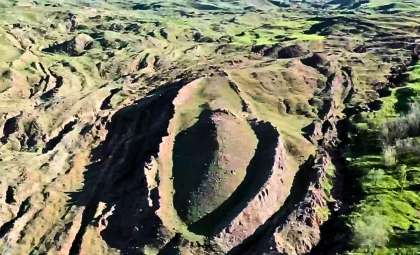
This Tuz Gölü Fault Zone, a 200-kilometer geologic feature observable via satellite, rests in central Anatolia. Even though it hasn’t triggered any notable ground fractures or significant seismic events, experts now contend it influences the area’s geological structure. Positioned at the junction of the Eurasian, Arabian, and African tectonic plates, it offers a distinctive environment to study continental rifting.

Previously categorized as a strike-slip fault—where crustal blocks slide horizontally—the new study, published in Nature Communications Earth & Environment and headed by Professor Axel Schmitt from Curtin's John de Laeter Centre, demonstrates an ongoing active rift with the fault's sides moving apart.
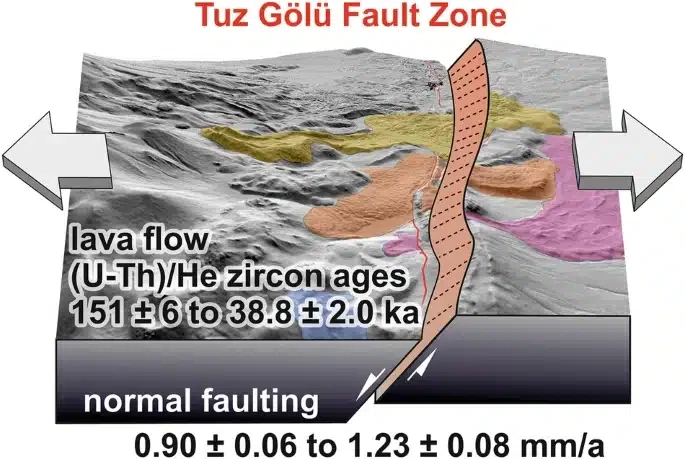
“Our findings unambiguously reveal the fault is pulling apart at a rate of about one millimeter per year, rather than shifting sideways. Understanding these movements is crucial not just for assessing volcanic and earthquake threats but also for improving global models of continental deformation,” Schmitt said, as reported by SciTechDaily.
Tracing Ancient Lava Layers
This breakthrough was achieved by examining ancient lava flows from the Hasandağ volcano. Once erupted and solidified, these layers were later fractured by the fault’s motion, serving as natural indicators of geological shifts. By reconstructing their original forms and comparing them to their present positions, scientists gauged the extent of crustal movement.
Associate Professor Martin Danišík, another expert from the John de Laeter Centre, explained that minuscule zircon minerals embedded in the lava provided essential clues. These crystals retained helium produced by radioactive uranium and thorium decay, allowing precise dating of the rock formations.
“By measuring uranium, thorium, and helium in zircon, we can accurately determine when the lava flows erupted, spilled across the fault, and subsequently cooled,” he also explained.
The findings confirmed the fault’s characteristic extension, consistent with the mechanics of an extensional fault.
Modern Technology Reframes Geological Understanding
Utilizing sophisticated techniques like helium isotope dating and satellite remote sensing, the researchers could detect subtle crustal displacements, too minute for conventional seismic instruments.
“This research highlights the importance of revisiting long-held geological assumptions and using modern techniques to precisely measure how continents respond to the immense pressures of tectonic collisions,” noted Janet Harvey, a co-author and remote sensing expert at Curtin.
Though the Tuz Gölü Fault’s slow motion results in few noticeable earthquakes, this investigation underscores the value of geological and geophysical analysis in uncovering gradual but impactful fault activity, allowing a glimpse into continental deformation beyond rapid seismic events.
- Categories:
- Science






0 comments
Sign in to Comment