
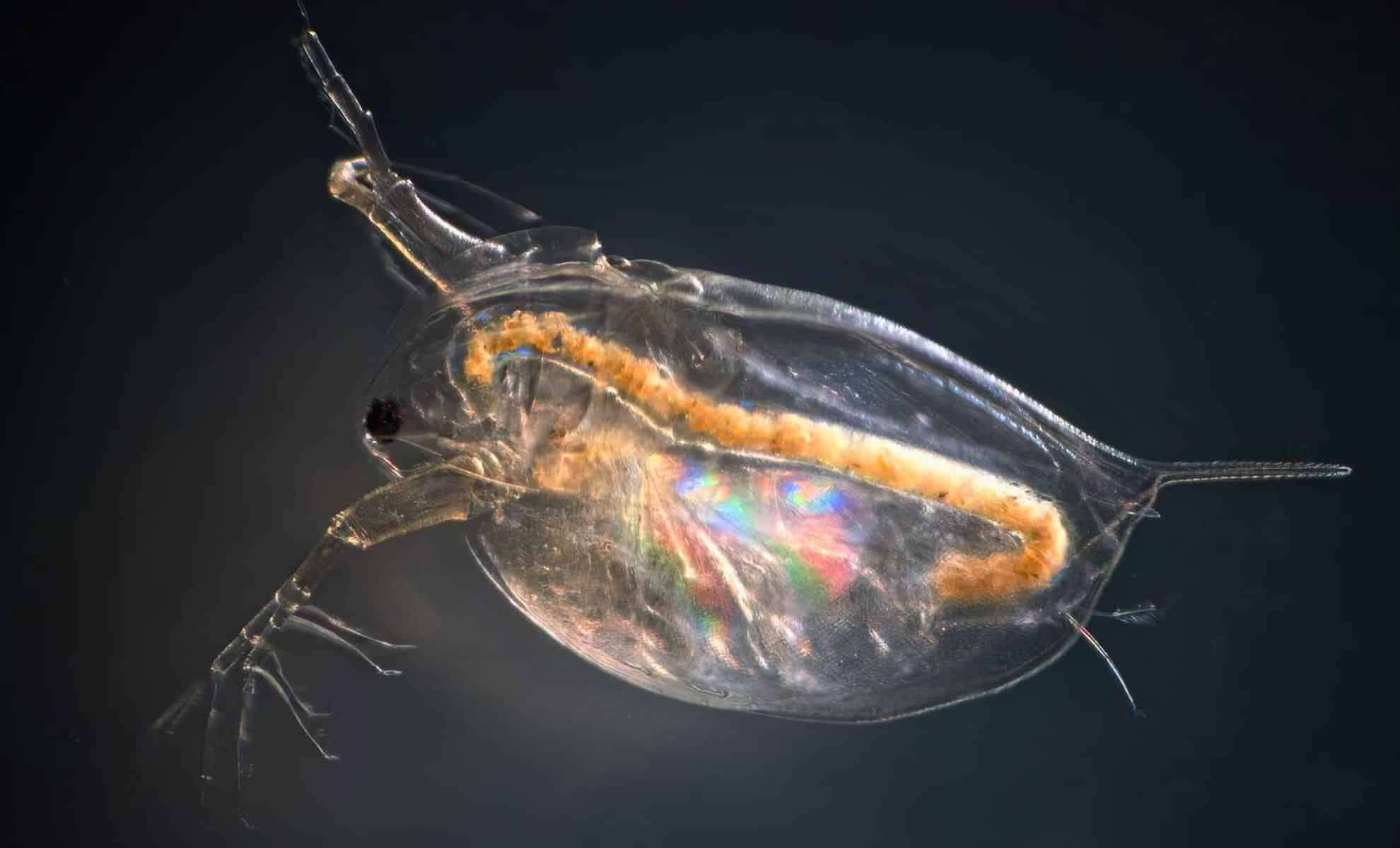
Scientists at Rice University have uncovered an overlooked process that connects increasing temperatures with species population drops in natural habitats. Published in Ecology, their findings suggest that global warming can disrupt species stability through intensified competition within populations, even before reaching critical temperature thresholds.
Temperature Rise Amplifies Internal Competition
Under the direction of Volker Rudolf, a biosciences professor at Rice University, the team explored how temperature changes affect population interactions.
Using Daphnia pulex, a tiny zooplankton commonly inhabiting freshwater lakes and ponds, the study focused on a key aquatic species essential for food web balance and controlling algae growth, which maintains water quality.

In controlled lab experiments, researchers varied temperature and population density to isolate warming effects on population behavior.
They observed that even slight temperature increases dramatically altered interactions between individuals within populations.
Specifically, warmer conditions heightened competition among individuals, negatively affecting the overall population’s well-being.
Significant Population Collapse Linked to Temperature Increases
The findings indicate that with every 7°C rise in temperature, competitive pressure between individuals doubled. This resulted in a severe population decline of 50% at the upper temperature limits tested.
While moderate warming between 12°C and 19°C initially boosted growth rates by enhancing metabolism and reproduction, further temperature increases negated these benefits.
Instead, rising competition for resources dominated, reducing survival rates and reproductive success across the populations.
According to Rudolf, this research fills in “an important knowledge gap regarding the broader impact of warming on species populations.” He emphasized, “Even if individual organisms tolerate warmer conditions, their populations can still experience decline.”
Temperature Stress Emerges Before Physical Limits Are Reached
The study offers valuable experimental evidence that warming reshapes ecological interactions governing population survival. Lillie Stockseth, the lead author and former student in Rudolf’s lab, highlighted how increased temperatures can have negative effects even when organisms seem physically unaffected.
“It's established that rising temperatures boost metabolic and reproductive functions in cold-blooded animals,” Stockseth explained. “However, we found these warming conditions also intensify internal competition, which limits survival and reproduction.” She noted that as temperatures near species’ physiological limits, this competition overwhelms earlier benefits, causing population declines.
Stockseth, who completed this research as her senior thesis and now works at the Houston Zoo, stressed the significance of competition as a growing threat in warming ecosystems.
A Wake-Up Call for Temperate-Tolerant Species
This research challenges the prevailing notion that heat-tolerant species remain stable with increasing temperatures. Zoey Neale, a co-author and former graduate student in Rudolf’s group, pointed out that competitive pressures linked to warming may be more widespread than anticipated.
“Our results indicate that many populations could face rapid declines well before hitting their thermal limits,” said Neale, now a data scientist at the University of Texas MD Anderson Cancer Center.
“These findings carry important conservation implications because species once assumed to be heat-resilient may be vulnerable at lower temperature rises, increasing the risk of temperature-driven population collapses.”
By focusing on how internal population competition intensifies under warming, this study reveals a subtle yet powerful threat to biodiversity in a changing climate.
- Categories:
- Science









0 comments
Sign in to Comment