

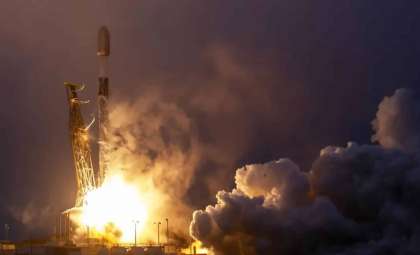
On September 17, 2024, SpaceX achieved a milestone by launching a pair of Galileo navigation satellites on a Falcon 9 rocket from Cape Canaveral Space Force Station in Florida.
The operation, dubbed Galileo L13, supports the European Union’s initiative to enhance its global navigation satellite system, offering precise location services to billions of users worldwide. This marks the second Galileo deployment from the United States this year, following a similar mission in April 2024. The Galileo network is overseen by the European Space Agency (ESA) and the European Union Agency for the Space Programme (EUSPA).
Falcon 9 Booster Reuse and Mission Overview
The Falcon 9 rocket utilized for this launch flew with a first-stage booster having a rich flight history, including two astronaut missions to the International Space Station (ISS) and multiple Starlink deployments. This flight marked the booster’s 22nd mission, culminating in a successful recovery by SpaceX. Just 8.5 minutes post liftoff, the booster landed precisely on the droneship Just Read the Instructions positioned in the Atlantic Ocean near Florida.

This recovery was noteworthy because the April Galileo satellite launch required the booster to be expended due to greater performance demands to reach orbit. For the L13 mission, SpaceX applied improvements based on previous flight data, including weight reductions and adjustments to the flight path. These measures allowed the booster’s retrieval and demonstrated SpaceX’s commitment to lowering launch costs through rocket reuse.
Galileo System Enhancements and Impact
The Galileo satellite constellation, coordinated by the European Space Agency (ESA) and managed by EUSPA, stands as the world’s most accurate satellite navigation network. Adding these two satellites boosts Galileo’s capability to provide dependable, precise positioning for both civilian and defense uses. The constellation currently comprises 32 satellites orbiting in medium Earth orbit (MEO), enhancing the overall availability and accuracy of its signals.
Rodrigo da Costa, Executive Director of EUSPA, remarked on the launch’s importance: “These two satellites reinforce Galileo’s position as the preeminent navigation system globally. Each addition advances navigation reliability for over four billion users and supports expanding opportunities for European enterprises, SMEs, and innovators.”
Galileo plays a vital role in everyday navigation tasks such as smartphone location services, as well as critical sectors including emergency management, aviation, maritime navigation, and timekeeping synchronization. Its interoperability with GPS and Russia’s Glonass systems enables users to benefit from enhanced accuracy by combining data from multiple constellations.
Satellite Technology Progress and Upcoming Plans
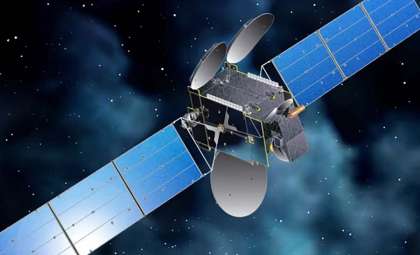
The newly launched Galileo FOC (Full Operational Capability) satellites, FM26 and FM32, each weigh about 2.3 metric tons and are engineered for a lifespan of 15 years. These satellites form part of ESA and EUSPA’s continuous efforts to boost the system’s operational efficiency and coverage. The European Union intends to expand the Galileo fleet through additional deployments in future years, further raising system performance worldwide.
Future Galileo satellites will feature cutting-edge technology advancements, such as more robust signal transmission, increased resistance to interference, and superior precision. These upgrades will maintain Galileo’s leadership position among global navigation systems, providing enhanced services to users worldwide.
This mission spotlights SpaceX’s integral role in enabling the European Union’s ambitious space objectives while highlighting the company’s ability to successfully launch and recover boosters under demanding mission conditions. SpaceX continues to prove its reusable rocket technology’s reliability, contributing to reduced space access costs and supporting future space exploration advancements.








0 comments
Sign in to Comment