

NASA is preparing to send a pioneering artificial star into orbit, aimed at enhancing the precision of astronomical observations.
This innovative initiative, called the Landolt mission, will launch a compact satellite outfitted with lasers that simulate star-like light, enabling astronomers to calibrate their instruments with greater exactness than ever before.
Overview and Goals of NASA’s Landolt Mission
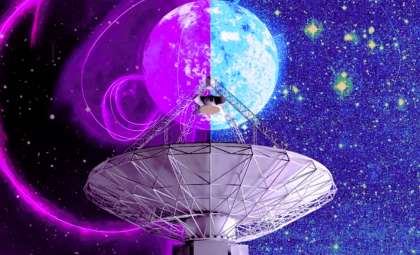
The Landolt mission, named to honor the late astronomer Arlo Landolt, renowned for his stellar brightness catalogs, is slated for a 2029 launch. The mission involves a device roughly the size of a toaster, equipped with eight lasers designed to emit light at well-characterized photon levels.

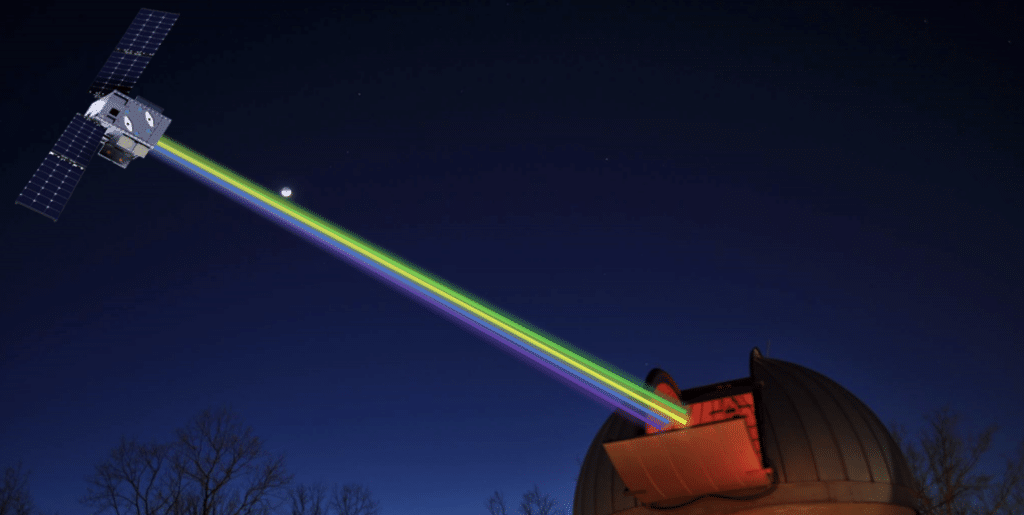
Once in orbit approximately 22,236 miles above Earth, the artificial star will rotate in sync with the planet, making it appear as a fixed point in the night sky. This stable positioning will allow astronomers to consistently target it with ground-based telescopes.
The mission’s main purpose is to improve the accuracy of stellar brightness measurements, which are essential for comprehending a wide range of astrophysical phenomena. According to Tyler Richey-Yowell, a postdoctoral researcher at Lowell Observatory, “This is really new for us to have some sort of artificial star up there that we can go and rely on and use.” Such precision is difficult with natural stars due to unknown exact light output and atmospheric interference.
Enhancing Telescope Calibration and Measurement Accuracy
A crucial aspect of the mission is to substantially advance telescope calibration. Thanks to the artificial star’s stable and well-known brightness, scientists can remove many uncertainties present in today's calibration processes. Jamie Tayar, assistant astronomy professor at the University of Florida, emphasized, “Much of our comprehension of the universe hinges on our ability to gauge the brightness of celestial objects.”
The artificial star is expected to allow brightness measurements of stars with up to tenfold greater accuracy compared to current methods. This boost in precision will improve determinations of fundamental stellar attributes such as size, brightness, and age. Tayar added, “For each star, you need to know exactly how much energy is coming from the star, and exactly how far away the planet is, and so on,” highlighting the mission’s role in deepening insights on exoplanets and their potential to support life.
Wider Impact of NASA’s Artificial Star on Astronomy
The Landolt mission promises wide-ranging benefits across different astronomical disciplines. Providing a consistent calibration benchmark will support research on objects ranging from nearby stars to remote supernovae. It may also help resolve persistent inconsistencies in measuring the universe’s expansion rate, a key challenge in cosmology.
Accurate expansion rate determination is vital for studying dark energy, the enigmatic force thought to propel the accelerating growth of the cosmos. Data from the Landolt mission could shed light on this mysterious energy and its consequences for the universe's future.
Tyler Richey-Yowell summed up the mission’s far-reaching significance by stating, “So really anything from small, tiny planets to the whole scale of the universe relies on our understanding of stars and how bright they are and what kind of light they’re emitting. I really do think it will be revolutionary for astronomy.”
The Landolt mission represents a major leap forward for stellar measurement technology and has the potential to transform our cosmic understanding, enhancing knowledge from the tiniest exoplanets to the grandest scales of the universe.
- Categories:
- Astronomy ,
- News ,
- Space ,
- Nasa ,
- Aircraft



0 comments
Sign in to Comment