
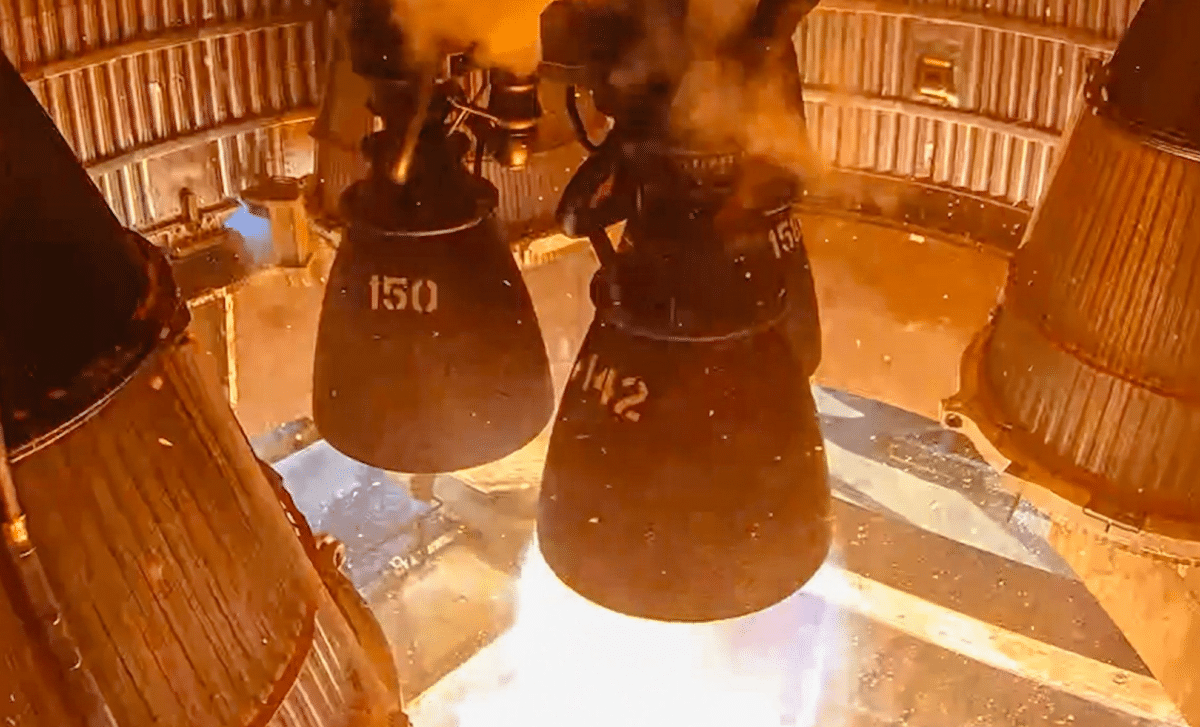
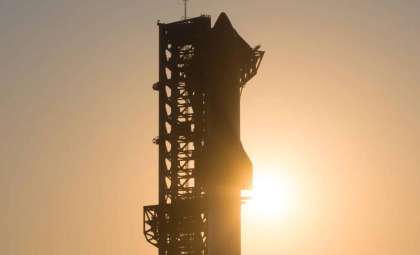
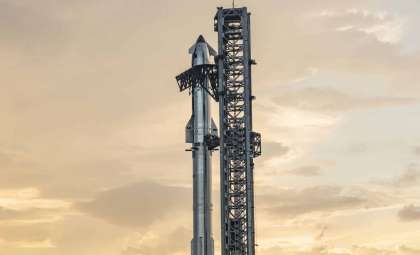
SpaceX has achieved a major milestone with the first static fire of its new spacecraft, Starship 40. This upper stage, slated for the upcoming Flight 13 mission, underwent a brief but critical ignition test, signaling the start of an important testing phase for the world’s largest fully reusable rocket system. The engine burn highlights SpaceX’s ongoing commitment to rapid development and refinement.
Starship 40 Takes Its First Step Towards Flight 13
According to Space.com, the test was conducted at SpaceX’s Starbase in Texas. At the company’s Massey test site, one of the spacecraft’s central Raptor 3 engines ignited for about 15 seconds. This short run allowed engineers to assess engine performance before moving on to more comprehensive evaluations. Such static fire tests are crucial checkpoints, as they confirm the engine’s functionality while the vehicle remains securely fixed to the ground.
While the ignition was brief, it yielded vital data affirming that the upgraded propulsion system is operating correctly. Starship 40 is outfitted with a total of six Raptor 3 engines—three optimized for atmospheric flight and three tailored for vacuum conditions in space. All six work in tandem during launch, but only one sea-level engine is employed for the spacecraft’s final landing burn. This initial test is just the start; further testing involving the complete engine set is planned before Starship 40 is declared flight-ready.

Full duration single-engine static fire test of Starship pic.twitter.com/nfR8PvHpze
— SpaceX (@SpaceX) June 26, 2026
Ongoing Enhancements Propel Starship’s Evolution
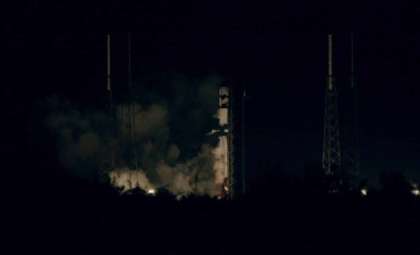
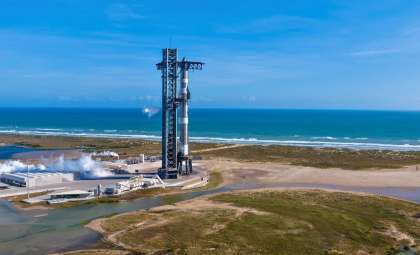
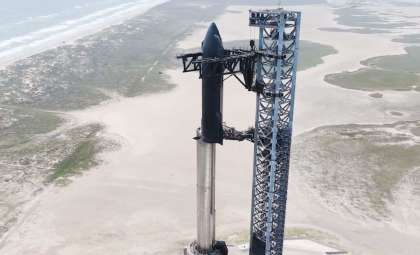
This latest success follows closely on the heels of the inaugural launch of the third-generation Starship on May 22. Standing at an impressive 408 feet (124.4 meters), this version incorporates the advanced Raptor 3 engine design and numerous hardware upgrades. These improvements include redesigned aerodynamic grid fins, enhanced thermal protection, expanded propellant tanks, and integrated docking mechanisms for future in-orbit refueling.
Despite some challenges during its debut flight—such as the Super Heavy booster’s failure to execute a controlled splashdown—SpaceX deemed the mission a success for validating new systems in flight. The swift progression from Flight 12 to the testing of Starship 40 exemplifies the company’s iterative development approach: testing, data analysis, rapid refinements, and prompt return to flight testing.
Implications for NASA and Deep Space Explorations
Beyond simply achieving orbit, Starship’s design prioritizes orbital refueling, a technique essential for deep space missions. While Starship can launch with onboard propellant, longer journeys require additional fuel transferred from dedicated tanker Starships in orbit. Although this capability has yet to be demonstrated, SpaceX plans to initiate tests soon.
This technology is crucial for NASA’s Artemis program, which has chosen a modified Starship variant as the Human Landing System to ferry astronauts from lunar orbit to the Moon’s surface. Mission planners estimate that the lunar Starship will need fuel from at least 15 tanker launches to complete its refueling before descending during Artemis 4, anticipated in late 2028. Each successful ground test thus plays a vital role in advancing humanity’s sustained presence beyond Earth.
- Categories:
- News







0 comments
Sign in to Comment