
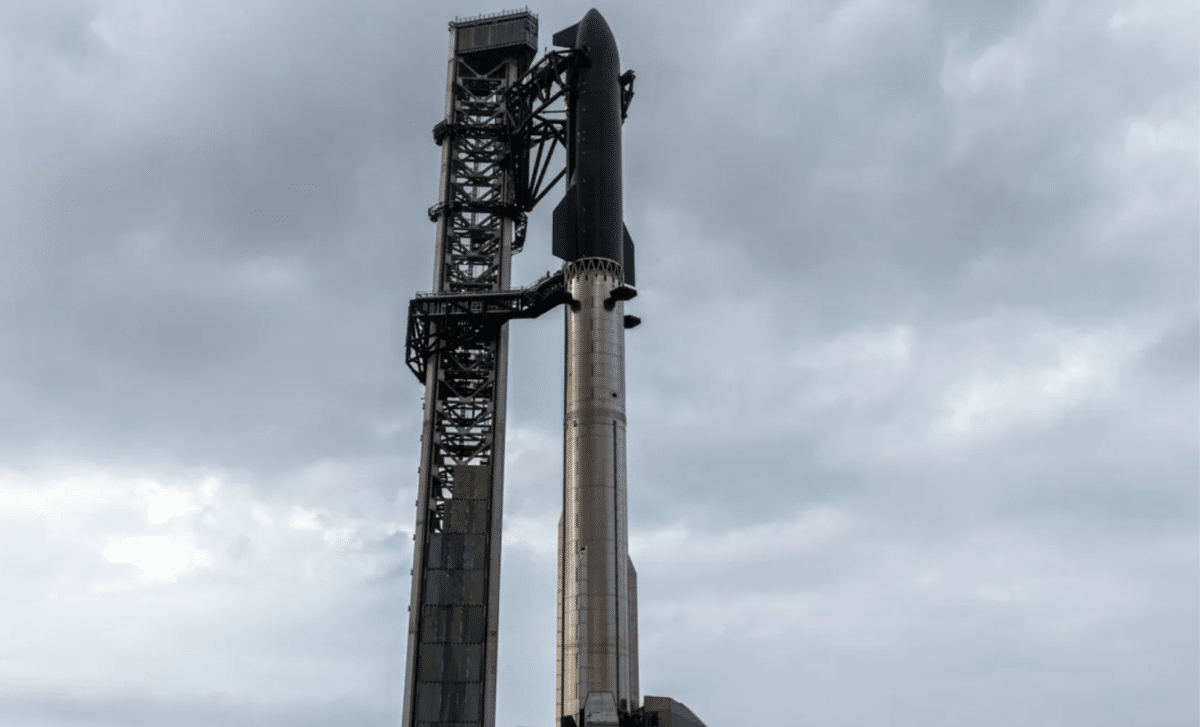
Today marks a landmark event as SpaceX prepares to send its Starship V3 on its inaugural flight. As the most advanced and powerful version of the well-known Starship megarocket, this suborbital test flight represents a crucial advancement towards future missions to the moon, Mars, and beyond. Eager audiences worldwide are watching for the anticipated launch from SpaceX’s Starbase in South Texas to see how this upgraded rocket performs in real flight conditions.
Introducing The Latest Starship Model
The V3 Starship signifies a major upgrade compared to earlier models. Although this is technically the twelfth Starship launch overall, it is the very first flight featuring the V3 design. Earlier attempts, including the initial launch in April 2023, were cut short due to explosions shortly after takeoff. Since then, SpaceX has made significant refinements, reaching full mission success on flights 10 and 11 last year. Those missions showcased the Super Heavy booster’s ability to steer itself back for a splashdown in the Gulf of Mexico, while the upper stage, called Ship, deployed eight dummy Starlink satellites before safely landing in the Indian Ocean.
The V3 variant boasts increased size, power, and payload capacity. Today’s mission will evaluate the rocket’s launch performance and its ability to release 20 dummy Starlink satellites along with two specially adapted real Starlink satellites. These satellites will collect critical data on the heat shield’s performance, assisting engineers in preparing the vehicle for future missions involving potential return-to-launch-site landings and deep space journeys.

Launch Timing and Mission Goals
The launch is planned within a 90-minute window starting at 6:30 p.m. EDT (5:30 p.m. local Texas time). Fans can follow live broadcasts on NASASpaceflight and SpaceX’s official platform beginning about 45 minutes before liftoff, providing unique insights into the final preparations and countdown.
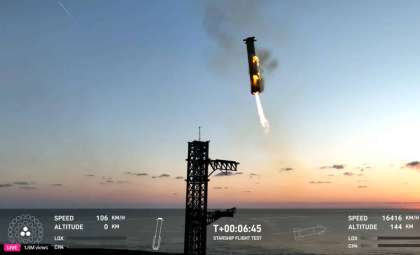
The entire suborbital flight is expected to last just over an hour. Approximately seven minutes post-launch, the Super Heavy booster will separate and land in the Gulf, while the Ship stage is scheduled to splash down 58 minutes after liftoff. Mission controllers are closely monitoring these critical phases as their success will validate Starship’s suitability for upcoming lunar and Martian missions. This important test also ties into NASA’s Artemis program, which has selected Starship as a candidate for crewed lunar landings.
Watch Starship's twelfth flight test https://t.co/wxna6dy4Lh
— SpaceX (@SpaceX) May 21, 2026
Significance for Moon and Mars Missions
A successful demonstration of the V3 Starship could accelerate the timeline for returning humans to the moon and pave the way for Martian exploration. Should Flight 12 and later tests perform as expected, Starship could be involved in the Artemis 3 docking in Earth orbit next year and a lunar surface landing near the south pole during Artemis 4 in 2028. This progress aligns with SpaceX’s broader goal of developing a reusable heavy-lift vehicle capable of supporting long-distance crewed space travel.
The stakes extend beyond NASA's goals. SpaceX envisions Starship not only for crewed lunar missions but also for deploying commercial satellites, ferrying cargo across interplanetary space, and eventually enabling human settlement on Mars. Of particular interest is how well the improved heat shield endures flight stresses, a key factor in enabling safe returns and deep space operations.
Experience a Leap Toward Space’s Future
This launch offers space fans, scientists, and the general public an exciting preview of the technology that may soon transform space travel. The V3 Starship reflects years of innovation, lessons learned from previous setbacks, and an unwavering commitment to push human spaceflight to new horizons. As launch time approaches, the eyes of the world are on this historic attempt that may redefine our path to the stars.
- Categories:
- Space









0 comments
Sign in to Comment