

Orbital has initiated the regulatory process for an extensive space-based computing infrastructure. In just five months since its inception, the startup has submitted a request to the Federal Communications Commission (FCC) seeking approval to launch up to 100,000 satellites functioning as orbital data centers, aiming to provide 10 gigawatts of processing power to support expanding artificial intelligence needs.
The June 24 application unveils fresh technical specifics about the planned satellite constellation, including dimensions, orbital parameters, and their data communication methods. This submission follows soon after the Los Angeles company announced its presence and secured $5 million in pre-seed capital funding.
Orbital is moving into a specialized segment gaining traction in the aerospace sector. According to SpaceNews, multiple players are examining the concept of orbital data centers to address the escalating power, cooling, and spatial challenges faced by terrestrial AI infrastructure.

Satellite Network Designed to Tackle AI Processing Demands
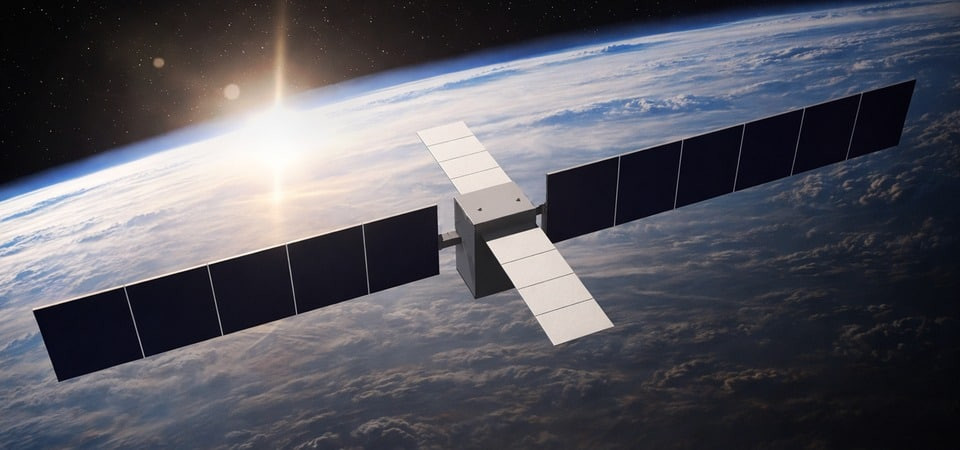
At the heart of Orbital's vision are 100-kilowatt-class satellites operating in low Earth orbit between 500 and 850 kilometers altitude. Each unit would be equipped with solar panels and radiators spanning about 100 meters, with a dry mass estimated between 1.5 and 2.5 metric tons.
These satellites will focus on data processing tasks rather than traditional communication roles. Instead of deploying their own network infrastructure, they plan to connect via optical intersatellite links to third-party systems. The recent FCC submission mentions SpaceX’s Starlink among potential relay constellations.
The company aims to launch a demonstration payload next year, although the initial hardware will be significantly smaller than the satellites intended for full-scale operations.
“The demonstrating payload is going to be a very, very scaled down version of what we’re looking to do with a single GPU,” founder and CEO Euwyn Poon said. “Maybe one one hundredth the size.”
Launch of First Functional Satellite Scheduled for 2028
Following the demonstration, Orbital intends to deploy Orbital-1, its inaugural dedicated compute satellite, targeted for launch in 2028. Poon explained the design will closely mirror the envisioned final production models, though full constellation deployment is expected much later in the decade.
Specifications may evolve prior to completion. Poon highlighted that Starcloud aims for 200-kilowatt satellites across a proposed 88,000-unit array, while SpaceX also outlined plans for 150-kilowatt orbital data centers supporting up to a million satellites.
Orbital’s team of six specialists brings backgrounds from SpaceX, Amazon, and Northrop Grumman, combining deep knowledge in spacecraft design, mass manufacturing, and advanced technologies.

Scaling Up Production and Launch Capabilities Is Essential
Poon recognizes that mass manufacturing of satellites will be among the toughest hurdles. He described orbital data centers as relatively simple platforms consisting mainly of solar arrays, thermal radiators, and electronics, though they must endure space radiation and operate in vacuum environments.
“The complexity is all launch,” Poon explained, highlighting the critical role of heavy-lift rockets in deploying huge constellations.
SpaceNews notes Orbital is one of several ventures awaiting availability of SpaceX’s Starship to enable practical deployment of large-scale orbital computing projects.
While the satellite design progresses in Los Angeles, Orbital is actively seeking manufacturing partners and collaborative opportunities. Poon compared this to his experience with Spin, the scooter startup he previously founded and sold to Ford, where small design tweaks like using swapable batteries greatly improved operations. He believes similar incremental improvements could dramatically benefit a fleet of 100,000 satellites.
- Categories:
- Space








0 comments
Sign in to Comment