
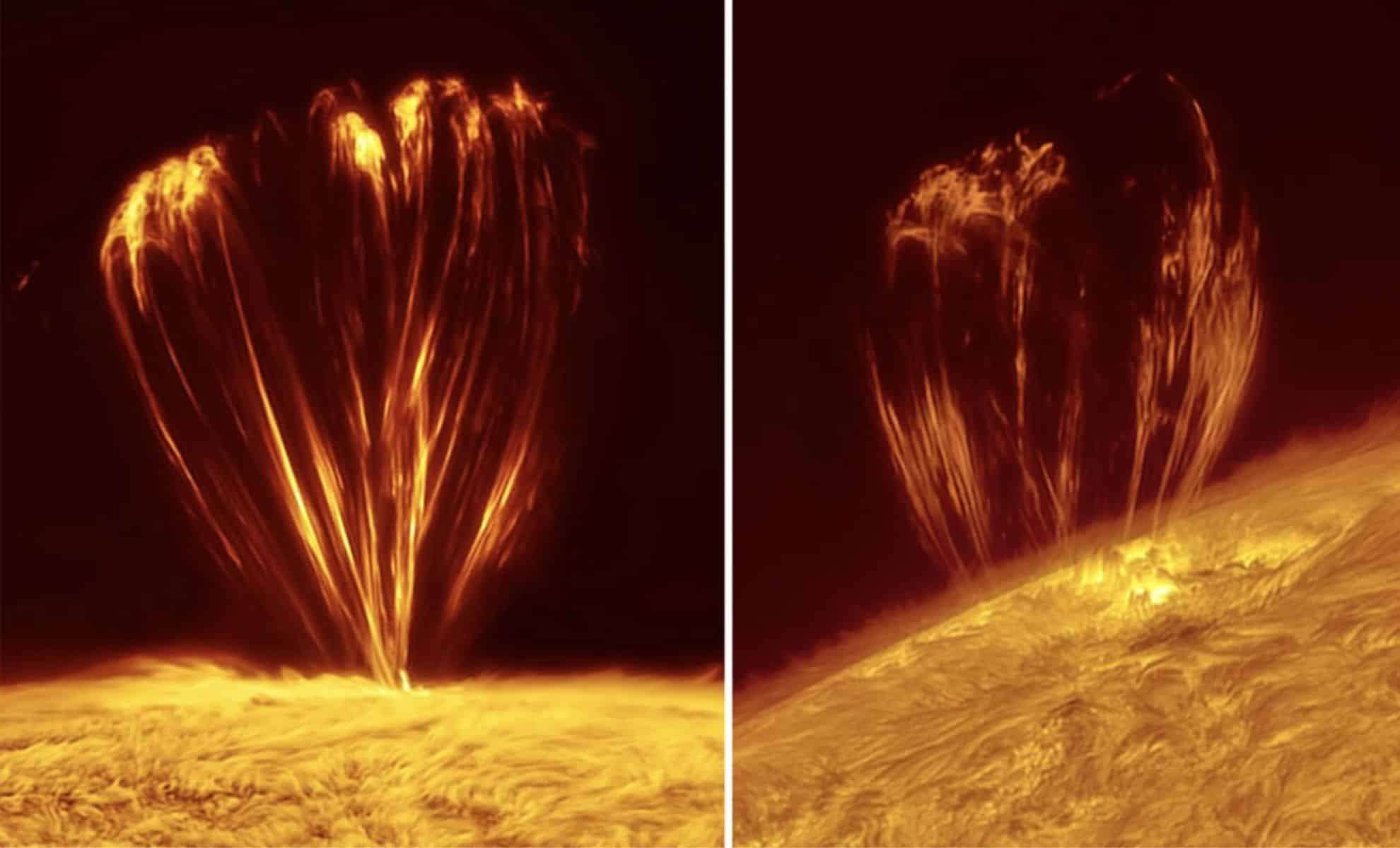
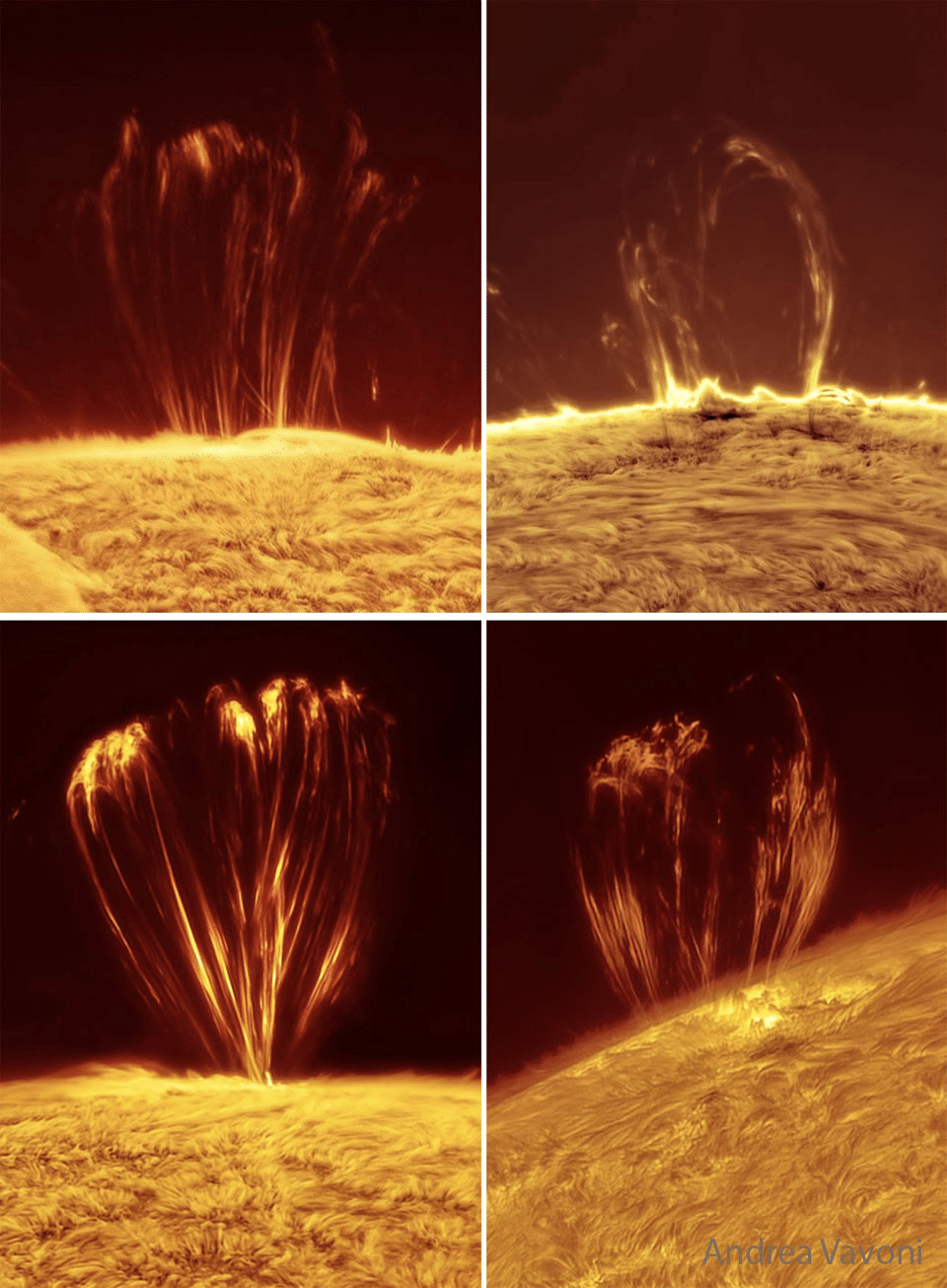
Astronomy Picture of the Day (APOD) from July 30, 2025 showcases a breathtaking photograph of the Sun’s coronal loops, granting a rare inside look into the dynamic forces at play in our closest star. Andrea Vanoni captured this striking image, which highlights coronal loops borne from intense solar magnetic activity. Beyond their visual splendor, these structures have important repercussions for space weather phenomena that can impact Earth’s technology and communication systems. This image, coupled with detailed information, enhances our understanding of the Sun’s intricate magnetic behavior and its extensive influence on our planet.
Understanding Coronal Loops
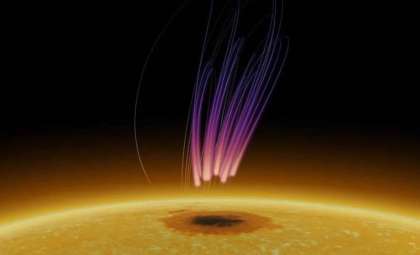
Coronal loops are gigantic arcs of superheated plasma rising from the solar surface, creating striking looped shapes in the Sun’s corona. These formations are guided by the Sun’s magnetic field lines, which channel the ionized plasma, made chiefly of electrons and protons, into looped structures that spiral and twist visibly from our perspective on Earth. The loops in Vanoni’s photograph were snapped near the solar limb, highlighting the specific wavelength from hydrogen emissions, vividly showcasing the plasma's temperature and motion.
Remarkably, these loops can stretch over distances large enough to enclose Earth entirely. Some persist for several days, revealing the magnetic field’s astonishing stability. They usually appear over active solar regions, often near darkened sunspots—areas characterized by intense magnetic forces on the Sun’s surface.

The Link Between Solar Activity and Sunspots
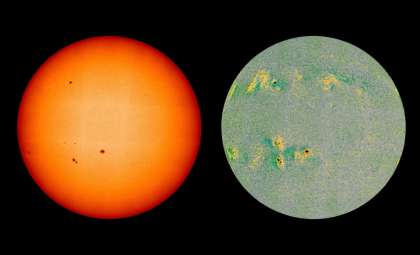
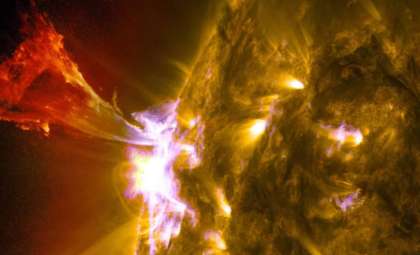
Solar prominences, such as these coronal loops, commonly emerge from magnetically active zones on the Sun, frequently accompanied by sunspots — cooler, darker patches caused by strong magnetic fields beneath the surface. The relationship between sunspots and coronal loops is vital for solar research. More sunspots typically mean an increased likelihood of loop formations. This interplay is essential for understanding solar magnetic dynamics and is key for predicting energetic solar phenomena like solar flares and coronal mass ejections (CMEs), which can disrupt Earth’s magnetosphere.
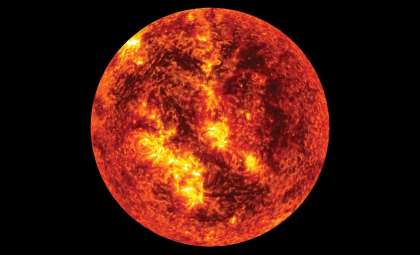
The Sun's magnetic environment continually shifts, driving spectacular solar events. Coronal loops reflect phases in the approximately 11-year solar cycle, moving from periods of minimal activity to peak magnetic turbulence. The solar maximum phase often corresponds with more abundant sunspots and more dramatic solar phenomena.
Implications of Solar Eruptions on Space Weather
When solar prominences burst, they eject vast amounts of energy and charged particles into space in events called coronal mass ejections (CMEs). These energetic streams traverse the solar system and sometimes collide with Earth. Upon arrival, they interact with our planet’s magnetosphere, triggering geomagnetic storms that can disrupt satellites, GPS navigation, and communications.
As society relies heavily on technology, the effects of CMEs have grown more critical. Recent occurrences have interfered with satellite systems and GPS accuracy, and potent CMEs directed at Earth have the capacity to damage electrical grids, potentially causing prolonged power outages.
Thankfully, scientists employ numerous space-based observatories to track solar activity continuously. These real-time observations enable the forecasting of flares and CMEs, helping to provide early alerts that mitigate damage and prepare technologies for solar weather disturbances.
The Growing Role of Amateur Telescopes in Solar Studies
The breathtaking image capturing these coronal loops was taken with a personal telescope located in Mantova, Italy. This demonstrates how advancements in aperture technology have empowered amateur astronomers to observe detailed solar phenomena. While professional space observatories supply wide-ranging solar data, private telescopes equipped with specialized solar filters allow enthusiasts to safely study our star and contribute important observational data.
The accessibility of sophisticated equipment and imaging methods means that amateur astronomers now play an increasingly valuable role. By documenting prominences and coronal loops, they deepen the collective knowledge of solar physics and inspire curiosity, education, and engagement with the science of the Sun and the cosmos.
- Categories:
- News

0 comments
Sign in to Comment