

A recent study published in Physical Review X reveals strong evidence for a mysterious “helicity barrier”. This previously theoretical structure helps clarify why the Sun's corona is significantly hotter than its visible surface. The breakthrough comes from detailed measurements by NASA’s Parker Solar Probe, which has ventured closer to the Sun than any spacecraft before. These observations may solve the enduring coronal heating puzzle that has confounded scientists since 1939.
The Solar Atmosphere’s Heat Mystery: Understanding the Coronal Temperature Spike
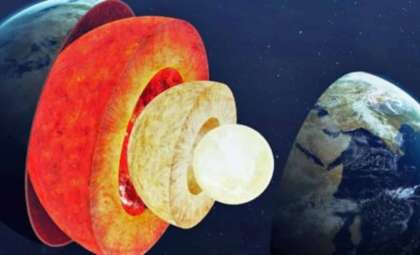
The Sun’s core reaches a staggering 27 million °F (15 million °C), where powerful nuclear fusion reactions take place. NASA points out, “While the core is the Sun’s hottest region, the visible surface, called the photosphere, remains much cooler at roughly 10,000 °F (5,500 °C).” Surprisingly, moving outward into the solar corona, temperatures climb again, peaking near 3.5 million °F (2 million °C). This steep temperature increase away from the surface characterizes the coronal heating problem, a scientific challenge for over eight decades.
The key question is how energy generated inside the solar interior travels outward to heat the outer atmosphere, despite it being located farther from the Sun’s main energy source. Existing theories such as magnetic turbulence and ion cyclotron wave heating have been proposed, yet none fully account for the observed heat distribution. The idea of a helicity barrier offers a promising explanation by reconciling conflicting models and producing predictions consistent with observed solar wind data.

Decoding the Helicity Barrier’s Role in Solar Plasma
The helicity barrier represents a physical “blockade” in the Sun’s plasma dynamics that alters how magnetic and thermal energy are dissipated. As Dr. Romain Meyrand, a principal researcher, explains, “If you picture plasma heating like water flowing down a slope, with electrons heated at the bottom, then the helicity barrier functions like a dam that stops the flow and converts energy into ion cyclotron waves.” Essentially, this barrier redirects energy, heating heavier particles (such as protons and ions) more intensely while keeping electrons relatively cooler.
“Previous models faced challenges—turbulence couldn’t fully explain why light elements like hydrogen, helium, and oxygen heat so much compared to electrons, while magnetic wave models lacked sufficient wave strength to cause such heating,” Meyrand adds. The helicity barrier merges these ideas, showing that the Sun’s magnetic geometry restricts energy flows, boosting wave-particle interactions only in specific scenarios. Thanks to Parker's advanced instruments, these conditions have become measurable for the first time.
Confirming the Barrier Through Solar Wind and Magnetic Field Observations
Scientific acceptance hinges on a theory’s ability to make verifiable predictions. The helicity barrier theory forecasts distinct patterns in magnetic field variations connected to the ratio of thermal to magnetic energy. “The barrier emerges only when thermal energy is relatively low compared to magnetic energy. Because magnetic fluctuations behave differently with or without the barrier, tracking these changes under solar wind conditions relevant to its formation provides a test for its presence,” researchers explain.
Examining data gathered by Parker Solar Probe during its closest solar passes, the team discovered that observed solar wind magnetic fluctuations precisely matched theoretical predictions. “Our analysis demonstrates that fluctuations align exactly with expected changes in solar wind parameters that characterize barrier formation, and these required conditions are frequently found near the Sun,” they report.
This strong empirical-theoretical agreement not only confirms the helicity barrier’s reality but also establishes it as a crucial mechanism responsible for selective heating of solar wind ions and explaining variations between different solar wind streams.
- Categories:
- News







0 comments
Sign in to Comment