
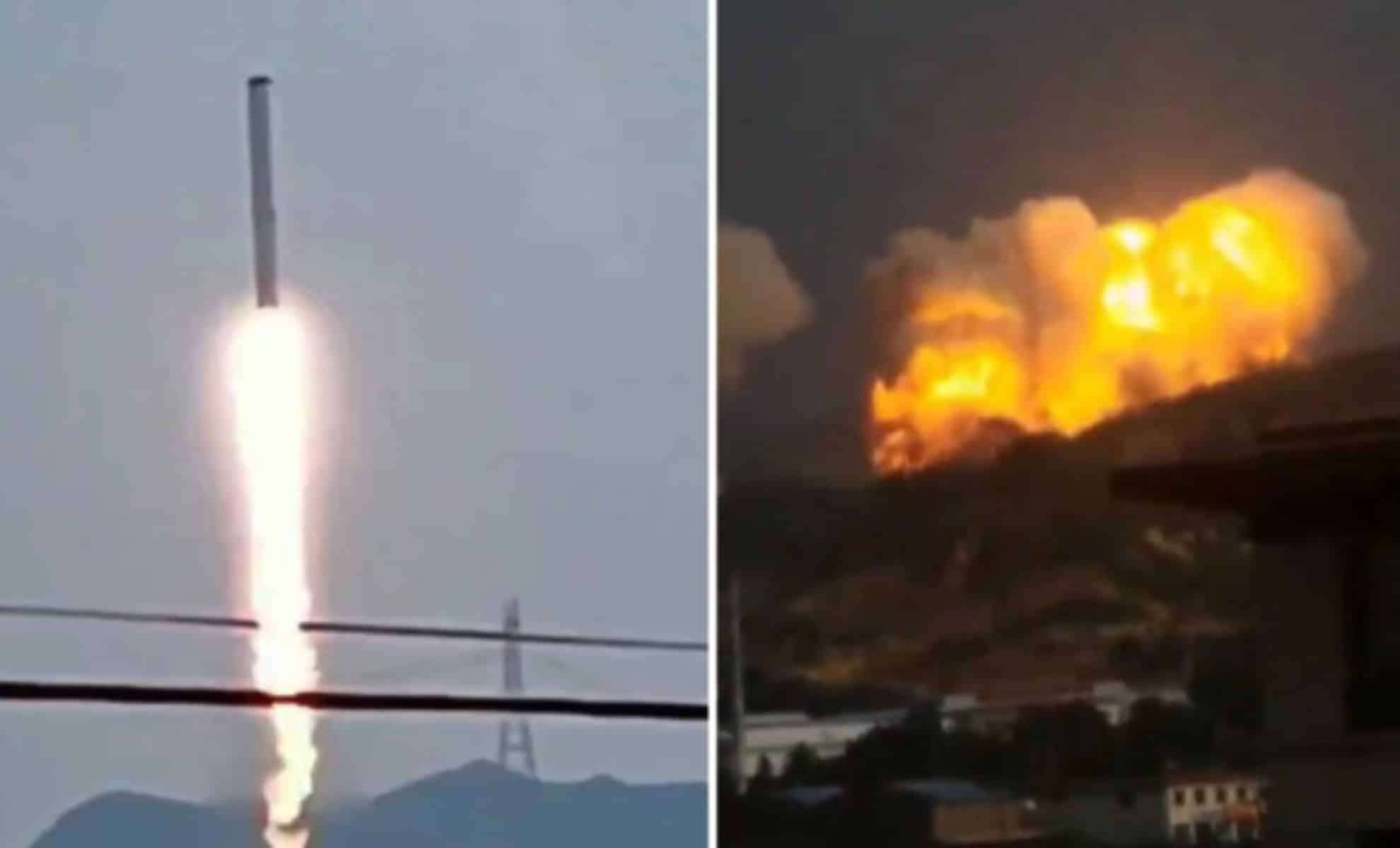
Space Pioneer, a Chinese aerospace enterprise, faced a major challenge when its Tianlong-3 rocket accidentally ignited during a routine test, culminating in a fiery crash.
The unexpected event took place close to Gongyi city in Henan province. Fortunately, no injuries were reported despite the dramatic nature of the accident.
What Happened During the Test
Tianlong-3 was undergoing a static fire test, a typical procedure where the rocket’s engines fire while the vehicle remains secured to the test platform. However, during the test, a mechanical failure caused the rocket to detach from its restraints and ascend several hundred meters before crashing.

Space Pioneer explained that the accident stemmed from an insufficiently secured connection between the rocket and the test stand. “Due to structural failure, the rocket was not properly held and unexpectedly launched from the test stand,” the company said. Footage shows the rocket lifting off briefly before losing thrust, tilting horizontally, and crashing into a nearby mountain leading to a fiery explosion.
The remarkable recording quickly circulated on social media, highlighting the risks involved in rocket testing. The Tianlong-3’s rogue flight and explosive end near Gongyi emphasize the potential hazards tied to mechanical failures in such controlled environments. This incident has sparked conversations about the strength of safety protocols and the durability of rocket structures under stress.
Safety Precautions and Consequences
Space Pioneer assured that safety protocols were carefully implemented and that the test area was deliberately chosen to be remote from urban centers. The site where the rocket crashed is located in a hilly region about 5 kilometers away from Gongyi’s central district and less than one kilometer from a small village.
The Gongyi emergency management bureau confirmed debris landed within a designated safety perimeter, causing a fire which was promptly extinguished. “The test location is situated well outside Gongyi's main urban zones,” Space Pioneer emphasized, although the incident's closeness to inhabited areas has raised some safety concerns.
Rapid intervention by emergency teams helped quickly contain the fire and prevent injuries or further danger. The company’s claim that the facility is isolated from large population centers aims to alleviate public and investor worries regarding safety standards.
Nevertheless, the event’s proximity to residential areas has prompted ongoing discussions on whether current safety measures suffice or if more rigorous regulations and safer test venues should be implemented to prevent similar future events.
Effects on Space Pioneer’s Trajectory
Founded in 2019, Space Pioneer has established itself as a rising star among Chinese private space ventures. Just over a year ago, it became the first private Chinese company to successfully reach orbit using a liquid-fueled rocket, the Tianlong-2, accomplishing the feat on the vehicle’s maiden flight. However, the Tianlong-2’s engines were supplied by the state-run Academy of Aerospace Liquid Propulsion Technology. For the larger Tianlong-3, Space Pioneer has been developing its own kerosene-powered engines, named TH-12.
This accidental ignition marks a significant hurdle, especially as Space Pioneer was preparing for the Tianlong-3’s inaugural launch later this year. Static fire tests of the first stage serve as critical final validations before any official launch. The company has not yet announced a revised schedule but pledged to complete a detailed failure investigation promptly.
The incident’s ramifications for Space Pioneer are considerable: technically, it exposes possible weaknesses in the rocket’s mechanical design and clamping methods during testing. From a business standpoint, the mishap could postpone upcoming missions, increase expenses, and potentially undermine investor confidence.
Rebuilding trust will necessitate thorough corrective actions and demonstrations of improved reliability. This episode could become a turning point for Space Pioneer, pushing the firm to enhance its engineering standards and recommit to safety and innovation in its rocket programs.




0 comments
Sign in to Comment