

A team of astronomers has recently caught sight of a remarkable surge in brightness from a remote galaxy, signaling the abrupt activation of a colossal black hole at its center.
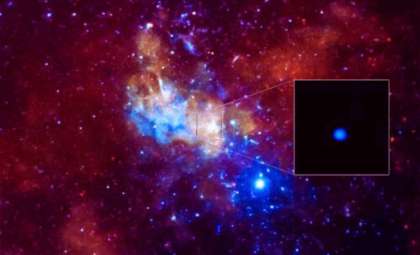
This significant occurrence involves a black hole with a mass approximately one million times that of our sun, situated within the Virgo constellation. This rapid ignition provides researchers an extraordinary chance to examine the turbulent phenomena inside a galaxy's core, shedding light on the behavior of these mysterious cosmic giants.
Unveiling the Phenomenon: Insights into Massive Black Hole Dynamics
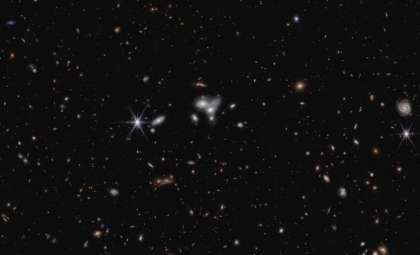
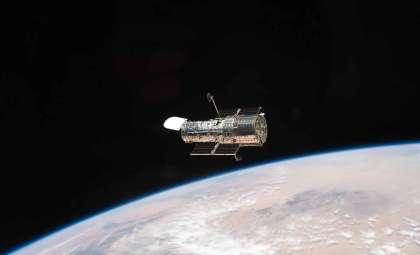
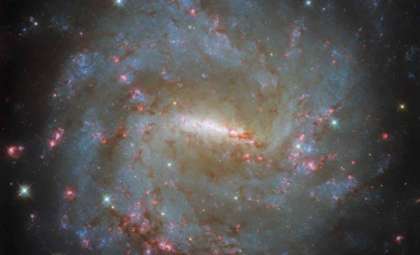
The affected galaxy, known as SDSS1335+0728 and located roughly 300 million light-years from Earth, exhibited a notable increase in luminosity in late 2019. The initial detection came from the Zwicky Transient Facility in California, which prompted extensive follow-up investigations using multiple telescopes both on Earth and in space.

According to Dr. Paula Sánchez-Sáez from the European Southern Observatory in Germany, “We observed this source right as it began to show variability in its brightness. This is an unprecedented real-time observation.”
Watching this event unfold in real time marks a pivotal breakthrough, enabling scientists to capture the immediate effects stemming from a black hole’s sudden activation.
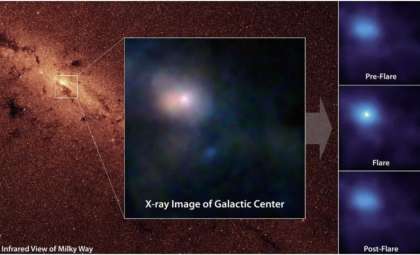
Since that period, the galaxy’s brightness has surged—doubling in mid-infrared wavelengths, quadrupling in ultraviolet emissions, and escalating tenfold in the X-ray spectrum. Experts suggest this rise in light output stems from the central black hole devouring nearby matter.
This accretion process unleashes tremendous energy, heating surrounding gases so they radiate light across a wide range of wavelengths. Such behavior signals the emergence of an active galactic nucleus (AGN), where the black hole’s feeding triggers a significant luminosity boost.
Active Galactic Nucleus or Star Disruption?
The intense brightening of SDSS1335+0728 has prompted researchers to explore various hypotheses. A prominent idea is that an active galactic nucleus has formed, characterized by the black hole voraciously consuming material and emitting strong radiation. AGNs are noted for their brilliant emissions caused by intensely heated gas and dust close to the black hole.
Alternatively, this flare-up might stem from a tidal disruption event, wherein a star is shredded by the black hole’s extreme gravitational forces. Such incidents typically produce a burst of brightness lasting several hundred days. However, pinpointing the exact cause requires additional monitoring. “Based on current data, distinguishing between these scenarios remains challenging,” explained Dr. Sánchez-Sáez. “Ongoing observations are crucial.”
Tracking Developments: What Future Observations Could Reveal
Ongoing surveillance of SDSS1335+0728 is vital to unravel the detailed mechanisms behind this rare occurrence. This episode delivers a unique window into the live behavior of a supermassive black hole interacting with its galactic environment, offering valuable knowledge about such spectacular cosmic events.
As the data pool expands, astronomers aim to determine whether this is an active galactic nucleus event or a tidal disruption occurrence, enhancing our grasp of the fundamental cosmic forces shaping the universe.
The abrupt ignition of this giant black hole and its resulting illumination of the host galaxy constitute an invaluable chance for scientists. Continued observation and analysis will deepen understanding of how black hole activity operates and influences galaxies on a grand scale.
- Categories:
- Astronomy ,
- News ,
- Space




0 comments
Sign in to Comment