
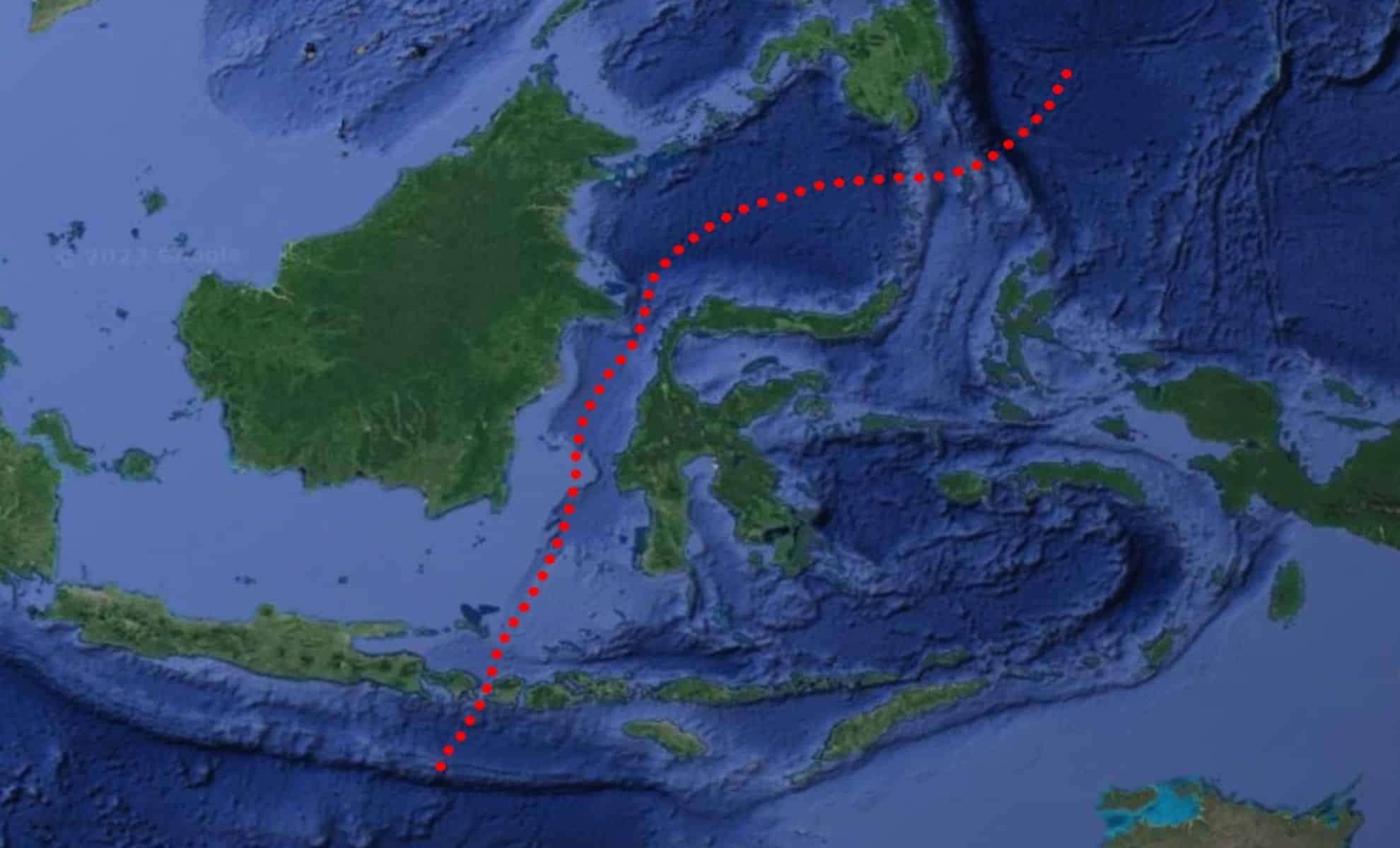
At the heart of Southeast Asia, where the vibrant rainforests of Borneo meet the seas near Sulawesi, there exists an elusive dividing line that has intrigued scientists for over 100 years. Dubbed the Wallace Line, this invisible boundary marks a stark division between two distinct biological zones. On one side roam familiar Asian megafauna like tigers, elephants, and rhinos, while just across the divide, one finds marsupials, cockatoos, and kangaroos more typical of Australia.
Although the islands separated by the Wallace Line are a mere 15 miles apart, their flora and fauna exhibit completely different compositions, as if an unseen barrier prevents species migration. Unlike obvious natural obstacles such as mountains or deserts, this boundary lies submerged beneath ocean waters, making it one of the most remarkable evolutionary obstacles ever documented.
Decades of research have focused on understanding this biological frontier and the ways it has influenced species evolution up to the present day.

Geological Roots of a Biological Divide
Far from being an arbitrary marker, the Wallace Line traces the Makassar Strait, a deep seabed trench that has kept landmasses apart for millions of years. Unlike other parts of Southeast Asia where ice-age land bridges emerged, this trench remained underwater, isolating animal populations and fostering divergent evolutionary paths.
Ecologist Dr. Penny Van Oosterzee at James Cook University has extensively studied the Wallace Line. She highlights it as a vivid example of how even small geographic barriers can significantly shape biodiversity.
The line derives its name from Alfred Russel Wallace, a British naturalist and contemporary of Charles Darwin. In the mid-1800s, Wallace observed remarkable contrasts in species across the Malay Archipelago, helping establish biogeography and lending vital evidence for the theory of natural selection.
However, modern scientists are reevaluating whether the Wallace Line’s original course perfectly captures the complex biogeographical realities now known.
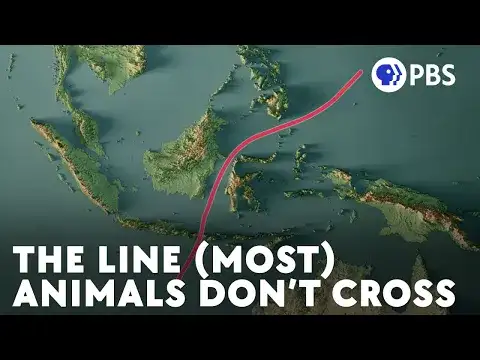
New Discoveries Prompt a Rethink of the Wallace Line
Emerging studies suggest the classic positioning of the Wallace Line could need revision. Research led by Jason Ali and his team at the University of Hong Kong argues that the boundary might be more accurately drawn further east, placing some islands on the Australasian side.
In their peer-reviewed paper published in the Biological Journal of the Linnean Society, Ali’s group states, “We propose redrawing Wallace’s Line to reflect current biological and genetic data more precisely.”
Such a shift illustrates the dynamic nature of scientific understanding, as fresh data on species distribution and evolutionary links refine our perception of natural boundaries.
Regardless of the exact placement, the core biological separation remains unmistakable. Yet, a curious question persists: why do even airborne creatures rarely cross this narrow marine gap?
The Mystery of Avian Reluctance to Cross
One might assume that birds, capable of extensive flight, would disregard the Wallace Line. Nevertheless, avian species tend to remain confined to their respective sides due to factors beyond mere geography—such as climate differences, food resources, and ecological adaptations.
The Asian region is inhabited by species like hornbills and pheasants, while the Australian side is known for cockatoos and parrots. These birds depend heavily on specialized environments and diets; crossing the strait exposes them to unfamiliar and unsuitable conditions, limiting their survival.
This evidence underscores that the Wallace Line represents more than physical separation—it is a boundary molded by millions of years of evolutionary divergence.
Beyond Wildlife: Human Impact and Cultural Divides
The Wallace Line also reflects differences in human populations. Historical records reveal distinctions in genetics, languages, and cultural practices among communities on each side.
Dutch scholar Fenneke Sysling from the University of Utrecht examined accounts from early European explorers highlighting these contrasts. “Travelers noted not only the disparity in flora and fauna but also the marked differences in the physical and cultural traits of indigenous peoples,” Sysling states.
These observations have fueled ongoing debate about the role of geographic isolation in human evolution and diversity. Some evidence suggests the Wallace Line influenced ancient human migration patterns, which may explain present-day genetic and cultural variation in the region.
Climate Change and the Future of the Wallace Line
Despite its age-old stability, the Wallace Line faces potential disruption from climate change and human activities. Deforestation, habitat loss, and altered climate conditions are pushing species into new ranges, challenging the integrity of this natural barrier.
Scientists are monitoring whether the Wallace Line will continue to function as a strict evolutionary border or if it will erode over time. Rising sea levels and habitat modification might enable crossovers between species previously confined, potentially transforming ecosystems maintained for millions of years.
In any case, the Wallace Line remains a compelling symbol of nature's power. It reminds us that evolution is ongoing, deeply influenced by geographical factors, chance, and time. The more we explore it, the more profound mysteries of the natural world come into view.
- Categories:
- News







0 comments
Sign in to Comment