
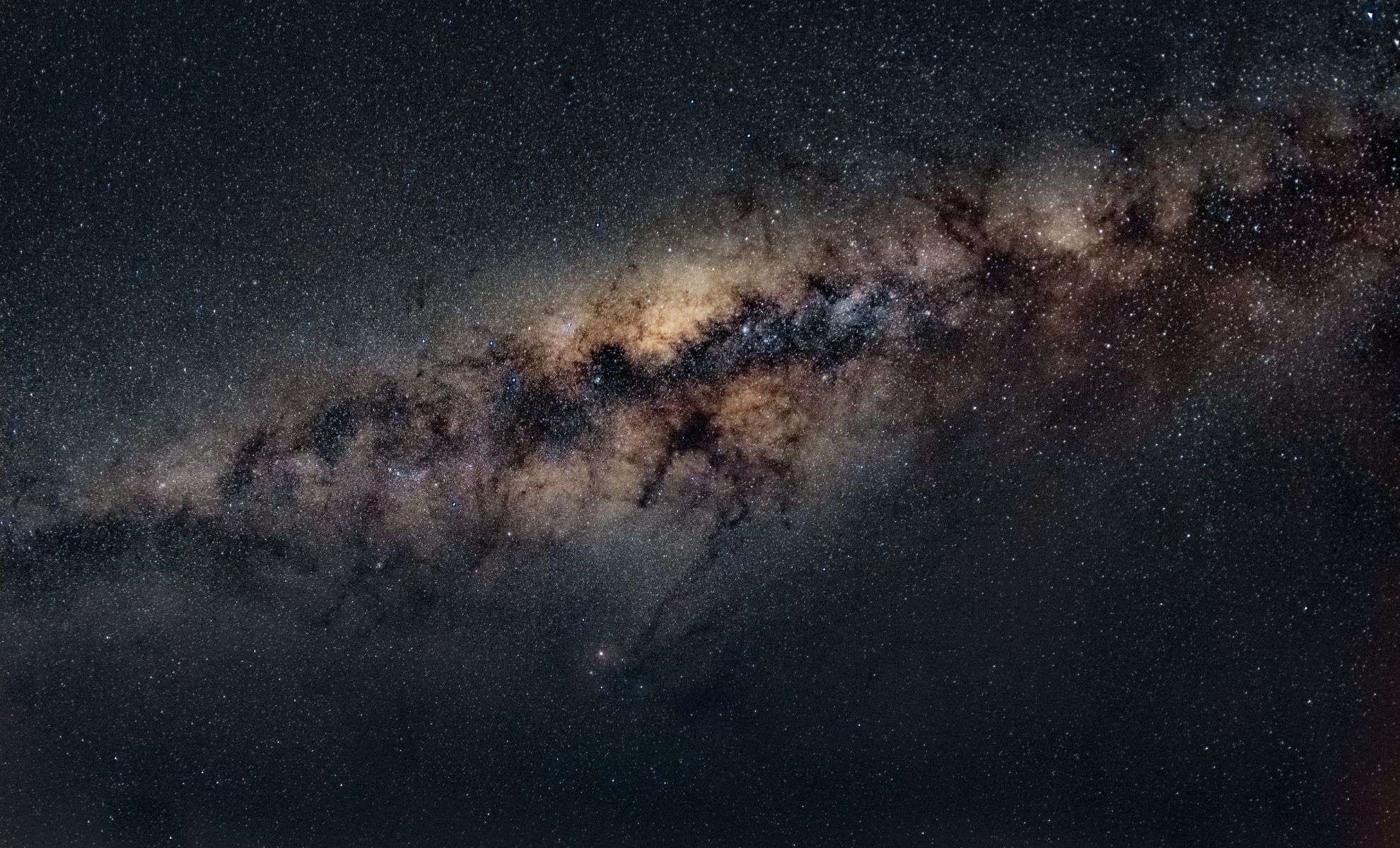
For decades, astronomers have treated the Milky Way as a standard model to understand how galaxies form and evolve, assuming its traits were common. Yet, cutting-edge research from the Satellites Around Galactic Analogs (SAGA) Survey has upended this belief by showing our galaxy stands out in significant ways. By studying 101 galaxies comparable in size to the Milky Way, scientists uncovered notable differences in satellite counts, stellar birth rates, and dark matter effects, prompting new perspectives on galactic diversity.
What Sets the Milky Way Apart?
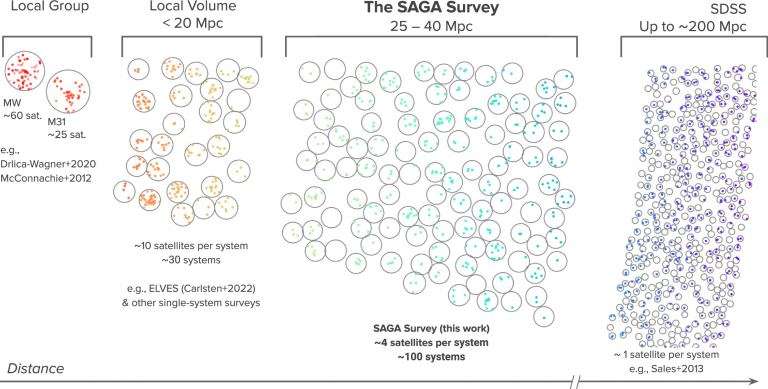
The distinguishing factor of the Milky Way appears to be its satellite galaxy population. The SAGA Survey's third data release evaluated 378 satellites orbiting 101 galaxies of similar scale, unveiling satellite numbers ranging from none to thirteen per galaxy. In stark contrast, the Milky Way possesses only a handful of prominent satellites, such as the Large and Small Magellanic Clouds, tallying just four major companions overall, as detailed in this report.
“The Milky Way has been a remarkable laboratory for understanding both galaxy formation and dark matter physics,” stated Risa Wechsler, co-founder of the SAGA Survey and professor at Stanford University and SLAC National Accelerator Laboratory. “Nonetheless, it represents a single case, and may not typify the evolutionary paths of other galaxies. This makes comparative studies essential.”

The survey concluded that such a low number of satellites like the Milky Way’s is uncommon. Typically, galaxies exhibited significantly more satellites with ongoing star formation, suggesting the Milky Way’s growth history is somewhat unique.
Star Formation Patterns in Satellite Galaxies
The study also highlights differences in star formation rates (SFRs) across satellite galaxies. While satellites orbiting other Milky Way-like hosts continue to form stars actively, most satellites of our Milky Way have had their star formation suppressed, except for the Magellanic Clouds. Satellite proximity to their host plays a role, as those nearer to the main galaxy often have reduced or halted star formation due to the gravitational influence and dark matter halo effects.
“Our findings indicate that lower-mass satellites, particularly those within 100 kiloparsecs, experience more effective quenching in environments like the Milky Way,” one report explained. The interplay of gravitational forces and halo dynamics appears to have shut down star formation in most satellites, although the ongoing activity in the Magellanic Clouds presents a fascinating anomaly.
“This presents a puzzle,” said Wechsler. “What has caused the cessation of star formation in these smaller satellites? Perhaps the Milky Way hosts an uncommon mix—older satellites with quenched star formation alongside newer, active ones such as the LMC and SMC that only recently became part of its dark matter halo.”
Dark Matter’s Crucial Influence on Galaxy Systems
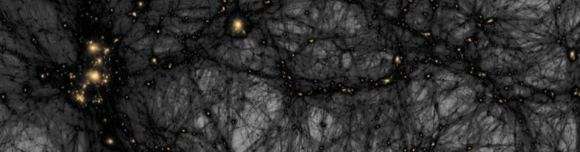
The SAGA Survey also enriched understanding of dark matter, the elusive component making up about 85% of the universe’s total mass. Dark matter halos are believed to orchestrate galaxy formation by funneling ordinary matter used to create stars and planets. The researchers identified that the largest satellite’s mass correlates strongly with how many satellites a galaxy system has.
Wechsler stressed that exploring dark matter’s effects at smaller scales remains a frontier in galaxy research. “A key challenge is uncovering what dark matter does within regions smaller than the Milky Way, especially in the smaller halos that encircle these dwarf satellites.” By examining the connections between dark matter halos and satellites, scientists aim to unlock deeper insights regarding galaxy growth in varying conditions.
Simulating the Milky Way’s Distinctiveness
Advanced simulations were utilized to test the observations against predictions from prominent tools like the Sloan Digital Sky Survey and the Universe Machine, an intricate galaxy evolution model. The models successfully replicated the unique satellite numbers and star formation patterns seen in the Milky Way, reinforcing the conclusion that it is indeed an outlier. Yet, the team emphasized the need for further observational evidence to fine-tune these models and better comprehend the mechanisms at work.
Wechsler concluded that the SAGA Survey has only scratched the surface: “SAGA establishes a foundation to deepen our knowledge of the universe by studying satellite galaxies beyond our own. Although we have mapped bright satellites in 101 host galaxies, there’s still much more to explore.”




0 comments
Sign in to Comment