
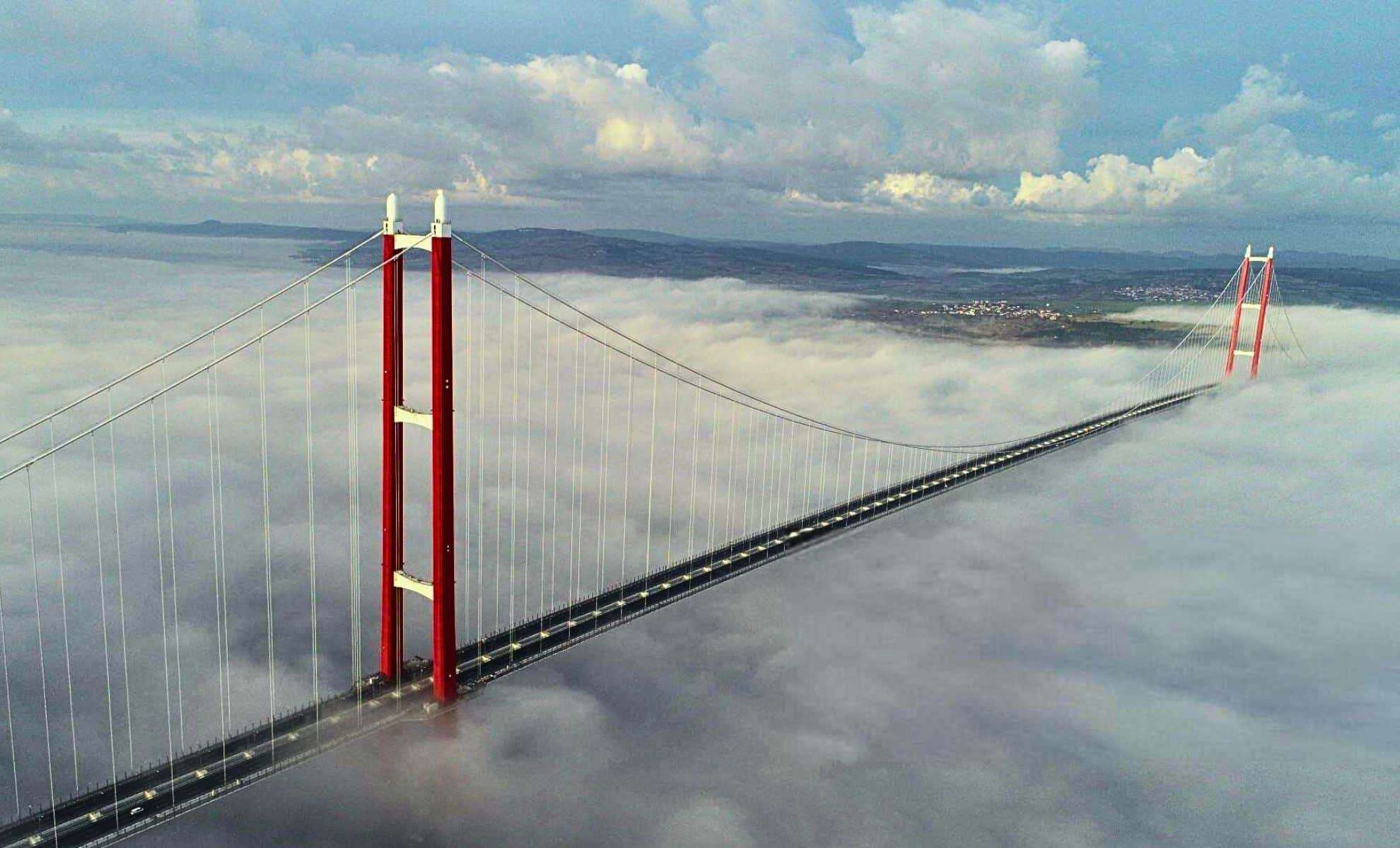
The 1915 Çanakkale Bridge stands as a testament to modern engineering ingenuity, reshaping travel between Europe and Asia. Stretching across the Dardanelles Strait in Turkey, this landmark bridge symbolizes Turkey's expanding influence on the world stage.
Bridging Two Continents Like Never Before
Measuring an impressive 2,023 meters in length, the 1915 Çanakkale Bridge holds the title of the longest suspension bridge worldwide. Situated between Gelibolu on the European shore and Lapseki on the Asian side, its towers reach a world-record height of 318 meters. This colossal structure dramatically reduces travel times across continents by an extraordinary 93%.
Prior to the bridge’s debut, ferry crossings over the Dardanelles Strait took nearly 90 minutes. Now, that journey takes only six minutes. This infrastructure marks a significant leap forward in connecting the continents, easing traffic flow and fostering stronger economic relationships.

A Monument of Historical Significance
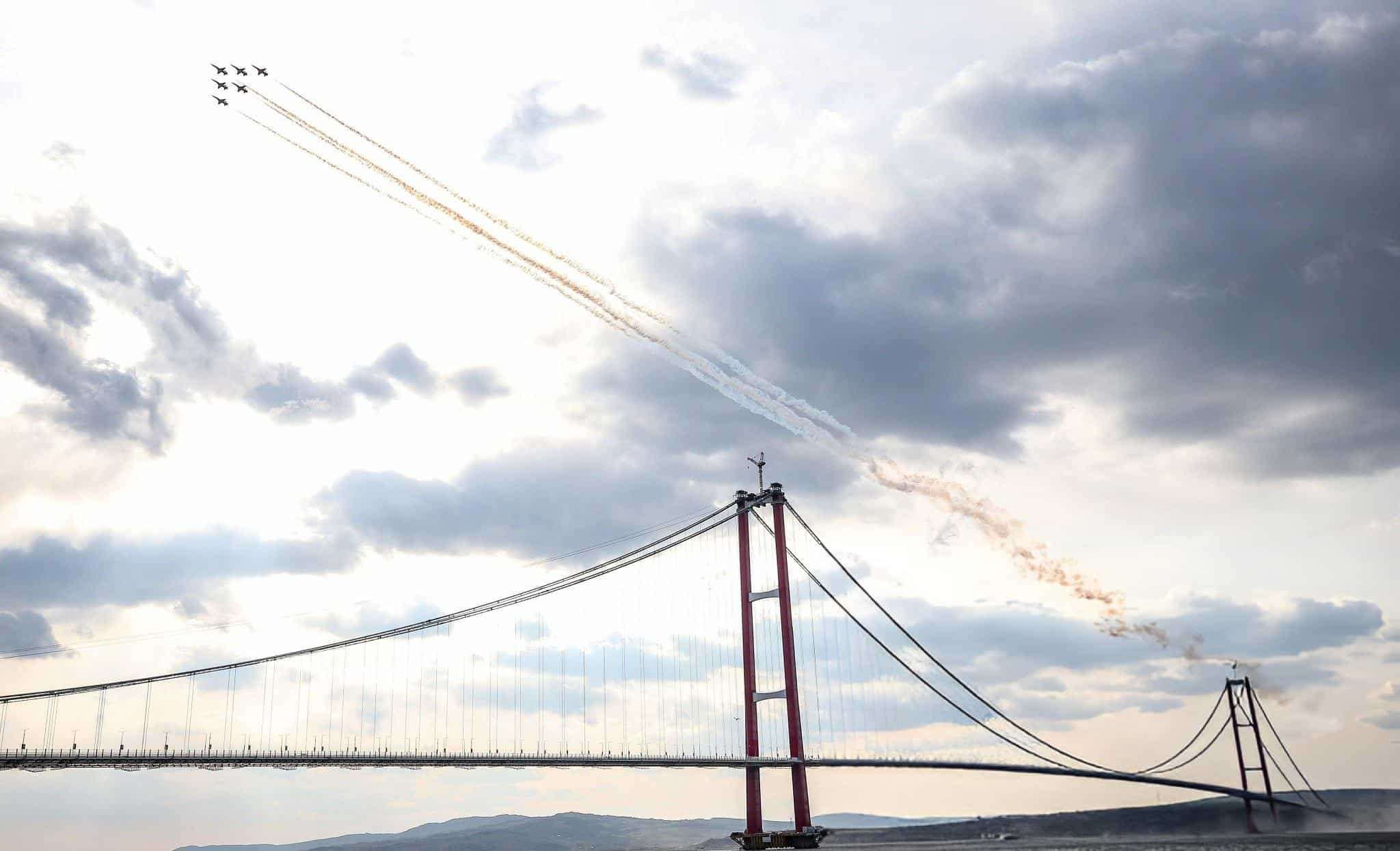
More than just an engineering landmark, the 1915 Çanakkale Bridge is steeped in cultural and historical meaning. Its name commemorates the 1915 Gallipoli Campaign, during which Turkish forces achieved a crucial victory in World War I over British and French troops. The date holds profound importance in Turkish national memory.
The official opening took place in March 2022, with Turkish President Recep Tayyip Erdoğan presiding over the event. Erdoğan highlighted the bridge as both a symbol of Turkey's progress and a practical infrastructure solution to regional transit challenges.
Key elements of the bridge reflect Turkey’s heritage and dedication:
- Length of 2,023 meters symbolizing the 100th anniversary of the Turkish Republic’s founding in 2023.
- Height of 318 meters honoring the 318 Turkish soldiers who lost their lives during the Gallipoli Campaign, a solemn tribute to their sacrifice.
This fusion of advanced engineering and rich symbolism makes the 1915 Çanakkale Bridge a powerful emblem of Turkey’s history and resilience.

Revolutionizing Commute and Enhancing Connections
The 1915 Çanakkale Bridge’s greatest impact lies in significantly cutting travel times over the Dardanelles Strait by 93%. This striking improvement has profoundly influenced the local economy, logistics, and the tourism industry. By reducing the ferry crossing to merely six minutes, the bridge has:
- Streamlined logistics: Accelerating the movement of goods and supporting trade between Turkey’s European and Asian regions.
- Fortified regional integration: Enabling smoother transit of people and services, fostering closer cooperation across sectors.
- Boosted tourism: Offering easier access and drawing global visitors attracted by the bridge’s monumental scale.
Additional Advantages:
- Travel duration: Cut from 90 minutes by ferry to 6 minutes via the bridge.
- Cost efficiencies: Less fuel usage and reduced emissions save around €415 million annually.
- Economic opportunities: The enhanced transport route opens new avenues for commerce on both continents.
Financial and Environmental Benefits
Completed in 2022, the bridge’s construction required an investment of approximately €2.5 billion ($2.7 billion). Beyond its initial expense, it has delivered significant economic and ecological returns:
- Fuel efficiency: The time savings lower fuel consumption that ferries once required.
- Eco-friendly impacts: The project supports Turkey’s environmental targets by cutting carbon emissions from ferry operations.
- Investment payback: Annual savings, including less fuel use and shorter trips, are estimated at €415 million.
Additionally, the bridge is a key element in Turkey’s broader infrastructure agenda, which includes new tunnels and airports, strengthening its strategic role as a transcontinental transportation hub.
A Strategic Link on the World Stage
Besides its practical utilities, the 1915 Çanakkale Bridge carries significant geopolitical importance. By physically linking Europe and Asia, it fortifies Turkey’s role as a gateway between East and West. The bridge contributes to:
- Elevating Turkey’s geopolitical status: Improved connectivity enhances Turkey’s influence as a vital Eurasian corridor.
- International partnerships: Developed as a collaborative project involving Turkish and Korean firms, with design led by Danish engineers at COWI, it showcases global cooperation.
- South Korea’s role: The involvement of South Korean companies highlights the project’s international economic ties and significance.
Laying the Foundation for Future Mega Projects
The 1915 Çanakkale Bridge exemplifies how large-scale infrastructure can drive economic progress and sustainability. As Turkey advances its development agenda, this bridge sets a benchmark for future ambitious projects worldwide.
While concerns about environmental impacts remain for projects of this magnitude, the bridge’s success in transforming regional connectivity will likely inspire similar undertakings internationally.








0 comments
Sign in to Comment