
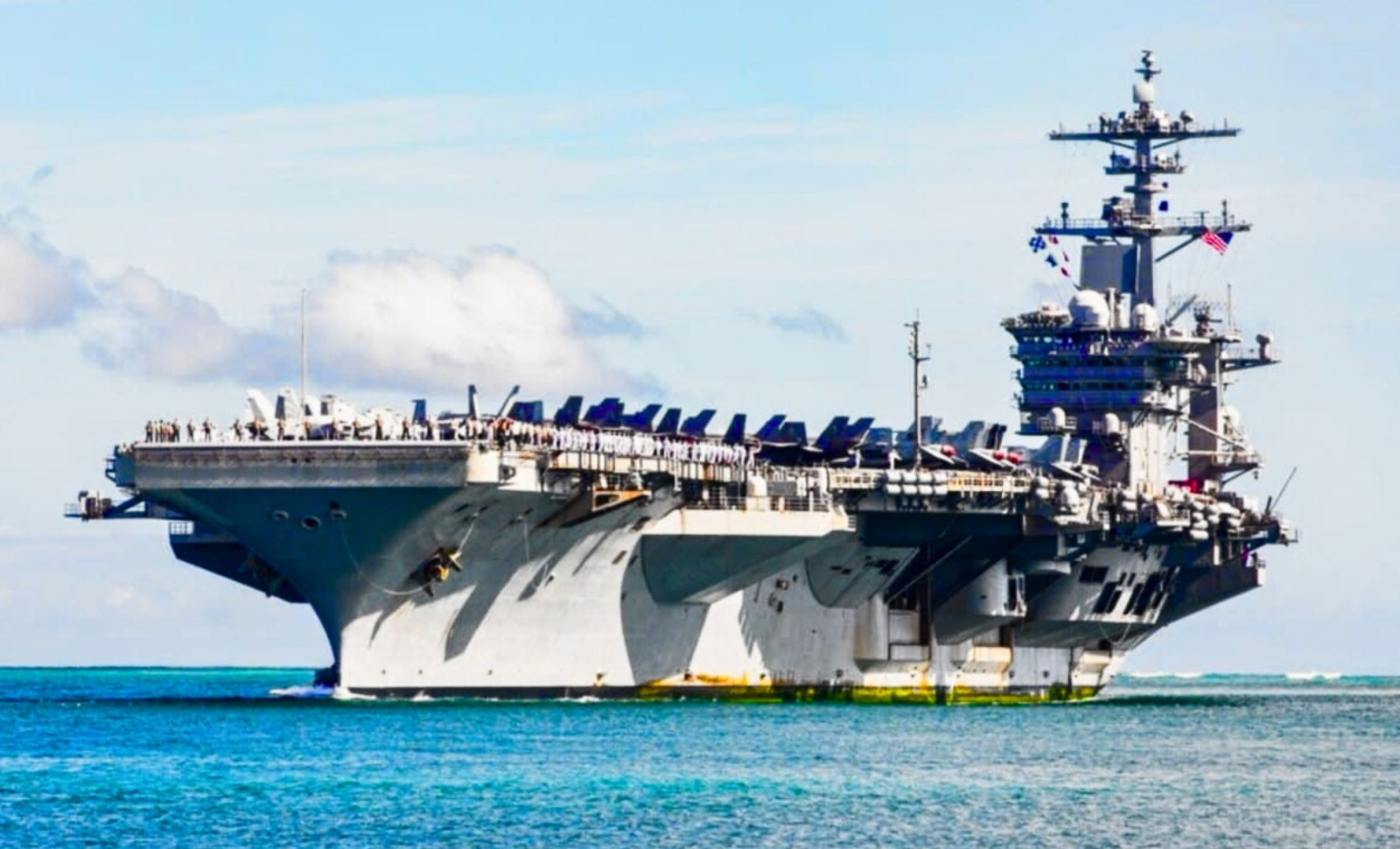
The USS Abraham Lincoln, a major American Navy supercarrier, has resumed active operations in the South China Sea, a region marked by contested sovereignty. In early January 2026, the carrier executed live-fire drills near reefs fiercely claimed and militarized by China, with no prior public announcement until visuals were published days later.
Following the release of images via the U.S. Defense Visual Information Distribution Service (DVIDS), the Nimitz-class vessel was seen deploying its defensive weaponry while underway in this strategically sensitive maritime area. The lack of official briefings or coordinated regional communication suggests a heightened operational pace in the Indo-Pacific.
These maneuvers come amid a lull in U.S. carrier presence in the area, as the USS George Washington remains under maintenance in Japan. The Abraham Lincoln’s active deployment reiterates the U.S. Navy’s commitment amid intensifying regional disputes over overlapping territorial claims.

Advanced Weapon Drills Target Areas With Chinese Military Presence
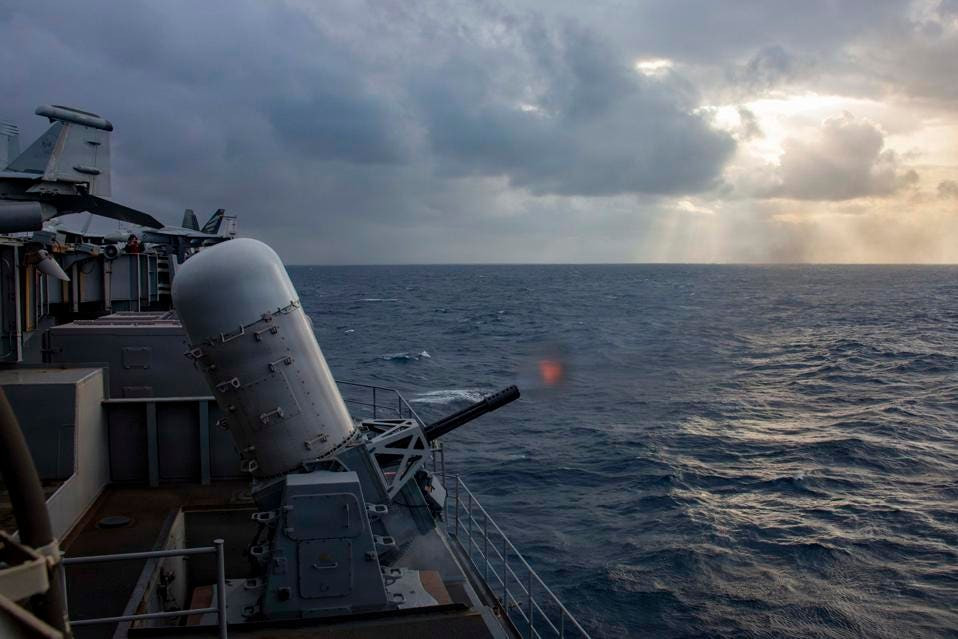
On January 8, 2026, the USS Abraham Lincoln executed live-fire operations utilizing its Phalanx Close-In Weapon System (CIWS), an automated defense designed to neutralize short-range threats like missiles and drones. DVIDS photographs reveal the CIWS engaging targets from the carrier’s deck within the contested South China Sea.
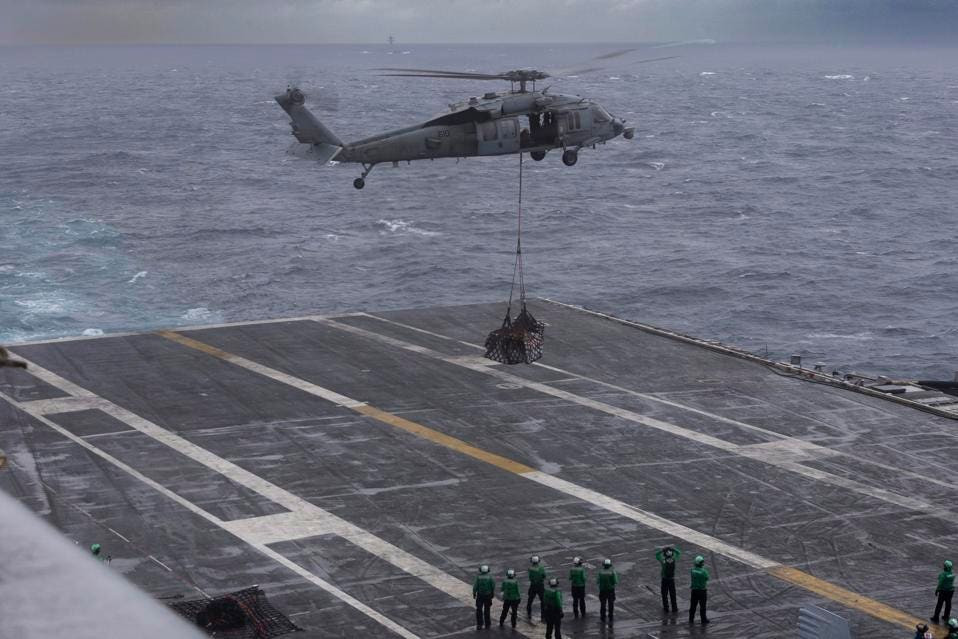
The shooting drills were preceded by a replenishment at sea conducted a day earlier, involving cargo transfer from the USNS Cesar Chavez to the carrier via MH-60S Sea Hawk helicopters from Helicopter Sea Combat Squadron 14, reported by Indian Defence Review. These coordinated actions underline a robust operational posture without accompanying public statements from U.S. naval officials.
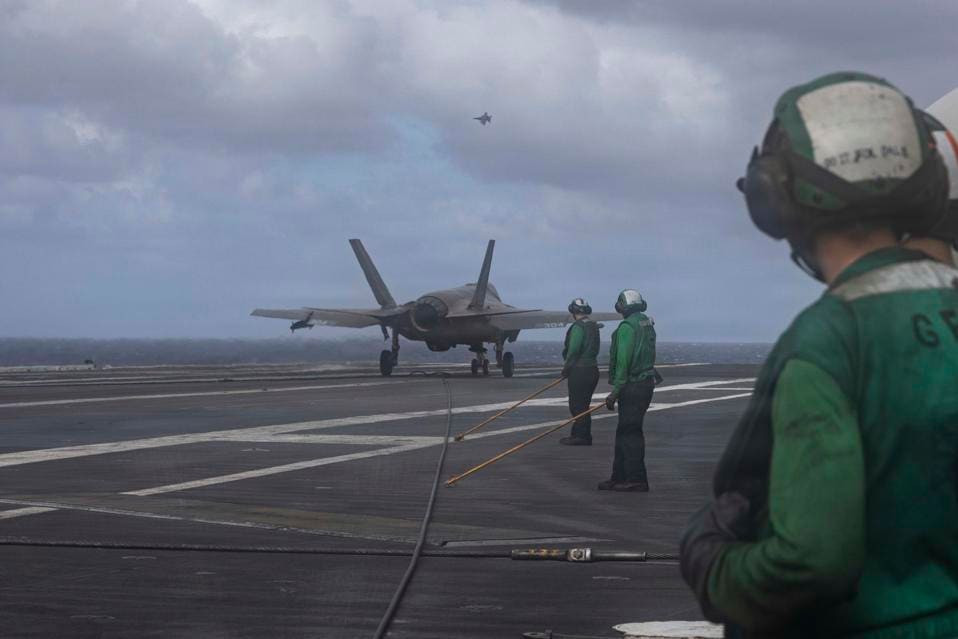
The air wing of the carrier includes F-35C Lightning II jets from Marine Fighter Attack Squadron 314, which bolster the strike group’s reach and electronic warfare capabilities. The strike group known as CSG-3 also comprises the USS Frank E. Petersen Jr. (DDG-121), USS Spruance (DDG-111), and USS Michael Murphy (DDG-112).
There were no reports of confrontations with other vessels while these exercises took place in an area regularly monitored by Chinese naval and coast guard units.
Silent Departure From San Diego Marks Strategic Pacific Presence
On November 24, 2025, the Abraham Lincoln left Naval Air Station North Island discreetly, without formal fanfare or detail on its destination. Coverage by the San Diego Union-Tribune highlighted the low-profile nature of the deployment matching established U.S. Navy protocols for operational security.
This deployment coincided with the retirement of the USS Nimitz, which recently returned to Naval Base Kitsap in Washington for nuclear decommissioning. With the Nimitz taken offline, the Abraham Lincoln assumed the role of America’s forward-deployed supercarrier in the Pacific at the start of 2026.
The carrier group made logistical stops in Guam and entered the Philippine Sea by mid-December. Details regarding the duration of the mission or upcoming port visits remain undisclosed by naval authorities.
Upgraded Supercarrier Elevates Air Power in a Tense Theater
Commissioned in 1989, the USS Abraham Lincoln underwent a significant mid-life refueling and complex overhaul (RCOH) in 2017, extending its operational life by 20 years and enabling it to support next-generation aircraft such as the F-35C.
The ship features a sprawling 4.5-acre flight deck with four steam-powered catapults and four elevators for aircraft, capable of carrying nearly 90 aircraft. A complement of over 3,200 sailors and 2,400 air wing staff maintains the ship’s extensive onboard facilities, including medical units, logistics hubs, and advanced communication systems comparable to large civilian infrastructures.
According to Forbes, this deployment fills a strategic gap created by the ongoing maintenance of the USS George Washington. The report underscores the significance of conducting exercises adjacent to Chinese militarized territories amid rising naval tensions.
The Abraham Lincoln has played a vital role in Pacific operations over the last decade and was notable for being the first U.S. carrier under the command of a female captain, Amy Bauernschmidt, who took charge in 2021.
South China Sea Tensions Heighten as U.S. Reinforces Deterrence
Despite a 2016 ruling by the Permanent Court of Arbitration dismissing China’s expansive maritime claims, the South China Sea remains a hotspot due to continued Chinese military development and near-continuous naval patrols.
Regional countries like the Philippines, Vietnam, and Malaysia have responded with their naval deployments and diplomatic protestations, while the U.S. Navy sustains its freedom of navigation operations (FONOPs) close to disputed territories. These operations often provoke monitoring by Chinese maritime forces.
This deployment concluded without confirmed encounters, yet ongoing Chinese advancements in naval assets such as the Fujian-class aircraft carrier, and next-gen drone swarm tactics and hypersonic missile development amplify regional strategic complexities for U.S. defense planners.
The Pacific Deterrence Initiative, which includes rotational carrier deployments, allied war games, and port visits, underpins the U.S. strategic presence. The Abraham Lincoln’s current activities exemplify this commitment to maintaining regional security and deterrence.
- Categories:
- News









0 comments
Sign in to Comment