

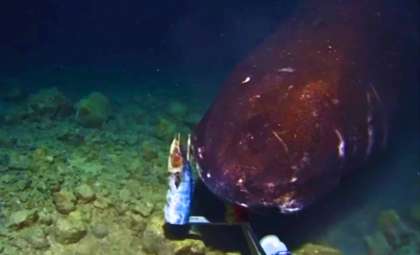
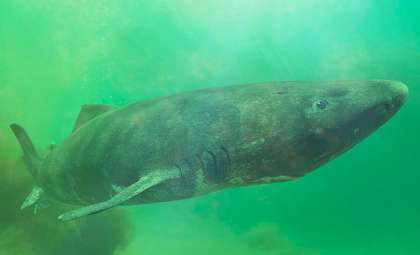
A recent research effort recorded the appearance of eight Pacific sleeper sharks (Somniosus pacificus) during an underwater experiment in the South China Sea, marking the first documented presence of this species in that region. These sharks were attracted by a cow carcass released at a depth of 1,629 meters (5,344 feet) to study the ecological dynamics triggered when large marine animals descend to the ocean bed.
Surprising Findings From a Deep Ocean Experiment
The test was designed to mimic the fall of a whale carcass near Hainan Island, with the cow carcass strategically placed on the continental slope. Unexpectedly, multiple sharks appeared on the underwater cameras deployed as part of the investigation.
This discovery represents the first recorded sighting of Pacific sleeper sharks in the South China Sea, providing new understanding of their feeding strategies. The video captured not only their hunting behavior but also an unanticipated ordering system at the feeding site. The sharks at the forefront yielded space to those following behind, implying that feeding access was influenced by individual assertiveness.

Han Tian, affiliated with Sun Yat-sen University and the Southern Marine Science and Engineering Guangdong Laboratory in China, commented, “This pattern implies that even in deep ocean habitats, feeding hierarchy depends on individual competitive drive, revealing an adaptive foraging method among Pacific sleeper sharks, which typically feed in groups rather than alone.”
Remarkable Insights into Shark Conduct
The study highlighted behavioral differences tied to shark size. Those exceeding 2.7 meters (8.9 feet) displayed significantly more confrontational feeding behavior, whereas smaller sharks approached cautiously, often circling around the carcass. Larger sharks dominated the feeding activity.
“The intense aggression observed among sharks in this deep-sea environment suggests a rich food supply in the South China Sea’s depths. Identifying these food sources could deepen our understanding of both their distribution and behavior,” Tian noted.
Additionally, the footage showed a distinct eye retraction behavior believed to serve as protection. Instead of relying on a "third eyelid" like many species, Pacific sleeper sharks pull their eyes back during feeding episodes.

Expanding Pacific Sleeper Sharks’ Known Habitat
The Pacific sleeper shark’s range typically includes waters from Japan to Alaska and extends to the Tonga Trench. Sightings near the South China Sea introduce new questions about the extent of their habitat. These sharks are primarily linked to colder ocean regions, with previous records from the Solomon Islands and Palau considered southernmost points. This new observation highlights the species’ broader distribution.
“Though Pacific sleeper sharks frequent northern Pacific deep waters, their recurring presence in the southwestern South China Sea indicates that our knowledge about this population segment is far from complete,” Tian explained.
- Categories:
- News









0 comments
Sign in to Comment