
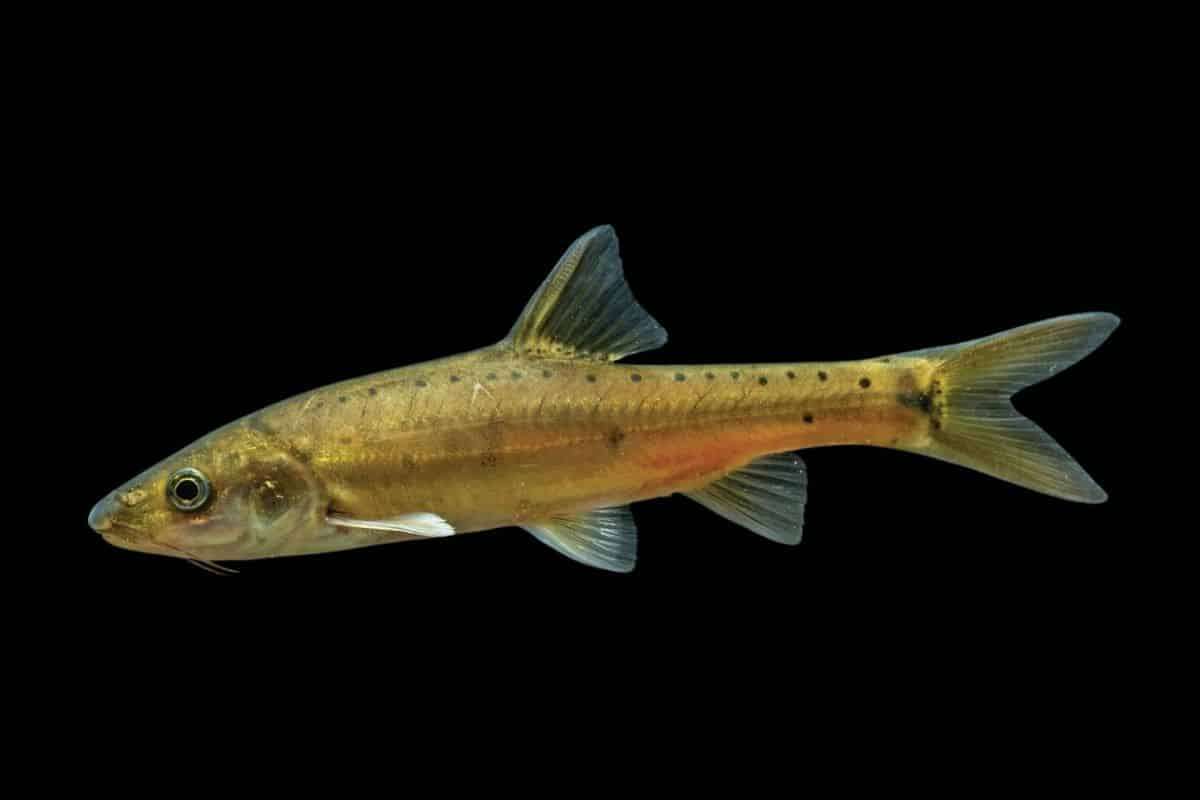
Researchers in southwestern China have uncovered a remarkable golden-scaleless cave fish shedding light on evolutionary changes in progress. The species, identified as the Xingren golden-line fish (Sinocyclocheilus xingrenensis), features no scales and possesses unusually large eyes, indicating ongoing adaptation to subterranean living.
A Species in the Midst of Evolutionary Change
The Sinocyclocheilus genus includes over 80 species, many of which inhabit caves and exhibit reduced eyesight or scale loss. The recently found Xingren golden-line fish, however, retains prominent functioning eyes despite its scaleless form — a rare combination signaling an evolutionary transition.
Detailed in a study published in Zoosystematics and Evolution, this fish appears to be gradually adapting to cave conditions. Scientists suggest that while some cave-dwelling species gradually lose eyesight and scales over millions of years, the Xingren fish represents an intermediate evolutionary phase.

Adaptations for Life in Darkness
Cave species in China are thought to have developed their distinct features as a response to long-term climatic shifts. Ancient droughts pushed populations into underground water systems, where living in total darkness prompted gradual loss of vision.
The Xingren golden-line fish’s preserved large eyes suggest it is still somewhat exposed to light. Researchers theorize that natural cave openings allowing limited daylight likely impact this species’ evolutionary path, hindering complete eye degeneration.
Distinguishing Features Within the Genus
A further notable trait of this fish is its absence of the horn-like protrusion seen in close relatives, including S. longicornus, discovered in 2023. These distinct characteristics highlight the varied evolutionary directions cave fish pursue, even among closely related species.
The fish’s scaleless body paired with irregular dark markings gives it a unique look. Scientists propose that scale loss likely occurred during the Pleistocene era ( 2.6 million to 11,700 years ago ), a period marked by major evolutionary changes across many Sinocyclocheilus species.
Expanding the Roster of Cave-Dwelling Fishes
With this addition, the Sinocyclocheilus genus now boasts 81 documented species, making it the most species-rich group of cave fishes worldwide. Each discovery enriches understanding of how organisms evolve under extreme environmental pressures.
From loss of sight to the absence of scales, these fish species exemplify the striking morphological changes possible when isolated in dark habitats. The Xingren golden-line fish’s blend of subterranean and light-exposed traits offers a rare glimpse into evolutionary transitions between surface and cave ecosystems.
Unlike cave fish that have become fully blind, it may still utilize light cues for biological rhythms, indicating it retains some connection with surface conditions.
- Categories:
- News












0 comments
Sign in to Comment