
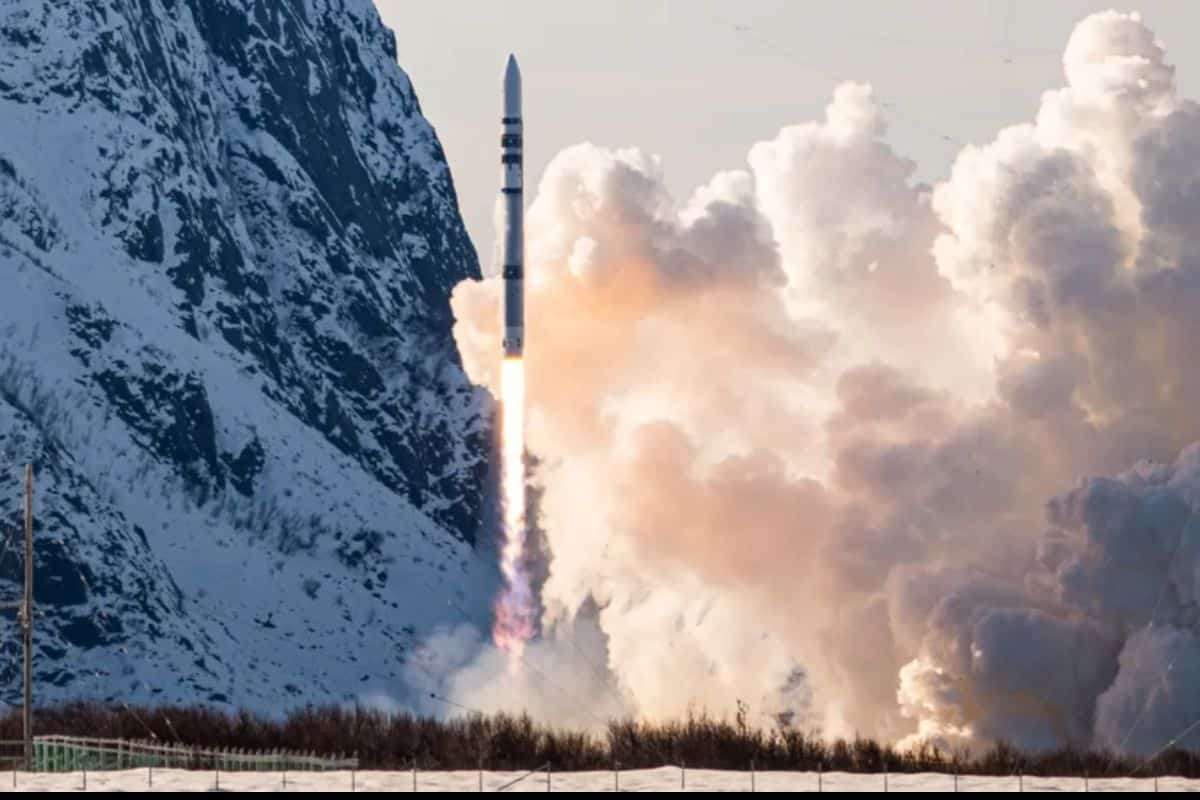
On March 30, 2025, Germany’s private space startup Isar Aerospace made history by attempting its inaugural orbital launch from European territory. Their Spectrum rocket lifted off from the Andøya Spaceport in northern Norway, marking a pivotal event for Europe’s ambitions in space exploration.
The Spectrum Rocket’s Fiery Malfunction
After successfully clearing the launch platform, the Spectrum rocket encountered a serious malfunction shortly into its flight. The rocket flipped and crashed into the Arctic Ocean, resulting in a spectacular blaze.
Video footage vividly captures the eruption, showcasing the intense orange-hued plume rising against the stark Arctic sky. Fortunately, according to Isar Aerospace, the surrounding launch facilities remained intact despite the dramatic explosion.
Isar Aerospace’s Optimistic Takeaway
In spite of the setback, Isar Aerospace emphasized the constructive aspects of the launch. CEO Daniel Metzler remarked, “Our maiden flight fulfilled our goals, marking a significant success. We achieved a clean liftoff, maintained flight for 30 seconds, and successfully tested our flight termination system.”
This positive perspective underscores the importance of the data collected, which will be instrumental in refining future rockets.

A German test rocket launched from Norway crashes and explodes seconds after takeoff pic.twitter.com/F1tOPDCxuB
— Reuters (@Reuters) March 30, 2025
Response from European Space Leadership
Officials from across Europe responded with encouragement despite the mishap. Josef Aschbacher, Director General of the European Space Agency (ESA), commented, “Test flights are designed to collect valuable information, learn from experience, and improve. What Isar Aerospace accomplished today is commendable, providing extensive data for future analysis.”
He also expressed confidence in subsequent attempts, stating, “I am optimistic that the next Spectrum rocket will be ready for launch soon.”
Data as the Driving Force Behind Exploration
This mission represented a key milestone in accumulating data crucial to the advancement of space technology. Similar to many initial rocket launches, the primary goal was to gather insights that will aid in the progressive design and enhancement of upcoming spacecraft.
Although the crash was an obstacle, it contributed invaluable information about the rocket’s behavior, especially regarding its flight termination system and other vital mechanisms, enabling improvements for future flights.
Europe’s Growing Role in the Commercial Space Industry
Isar Aerospace’s launch attempt from European ground signals an important development for the continent’s burgeoning commercial space sector. As private enterprises like Isar Aerospace emerge, Europe is asserting itself as a formidable contender in the global space market.
Historically dominated by national space agencies like NASA and ESA, the space sector is being transformed by private players such as SpaceX. Europe's increasing involvement bolsters its competitive standing in this rapidly evolving arena.
- Categories:
- Aircraft







0 comments
Sign in to Comment