
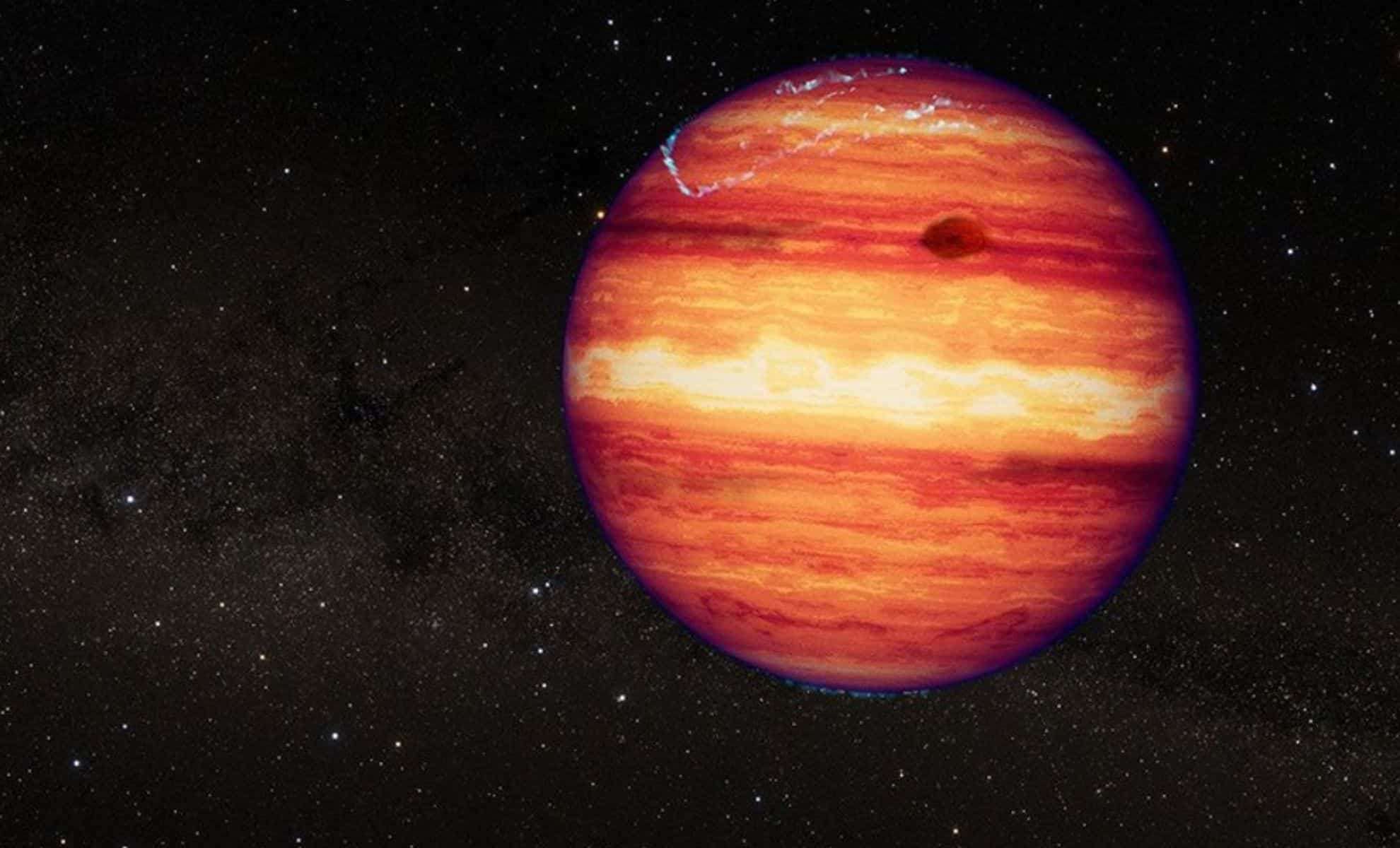
Using the James Webb Space Telescope (JWST), scientists have discovered an intricate atmosphere enveloping SIMP 0136, a massive, free-floating planetary body roaming through space without a host star. These fresh insights highlight an environment with fragmented clouds, fluctuating temperatures, and puzzling chemical transformations, providing a rare window into the volatile atmospheres of giant planets outside our solar system.
This breakthrough advances the emerging field of exo-meteorology, the examination of weather patterns on worlds beyond Earth. By tracking how SIMP 0136’s atmosphere evolves in real time, astronomers are honing the methodologies essential for studying faraway exoplanets—a vital step in the quest to identify potentially life-supporting planets.
Webb’s Pioneering Study of a Rogue Gas Giant
Published in The Astrophysical Journal Letters, the research involves detailed infrared surveillance of SIMP 0136 over several rotations. This colossal object, approximately 13 times Jupiter’s mass and situated just 20 light-years from Earth in the Milky Way, does not orbit a star. Its characteristics blur the line between a planet and a brown dwarf—a body too large to be a planet but not massive enough to ignite nuclear fusion.

Because SIMP 0136 exists without the influence of a nearby star’s radiation and heat, it offers a unique chance to observe its atmospheric dynamics unimpeded. Earlier studies with the Hubble and Spitzer telescopes hinted at the presence of patchy clouds, but Webb’s advanced infrared sensors uncovered factors beyond just cloud patterns affecting its brightness.
“We knew there were brightness changes caused by uneven cloud formations rotating in and out of sight,” said Allison McCarthy, lead author and doctoral candidate at Boston University. “However, we suspected temperature shifts, chemical reactions, and even auroral activity might contribute to these variations, which now seems more likely.”
Dynamic Atmosphere Featuring Cloud Layers and Unexpected Chemistry
With data from JWST’s NIRSpec and MIRI instruments, the team captured thousands of infrared readings during two full spins of SIMP 0136. The observations have uncovered multiple atmospheric strata, each behaving distinctly.
- Iron-rich clouds deep in the atmosphere: The lowest layer includes sporadic clouds made of iron particles that move in and out of view.
- Silicate clouds at higher altitudes: Above these iron clouds, fine grains of silicate minerals form clouds that produce additional variations in brightness.
- Unanticipated hot spots and chemical shifts: At even loftier levels, temperature irregularities potentially linked to auroras or thermal plumes were detected, causing surprising changes in the distribution of molecules like carbon monoxide and methane.
“We’re still unraveling the chemistry,” explained Johanna Vos, the principal investigator at Trinity College Dublin. “These findings are thrilling because they show molecular abundances, such as methane and carbon dioxide, can fluctuate across different regions and times.”
Implications for Finding Life Beyond Earth
SIMP 0136 is proving invaluable as a natural laboratory for exploring atmospheric phenomena on distant gas giants. Since many exoplanets orbit close to their stars, making atmospheric studies challenging, objects like SIMP 0136 help scientists perfect their observational techniques.
Results indicate that exoplanet atmospheres may undergo significant changes over time, suggesting single snapshots may not fully capture their chemical makeup. This presents a major consideration for efforts dedicated to locating habitable worlds.
“A single measurement might not represent the entire planet’s atmosphere,” noted Vos.
With NASA’s upcoming Nancy Grace Roman Space Telescope launching in 2027 and the planned Extremely Large Telescope (ELT) on Earth, researchers anticipate applying these insights to image exoplanets directly and seek signs of habitability or life.
- Categories:
- News







0 comments
Sign in to Comment