

Scientists from around the world have, for the first time, verified the existence of a global electric field surrounding Earth, termed the ambipolar electric field.
Although theorized more than six decades ago, this electric field is fundamental to Earth's environment, akin to gravity and the geomagnetic field, influencing key atmospheric dynamics.
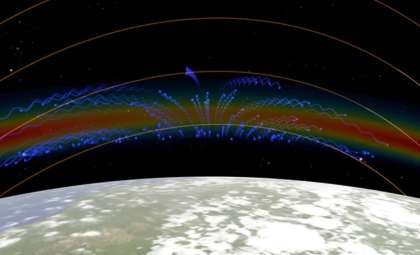
Leveraging observations from NASA’s Endurance mission—a suborbital rocket launched from Arctic regions—researchers have successfully identified and measured this subtle field, unveiling its crucial role in the ionosphere and atmospheric particle escape.

Understanding how the ambipolar electric field affects Earth’s upper atmosphere
The ambipolar electric field is vital in regulating charged particles in the Earth’s upper atmosphere, especially within the ionosphere—a layer ionized by solar radiation, containing free electrons and ions. This field arises due to the interplay between positive ions and negative electrons, balancing their movements by drawing electrons downward and pushing ions upward, thereby preventing charge separation and preserving the ionosphere’s stability.
Far from being a static condition, this electric field drives the polar wind—a continuous flow of charged particles escaping Earth’s atmosphere near the poles. Since the 1960s, satellites have recorded this outflow, though direct measurement of the responsible electric field remained elusive due to its weak intensity. The polar wind is notable for accelerating relatively cool particles to supersonic velocities, overcoming Earth's gravity. Detecting the ambipolar electric field fills a critical gap in understanding the acceleration mechanism behind this escape.
How the Endurance mission charted the ambipolar electric field
The Endurance mission was purpose-built to detect this elusive electric field and assess its influence. On May 11, 2022, a suborbital rocket equipped with sensitive instruments launched from Svalbard, positioned near the North Pole to access the polar wind zone where the field is most detectable. Measurements were gathered across altitudes spanning 150 miles (250 km) to 477 miles (768 km) above Earth.
During a 19-minute flight, the instruments recorded an electric potential change of approximately 0.55 volts — a modest voltage roughly equivalent to a button cell battery, but powerful enough to propel charged particles like hydrogen ions into space. Glyn Collinson, leading the effort at NASA’s Goddard Space Flight Center, highlighted how this small electric potential is key to lifting charged particles beyond Earth’s grasp.
Findings also revealed the ambipolar electric field’s significant influence on ionospheric composition. Hydrogen ions, the dominant component of the polar wind, experience forces over ten times greater than gravity, accelerating them to supersonic speeds. Heavier ions, such as oxygen, are also affected, reducing their effective weight and enabling them to reach much higher altitudes. This elevation increase stretches the ionosphere’s denser regions upward by 271%, reshaping our understanding of its vertical extent.
Broader consequences for Earth’s atmosphere and planetary exploration
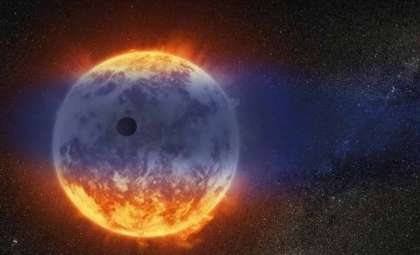
Identifying the ambipolar electric field reshapes our comprehension of atmospheric evolution on Earth. This fundamental field affects how charged particles escape into space, influencing atmospheric loss over millions of years, thereby playing a role in climate regulation and Earth's habitability.
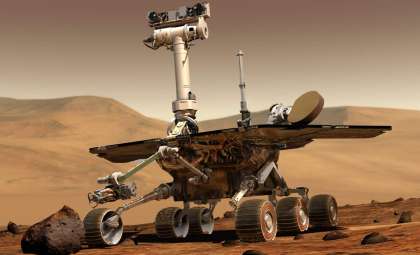
Moreover, this breakthrough informs planetary science beyond Earth. Comparable electric fields likely exist on planets such as Venus and Mars, where atmospheres are also gradually escaping. Gaining insights into the ambipolar field on Earth enhances our ability to model atmospheric behavior and habitability on other worlds, crucial for astrobiology and future exploration.
Collinson summarized the discovery’s far-reaching implications: “Any planet with an atmosphere should have an ambipolar field. Now that we’ve finally measured it, we can begin learning how it’s shaped our planet as well as others over time.” Understanding this mechanism helps explain why Mars lost much of its atmosphere while Earth maintains a life-supporting gaseous envelope.






0 comments
Sign in to Comment