
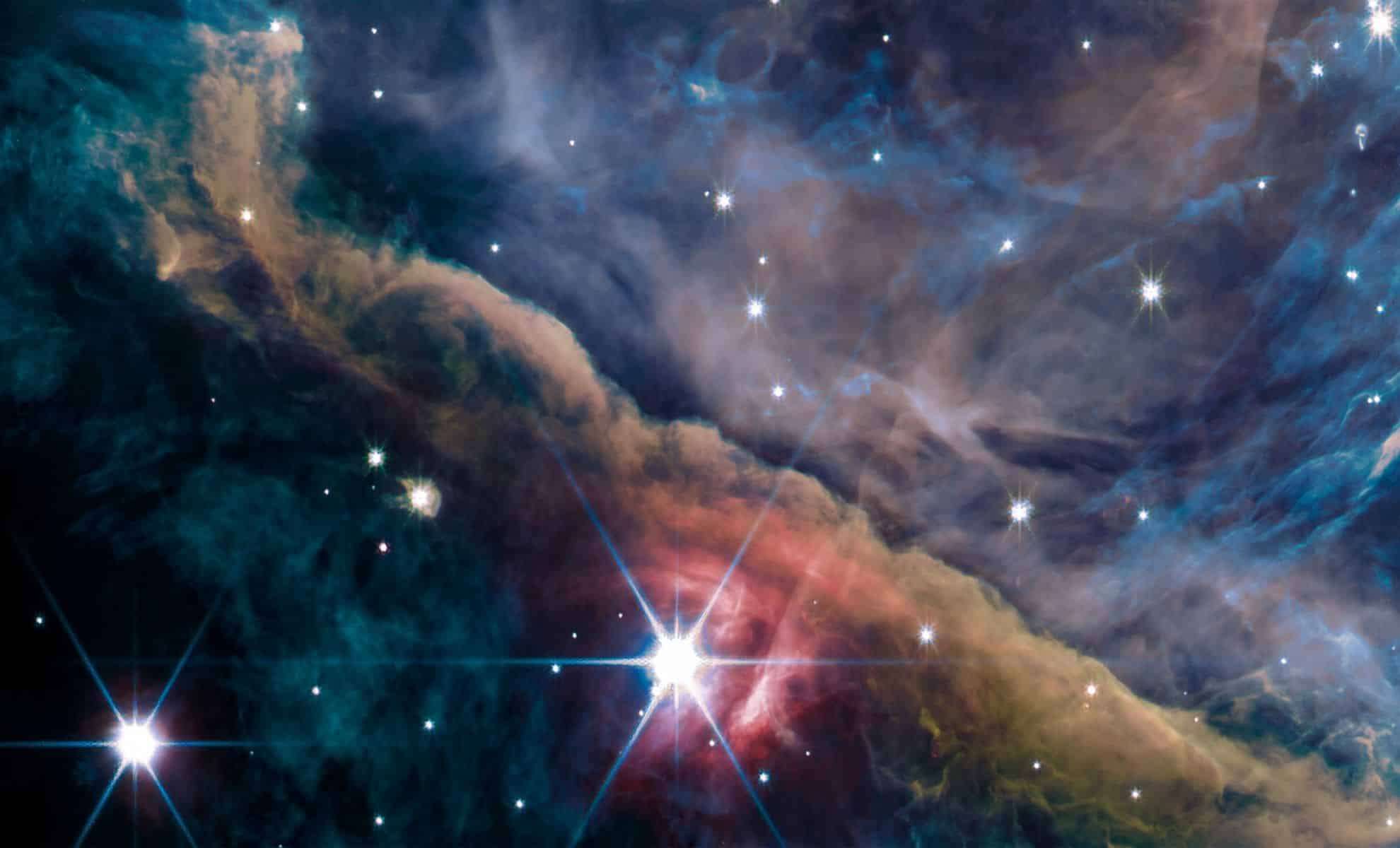
The James Webb Space Telescope (JWST) has delivered remarkable new views of the Orion Nebula, exposing intricate structures never seen before. These images provide astronomers with extraordinary perspectives on this vast star-birth region, enhancing our grasp of the mechanisms behind star and planet formation.
Revealing the Secrets of the Orion Nebula
Known formally as Messier 42 (M42), the Orion Nebula is among the most extensively observed celestial objects visible from Earth. Situated approximately 1,344 light-years away, it is the nearest massive stellar nursery to our solar system.
Its closeness and brightness make the nebula a prime target for scientists investigating the complex phenomena involved in young star and planetary system development. The Orion Nebula acts as a natural observatory where researchers can examine the interplay between newborn stars and their surrounding matter.

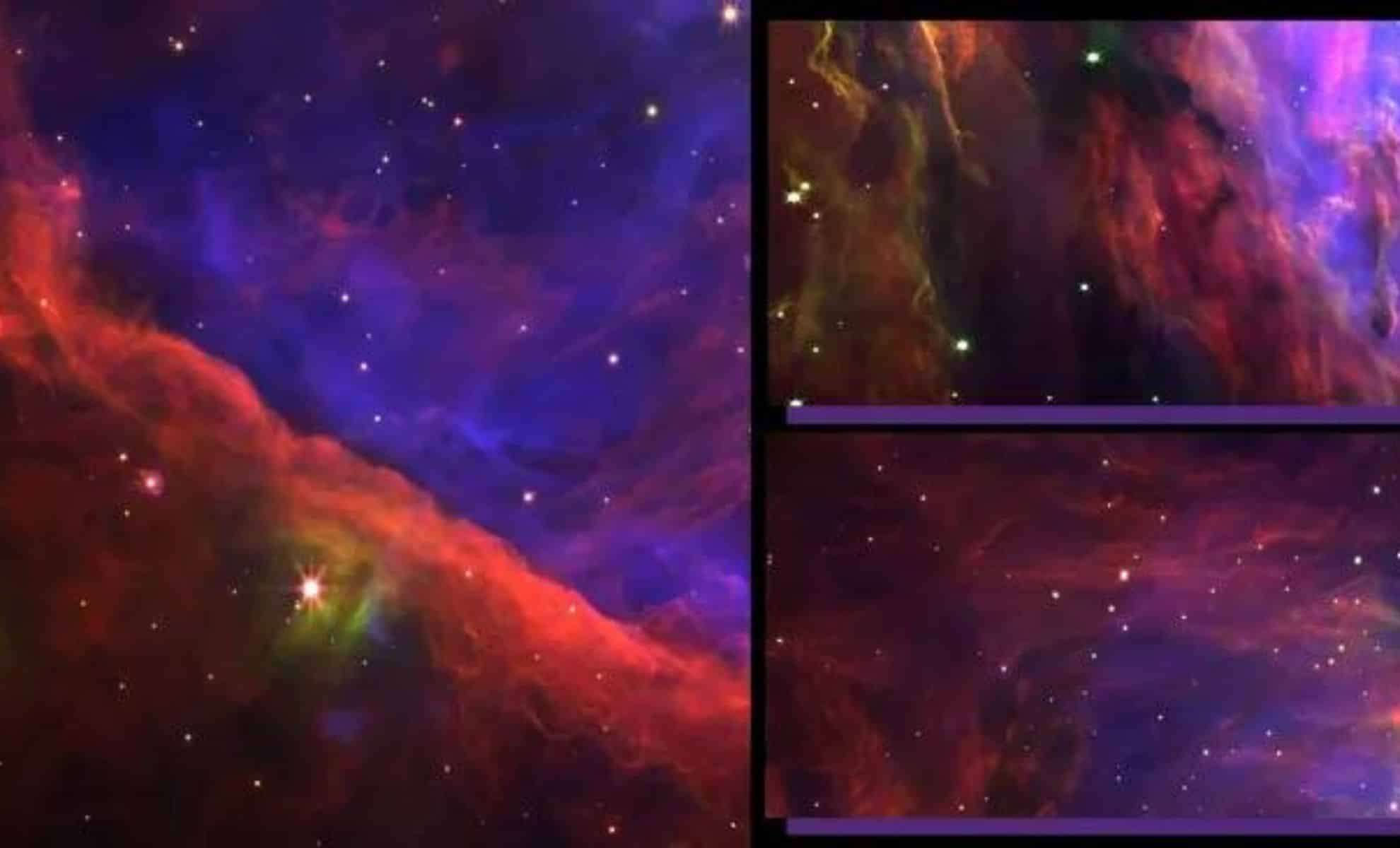
This nebula’s variety of features, including dense molecular clouds, energized gas regions, and young stars, form a complex mosaic for scientific study. Investigating these elements helps astronomers understand the early developmental phases of stars and the circumstances that favor planet formation.
Thanks to JWST’s sophisticated technology, researchers have been able to examine these structures in greater detail than ever, revealing finer aspects of the nebula’s makeup and behaviors.
How the James Webb Space Telescope Advances Our Knowledge
Launched at the end of 2021, the JWST is the most advanced space observatory created to date. Its powerful instruments and expansive mirror enable it to capture detailed imagery and spectra of distant cosmic phenomena. Observing the Orion Nebula with JWST has shed light on the intricate configuration and contents of the dust and gas that birth stars and planets.
Utilizing its Near-Infrared Camera (NIRCam) and Mid-Infrared Instrument (MIRI), the telescope has exposed the nebula’s elaborate networks of filaments and voids with unmatched clarity. These findings allow scientists to explore how intense radiation from young, massive stars sculpts their environments.
Gathering such high-resolution data empowers researchers to analyze interactions between stellar radiation and surrounding matter in star-formation zones, enriching our understanding of how stars influence their cosmic neighborhoods and spur the genesis of new stellar and planetary bodies.
Examining the Orion Bar
A key feature highlighted by JWST is the Orion Bar, a dense strip of gas and dust illuminated by the Trapezium star cluster. The Orion Bar provides a natural setting to study ultraviolet (UV) radiation’s impact on interstellar material. JWST’s imagery distinctly reveals the boundary between the ionized gas near the Trapezium cluster and the cooler molecular gas beyond it. This transitional zone is vital for understanding the photodissociation processes that affect star and planet formation.
Studying the Orion Bar helps astronomers comprehend how UV light from massive stars breaks down and reshapes molecular clouds, potentially initiating new rounds of star creation. Insights gained from this region contribute to knowledge about the delicate balance between destructive and constructive forces at play in star-forming areas. JWST’s ability to capture these phenomena in fine detail delivers crucial data for refining star evolution models and understanding the lifecycle of interstellar matter.
The Chemical Richness of the Nebula
Through its spectroscopic instruments, the JWST has detected a broad range of molecules and atoms within the Orion Nebula. Analyzing their spectral signatures enables mapping the presence and concentration of vital elements such as hydrogen, carbon, and oxygen.
These measurements are essential in tracking the chemical changes occurring in star-forming regions and assessing the potential for molecules that support life to form.
Deciphering the nebula’s chemical makeup is key to reconstructing the history of star and planet formation in this locale. The discovery of complex organic compounds offers clues about the pathways leading to the origins of life.
The detailed spectroscopic data from JWST assists astronomers in tracing the formation and evolution of these molecules, advancing our understanding of environments where life-fostering conditions might emerge around new stars.
A Global Effort in Research
The study of the Orion Nebula is driven by an international collaboration of astronomers and astrophysicists. Over 120 researchers from the PDRs4All consortium, led by Emilie Habart of the University of Paris-Saclay and Els Peeters of Western University in Canada, combine observational and theoretical expertise to extract maximum value from JWST data.
This worldwide partnership highlights how sharing knowledge and resources accelerates progress in cosmic research. The PDRs4All team’s work on the Orion Nebula exemplifies how cooperative scientific efforts lead to transformative discoveries.
Continuing to Unlock Cosmic Mysteries
The JWST’s ongoing observations of the Orion Nebula form part of a larger mission to decode star and planetary system lifecycles. By analyzing the nebula’s structure, chemical makeup, and dynamics, scientists aim to unravel the fundamental processes driving star creation. The comprehensive data from JWST will underpin future investigations and help refine theoretical frameworks for stellar and planetary development.
Further research will expand our insight into how stars and planets form and change over time. Findings from the Orion Nebula promise to deepen our understanding of the birthplaces of stars and the genesis of solar systems.
As more observations are gathered, researchers will test and enhance their theories, improving our comprehension of the complex cosmic interactions shaping the evolution of the universe.
- Categories:
- Astronomy ,
- News ,
- Space







0 comments
Sign in to Comment