
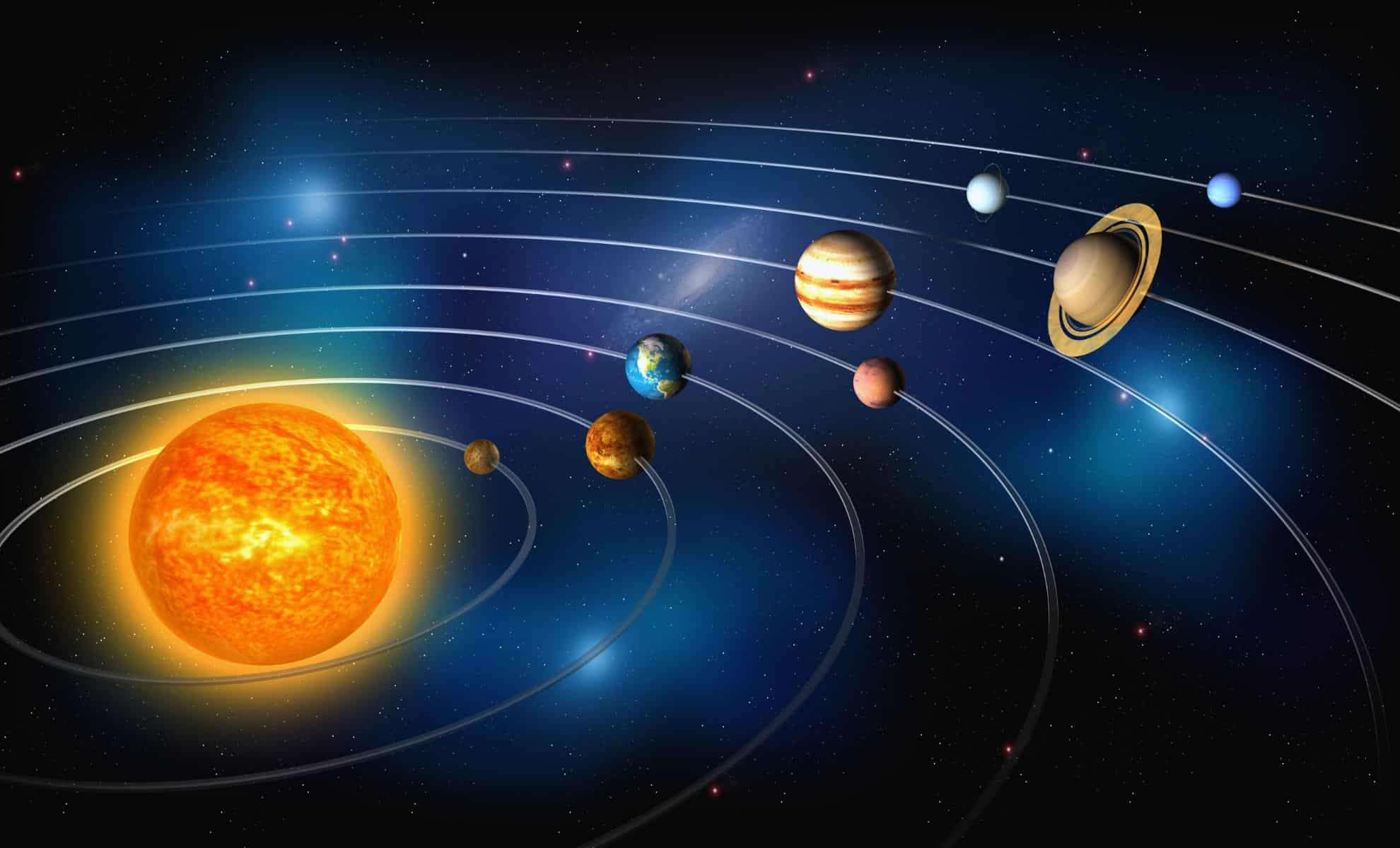
The destiny of our solar system has fascinated astronomers and space enthusiasts throughout history. As explored in a recent Live Science feature, although our solar system has thrived for billions of years, it is not everlasting. In the vast timeline of the 13.8 billion-year universe, its existence is brief. So, what timeline marks the end of our cosmic neighborhood? To understand this, we must focus on the Sun—the life-giving star at the heart of our system—and how its phases of evolution will seal the fate of the planets and objects around it.
Understanding the Solar System’s Duration and the Sun’s Influence
Our solar system sits about halfway through its lifespan, anchored by the Sun’s immense gravitational pull. However, the Sun itself will not burn forever. It currently shines steadily in its “main sequence” phase, generating energy by fusing hydrogen atoms into helium in its core. This phase, though stable now, will end in roughly 5 billion years when the Sun runs out of hydrogen fuel, triggering major changes.
Following this, the Sun will swell into a red giant, expanding enormously and potentially swallowing Mercury and Venus. Earth too faces the likelihood of being engulfed or at least rendered inhospitable due to soaring temperatures, long before the Sun’s full expansion. Alan Stern, a planetary scientist at NASA, explains, “From a habitability standpoint, that’s kind of the end of the solar system,” highlighting that the conditions necessary for life will vanish with the Sun’s decline.

The Transition to a White Dwarf: The Sun’s Last Stage
Once the Sun depletes its core hydrogen, it will move into its final evolutionary phase as a white dwarf. This phase signifies the end of nuclear fusion, leaving the Sun as a dense, fading remnant. Over billions of years, it will cool and shrink, no longer emitting significant light or heat. Despite this, many of the solar system's planets—especially the outer gas giants like Jupiter—will continue orbiting the cooling stellar core for a vast period.
Still, the death of the Sun turns the solar system into a frigid and lifeless expanse. Alan Stern notes that while planetary motions may persist for a time, the lack of solar energy will gradually halt the dynamic interactions within the system, leaving behind a frozen vestige of its former brilliance.
The Unstable and Turbulent Solar System Ahead
As the Sun contracts into a white dwarf, its gravitational influence will weaken, unsettling the delicate orbital balance of planets and smaller objects. This shift could trigger chaotic motions, with some bodies being thrown from their orbits or colliding violently.
Over immense stretches of time, the chance of devastating incidents increases. Theoretical astrophysicist Fred Adams from the University of Michigan remarks, “We’re not just waiting until the universe is twice as old. We’re waiting till it’s a billion times older, a trillion times older, and a quadrillion times older,” emphasizing the vast timescale for cosmic events that could disrupt our solar system. Encounters with passing stars, supernova shockwaves, or other cosmic phenomena may ultimately tear the solar system apart.
Proton Decay: A Hypothetical Threat Over Endless Eternity
Looking far beyond even the solar system’s ultimate destruction, some researchers propose that protons—the basic constituents of matter—might eventually decay. Though not confirmed experimentally, theories estimate proton lifetimes exceeding 1034 years. Should proton decay occur, it would lead to the breakdown of matter itself, hastening the dissolution of any remaining solar system components. While highly speculative, this possibility adds complexity to understanding the universe’s long-term fate.
The proton decay hypothesis expands the scope of the solar system’s eventual demise. It suggests that long after the Sun has settled into a cold white dwarf and after orbital chaos has run its course, even the atoms composing celestial bodies might disintegrate. This idea deepens the profound mysteries surrounding the ultimate conclusions of our solar neighborhood.
- Categories:
- News









0 comments
Sign in to Comment